
Dr. Abdul Qadeer Khan: The Father of Pakistan’s Atomic Bomb
" A Scientist’s Dedication to Defending the Nation"

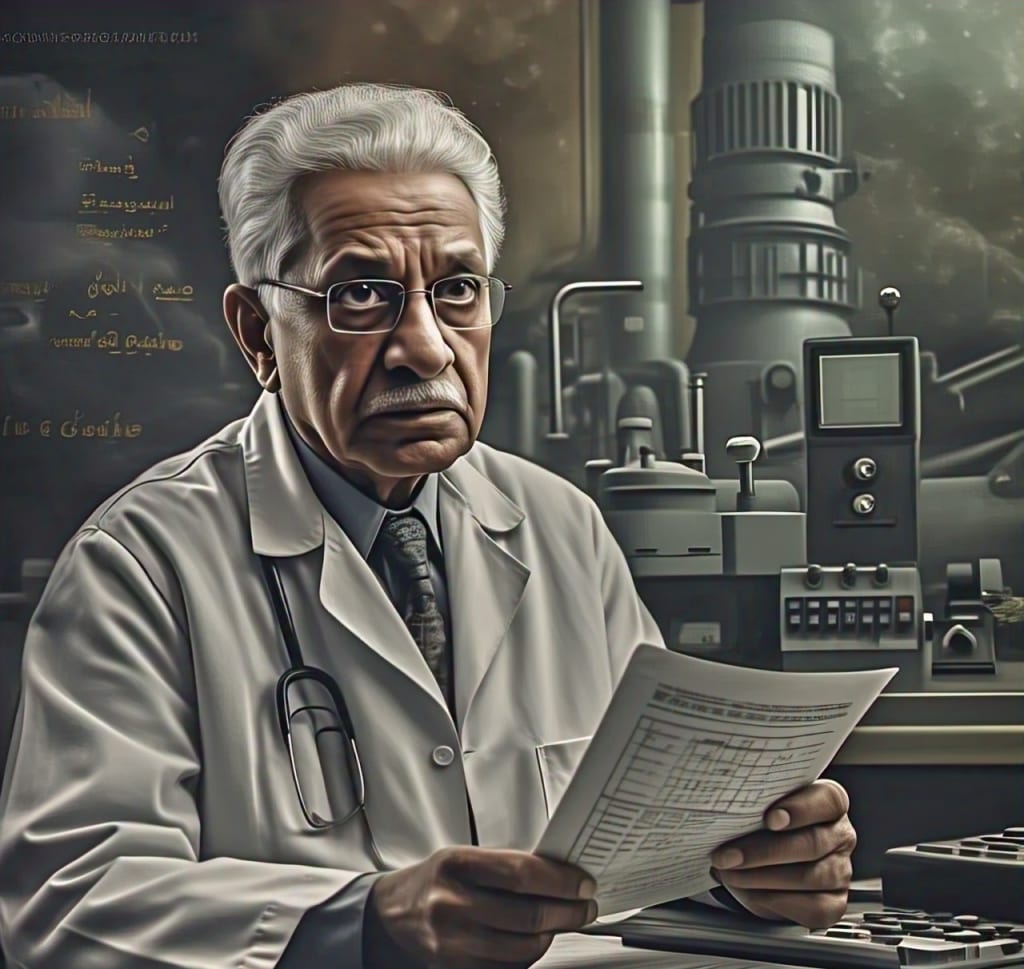
When people talk about the defense of Pakistan, one name always comes to mind — Dr. Abdul Qadeer Khan. Known as the “Father of Pakistan’s Atomic Bomb,” he played a key role in making Pakistan the first Muslim-majority country to become a nuclear power. His story is not just about science and technology, but also about patriotism, secrecy, and a strong belief in national security.
Early Life and Education Dr. Abdul Qadeer Khan was born on April 1, 1936, in Bhopal, India. After the partition of India in 1947, his family migrated to Pakistan. He studied metallurgy — the science of metals — and later moved to Europe for higher studies. He earned degrees from Germany and the Netherlands, and eventually completed his doctorate (PhD) in Belgium. While studying and working abroad, Dr. Khan gained valuable experience in nuclear technology. He worked at a Dutch company called URENCO, which was involved in uranium enrichment — a key process in making nuclear weapons.
The Trigger: India’s Nuclear Test In 1974, India conducted its first nuclear test, which shocked and alarmed Pakistan. The test sent a clear message to Pakistan that its neighbor had a dangerous new power. This event deeply affected Dr. Khan. He believed that Pakistan needed to develop its own nuclear capability to maintain balance and protect itself from future threats. Feeling a strong sense of responsibility, Dr. Khan offered his services to the Pakistani government. He wrote a letter to Prime Minister Zulfikar Ali Bhutto, expressing his willingness to help Pakistan build an atomic bomb. Bhutto quickly recognized Dr. Khan’s potential and invited him to join the country’s nuclear program.
The Nuclear Mission Begins In the mid-1970s, Dr. Khan returned to Pakistan and began working in secrecy. He founded the Engineering Research Laboratories (ERL), which was later renamed Kahuta Research Laboratories (KRL). Under his leadership, KRL became the heart of Pakistan’s uranium enrichment program. Enriching uranium is a complex process. It involves separating the useful isotope (U-235) from natural uranium so that it can be used in a bomb. Dr. Khan and his team built gas centrifuges — spinning machines that perform this separation. Despite limited resources and international pressure, they made remarkable progress.
Challenges and International Pressure Pakistan’s nuclear program was kept top secret. The government and scientists faced intense pressure from Western countries, especially the United States. Many sanctions were placed on Pakistan to stop it from becoming a nuclear power. But despite these challenges, the team continued their work with determination and secrecy. Dr. Khan was not only a scientist but also a strong organizer and motivator. He inspired his team to work day and night. He believed that a strong defense was necessary for a peaceful and independent Pakistan.
Pakistan Becomes a Nuclear Power On May 28, 1998, Pakistan finally conducted its first nuclear tests in the Chagai hills of Balochistan. This was in response to India’s tests just a few weeks earlier. The tests were a clear message: Pakistan now had nuclear capability. These tests made Dr. Abdul Qadeer Khan a national hero. He was celebrated across the country for his role in developing the atomic bomb. Streets were named after him, schools taught about his achievements, and he became a symbol of national pride. For many Pakistanis, the nuclear tests brought a sense of security. They believed that now, no country could threaten Pakistan easily. Dr. Khan was seen as the man who gave the country strength and respect on the world stage.
Controversies and Later Year However, Dr. Khan’s career also faced controversy. In 2004, he was accused of sharing nuclear secrets with other countries, including Iran, North Korea, and Libya. Under pressure, he confessed on national television, but later said that he was forced to do so to protect Pakistan’s image. He was placed under house arrest, and though he was later released, his movements remained restricted for many years. Many Pakistanis continued to support him, believing that he had acted out of patriotism, while others criticized the lack of transparency.
Legacy and Death Dr. Abdul Qadeer Khan passed away on October 10, 2021, at the age of 85. His death was mourned across the country. The government gave him a state funeral, and people from all walks of life paid tribute to him. His legacy remains strong. He is remembered as the scientist who gave Pakistan its nuclear shield. While some may debate the political aspects of his life, there is no doubt that he changed the course of Pakistan’s history.
Conclusion
Dr. Abdul Qadeer Khan is more than just a name in history books. He is a man who combined science with patriotism to build a stronger Pakistan. His work gave the country a powerful defense and a sense of pride that still lives on today.As the world continues to change, his legacy serves as a reminder of what can be achieved when vision meets action — and when a nation stands behind its scientists.
About the Creator
aadam khan
I am publishing different stories
Keep reading
More stories from aadam khan and writers in Confessions and other communities.
Why India and Pakistan Went to War in 2025
The year 2025 will be remembered as one of the darkest in South Asian history. For decades, India and Pakistan have shared a tense relationship—marked by wars, peace talks, border skirmishes, and diplomatic conflicts. But in 2025, that fragile peace finally broke down, leading to a full-scale war. This blog explains the main reasons behind the conflict, what led to the outbreak of war, and what it means for both countries and the world.
By aadam khan8 months ago in Confessions


Comments
There are no comments for this story
Be the first to respond and start the conversation.