
Clip: Bloodlines & Ballistics
Bloodlines & Ballistics

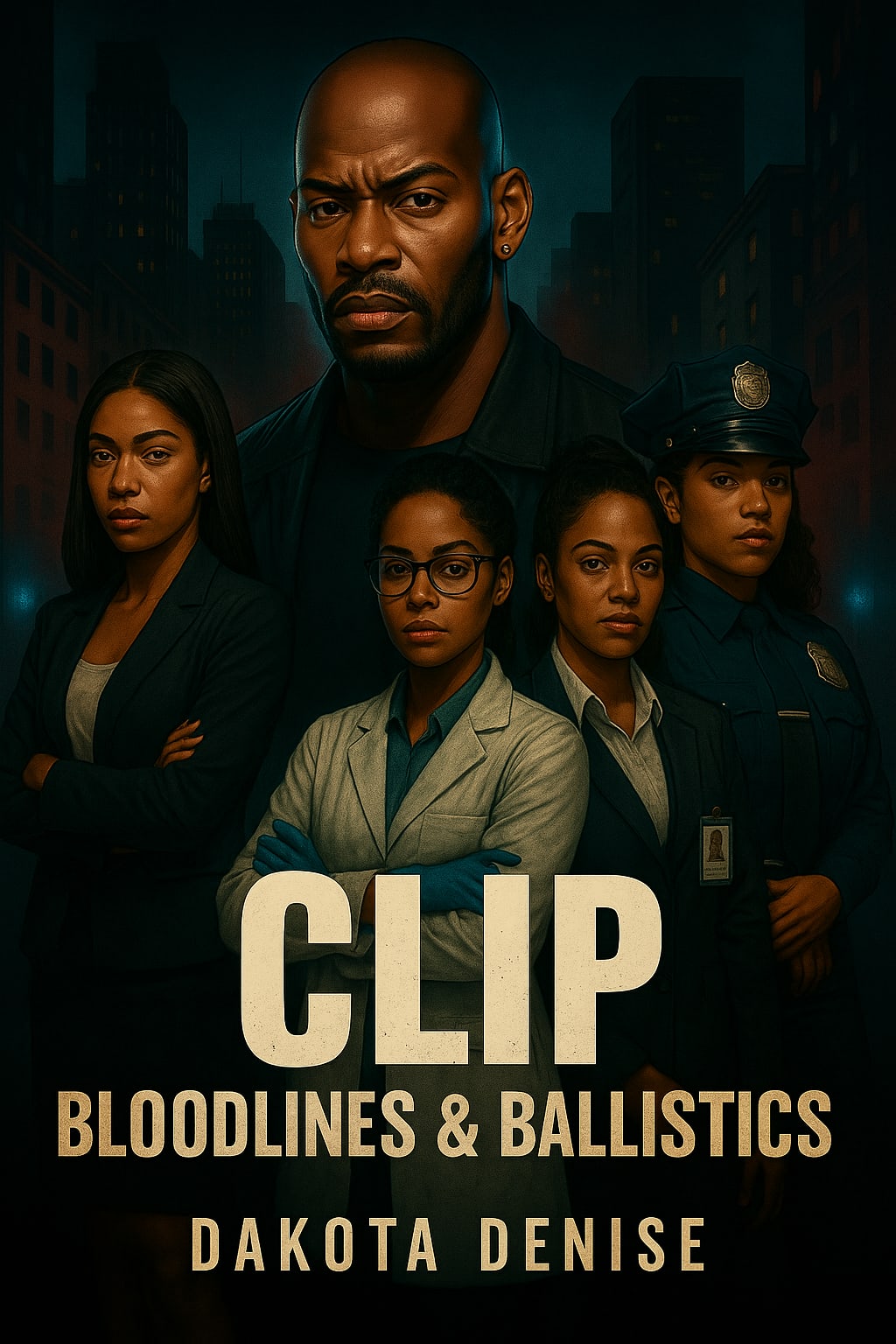
Clip: Bloodlines & Ballistics
Chapter 1: The Beginning
We grew up in a house where the walls were thin, the fridge was never quite full, and the love was loud. There were five of us: four girls and one boy. Our mother raised us by herself on the South Side of Chicago. She worked two jobs, sometimes three, just to keep the lights on and food in the kitchen. And somehow, even with all that, she still managed to teach us the difference between right and wrong—though, as life would have it, right and wrong blurred sometimes.
Our brother, **Chris**, was the only boy. We called him **Clip**. Not because he carried a gun—though eventually, he would—but because he was always quick to clip trouble before it reached us. He was our protector, our teacher, and in many ways, our second parent. If someone picked on one of us girls, they dealt with Clip. If we were scared to walk to school, he walked with us. If we needed to learn how to fight, he was the one who taught us how to swing without fear.
There was me—Dakota, the youngest. I was the mouthy one, always asking questions, always in people’s business. Then there was Tasha, the oldest sister, quiet but brilliant. Tasha could fix anything: radios, TVs, computers—she’d take them apart and put them back together like it was nothing. Maya came next, the calm one. She loved science and had a weird obsession with crime documentaries. She’d sit for hours with a notebook, pretending to solve cases. And then there was Keisha, all attitude and fire. She didn’t take mess from anybody, and even as a kid, she was ready to square up with grown men if she had to.
Chris was the bridge between us all. He never joined a gang, but every gang in our neighborhood respected him. He had a code. He didn’t hit women, he didn’t mess with kids, and he didn’t start anything unless someone came for us first. But as we got older, that respect turned into something else. Word started to spread about a guy who never missed his mark. A guy who only used revolvers. A guy who didn’t need a crew, because he moved like a ghost.
They called him **Clip** because he left no clips behind. Just clean shots and silence.
We didn’t know right away. At first, it was whispers. Then late-night phone calls. Then money started showing up—stacks in the kitchen drawer, envelopes under our beds. Mom thought he was hustling. She told him to be careful. But she never asked too many questions. None of us did. Not until the day he came home, blood on his boots, breathing like he’d run through hell.
That night changed everything.
It was the night we all realized who our brother really was—and the night we decided we’d do whatever it took to keep him free.
Maya went into forensic science. She said she wanted to "make sure good people didn’t get locked up." Tasha got into tech. She was already a hacker before she hit high school. She just made it legal. Keisha joined the CPD and later became a probation officer. Said she needed to be close to the system to know how to work around it.
And me? I became a defense attorney. I didn’t do it for the money. I did it so that when Chris finally slipped—and we all knew he would—I could be the one in the courtroom fighting for his life.
We all had our roles. We all had our secrets.
And Chris? Chris kept doing what he did best.
He never missed.
Chapter 2: Lessons in Loyalty
It wasn’t long before Clip’s reputation left the blocks of South Side Chicago and reached the ears of people with real power—dangerous power. The kind of people who didn’t ask for favors, they demanded them. And Chris, with his cold hands, sharp mind, and perfect aim, became their favorite secret.
It started small. A neighborhood dealer, pressing too close to a cartel's turf, needed to disappear. Chris got the call. No names were mentioned, just an address and a time. He went alone. The hit was clean—one shot, back of the head. No witnesses, no noise. By sunrise, the city had one less problem, and our family had five grand in a shoebox under Mom’s bed.
But it didn’t stop there.
The Latin Kings called him next. Then the Vice Lords. Even an Italian crew from Cicero reached out. Different languages, different codes, but they all knew Clip. To them, he was a shadow with a trigger finger. To us, he was just Chris.
He kept it quiet. He never bragged. He didn’t flash money or roll with big crews. His only companions were silence and steel. But with every job, the risk grew. And so did the need for all of us to play our part.
The first time things almost went south was in Bronzeville. The job was supposed to be routine—a mid-level enforcer from a rival gang was running his mouth. Chris was hired to shut him up. But what nobody knew was that the guy had a cousin on the force.
Chris got the shot off, but as he was slipping away through the alley, a patrol car happened to cruise past. One rookie cop saw a flash of motion and gave chase. Chris ducked into an abandoned building, bleeding from a gash on his leg after tripping on rebar. He texted a single word: “Now.”
That word set all of us in motion.
Keisha, still in uniform, rerouted the patrol cars using her access. Told dispatch it was a false lead from a homeless man known for hallucinations. Maya raced to the scene with a duffel bag full of bleach, gloves, and wipes. Tasha intercepted the surveillance footage and replaced it with a loop from the night before. I stayed at the station, monitoring the case from the legal angle, making sure no real charges stuck.
By the next morning, it was like nothing ever happened. The city talked about the shooting for a week, but no one ever said Chris’s name.
The second close call was in Little Village. A cartel lieutenant who’d skimmed from the wrong account needed to be erased—quietly and quickly. Chris flew to Arizona, waited three days, then took the shot from the rooftop of a parking garage as the man left a nightclub.
The escape was clean until TSA flagged his ID on the flight back. Some idiot had connected the alias he used to a suspect in another city. He was pulled into secondary questioning.
Tasha was already in his burner phone, rerouting the data. Maya doctored the forensics report that had been flagged. I called in a favor with a judge I clerked for, while Keisha pretended to be a pissed-off girlfriend, storming into the airport to “get her cheating man back,” causing enough chaos to distract the agents.
Chris walked free. Again.
But each time he got away, the stakes got higher. More eyes. More whispers. We knew we were dancing with fire, but we didn’t care. He was our brother. The streets might have called him Clip, but to us, he was still Chris—the boy who taught us how to throw a punch and who never let a bully breathe twice.
One night, he came home soaked in blood—not his. He walked in, stripped off his jacket, and said, “Don’t ask. Just burn it.”
So we did.
Tasha had a custom-built incinerator in her tech lab. Maya disposed of the DNA traces. Keisha filed a false police report about a gang fight six blocks over. I made sure the DA’s office didn’t take the bait.
There were no heroes in our family. Just loyalty. Just lines we crossed because we believed in protecting our own.
Clip never missed. And neither did we.
The city talked. The gangs watched. The system circled. But somehow, we stayed one step ahead.
Because in our family, the rule was simple: protect Chris at all costs.
And if that meant breaking laws to save the one who kept us safe our whole lives?
So be it.
Chapter 3: Kings and Ghosts
By the time Clip was twenty-seven, he had done more than most soldiers see in wartime. He wasn't just respected—he was feared. You didn't cross Clip. You didn't speak his name lightly. And if you owed a gang something—money, drugs, loyalty—and failed to deliver, you might just find yourself staring down the black mouth of one of his pearl-handled revolvers.
One night, the Latin Kings called.
The job wasn’t personal—they just wanted a message sent. A rival dealer had been making plays on their turf in Pilsen. They needed someone who could make the guy disappear without drawing heat. Clip was their ghost.
He scoped out the mark from a distance—some Dominican cat named El Lobo. El Lobo stayed holed up in a third-floor walk-up with his crew always nearby. Clip didn’t try to muscle in or flash a gun. He watched. For two nights, he watched. He noticed El Lobo's girl always came out to smoke on the fire escape at 3:17 a.m. She left the window open.
Clip moved at 3:15.
He scaled the adjacent building, crossed the rooftops like a shadow, and dropped down quietly on the fire escape. The girl didn’t even see him—just felt the cold barrel of a revolver brush her neck. He didn’t kill her. He never killed women. He covered her mouth and whispered, "You didn’t see me."
She nodded, trembling.
He stepped through the open window and made it to the bedroom. One clean shot to the temple. El Lobo never saw it coming. Clip wiped down the doorknobs, reversed the fire escape path, and was gone before the girl stopped crying.
Tasha erased the street cam footage. Maya called in a tip to crime scene control—anonymous, of course—steering them toward a rival crew. I filed paperwork that muddied the time-of-death window just enough to make an alibi stick.
No case. No witnesses. No trail.
Chapter 4: The Family Business
His next contract came from deeper shadows. The Mafia. Not the local outfit—the East Coast boys. They’d heard about Clip through an underground network of hired ghosts. A fixer in Jersey needed someone eliminated before a key witness testified in a federal drug trial.
The target was under house arrest in Bridgeport, guarded by two feds and a private detail. Most hitmen would’ve passed.
Clip took the train.
He wore a postal worker’s uniform, with a fake ID Tasha whipped up using some DMV access she definitely shouldn’t have. Keisha ran interference, making a few calls to dirty local POs who “happened” to delay the neighborhood patrol. Maya planted false forensics that sent the marshals on a brief, pointless lead.
Clip walked up to the house like he had a package.
The door buzzed open because they were expecting a delivery. Clip stepped inside, reached into the mail pouch, and fired two silent rounds from his revolver—custom loaded with suppressor shells. One to the chest. One to the eye. In and out in under two minutes.
He boarded the next outbound train before the body was cold.
That hit shook us. Not because of what he did—but how calm he was afterward. Like it was just another Tuesday.
That night, we sat in Tasha’s garage, smoking, half-laughing about how we’d just helped take down a federal witness.
“We a whole damn crime family,” Keisha joked.
Maya didn’t laugh. “We’re not a crime family,” she said. “We’re just… loyal.”
But even loyalty has its limits.
Chapter 5: No Loose Ends
We always knew the day would come.
Clip had done too much. Left too many bodies behind. No matter how careful we were, the streets talk—and eventually, so does someone with nothing to lose.
It was a small-time banger from the West Side who finally folded. Got picked up on gun charges and started spilling everything he knew, hoping for a deal. He didn’t know much, but he knew the name: Clip. And he knew enough to make it stick.
They raided our family home on a Monday morning. Clip wasn’t there—he’d already dipped. But the heat was real.
This time, it wasn’t about covering up one hit. It was about erasing the legend entirely.
Tasha wiped years of digital trails, rerouted IPs, and even faked cell tower data to show Chris in Mexico during most of the murders. Maya tampered with physical evidence tied to the West Side snitch’s claims. And I went full beast in the courtroom—exposing the snitch’s priors, undermining his credibility, and twisting timelines like pretzels.
The trial lasted eight days.
The jury took two hours.
Not guilty.
Clip showed up that night at Maya’s apartment, wearing a hoodie, eyes heavy. He didn’t say much. Just nodded at each of us, hugged our mom tight, and said he was done.
“Last one,” he whispered.
And we believed him.
He disappeared after that. We get postcards sometimes, no return address. Different places—Tulum, Paris, Ghana. Once, he sent a picture of a sunrise over a beach with one word written on the back:
*Freedom.*
But every time a body drops in Chicago, clean and quiet, the streets whisper.
*Clip’s back.*
Whether he is or not… we’ll never tell.
About the Creator
Dakota Denise
Every story I publish is real lived, witnessed, survived, by myself or from others who trusted me to tell the story. Enjoy 😊
Keep reading
More stories from Dakota Denise and writers in Confessions and other communities.
Mind Yo Business Investigations
Chapter 1: Bottom of the Deck Kansas City summers hit different. The heat stuck to your skin like cheap lip gloss, and the hustle moved through the air like bass from a car stereo. Skylar Nicole knew all about both. At 27, she was a mother of two, with a figure that made necks snap and a face that could stop traffic. But what most folks didn’t see was the weight she carried: the bills, the rent, the daycare, the shifts at that godforsaken casino—all of it riding on her back like it had paid rent to be there.
By Dakota Denise 9 months ago in Confessions
Dating Solutions That Help Build Genuine Emotional Connection With Partners
Open and Honest Communication is a Priority. Emotional connection in dating is based on open communication. Being open and speaking the truth about thoughts, feelings, and expectations makes the partners get to know each other better. Lack of transparency may destroy intimacy in the long-run through misunderstandings, assumptions, and frustration.
By Robert Smithabout 9 hours ago in Confessions
Lycan Lore
As the students of my 10am mythology class take their seats, I decide to steer the day's curriculum away from Greek and dive into a Western European discourse on the misaligned beliefs of the Werewolf. A tale of truth or fiction. No one really knows.
By Lamar Wigginsabout 20 hours ago in Fiction


Comments (1)
Growing up in a tough neighborhood like that must've been intense. It sounds like your family really stuck together, though. I can relate to having a protective older sibling. Did Clip's reputation ever get him into trouble? And how did Tasha's knack for fixing things come in handy around the house? It seems like there were a lot of interesting dynamics at play.