
Breaking the Cycle
How to Heal and End Generational Curses

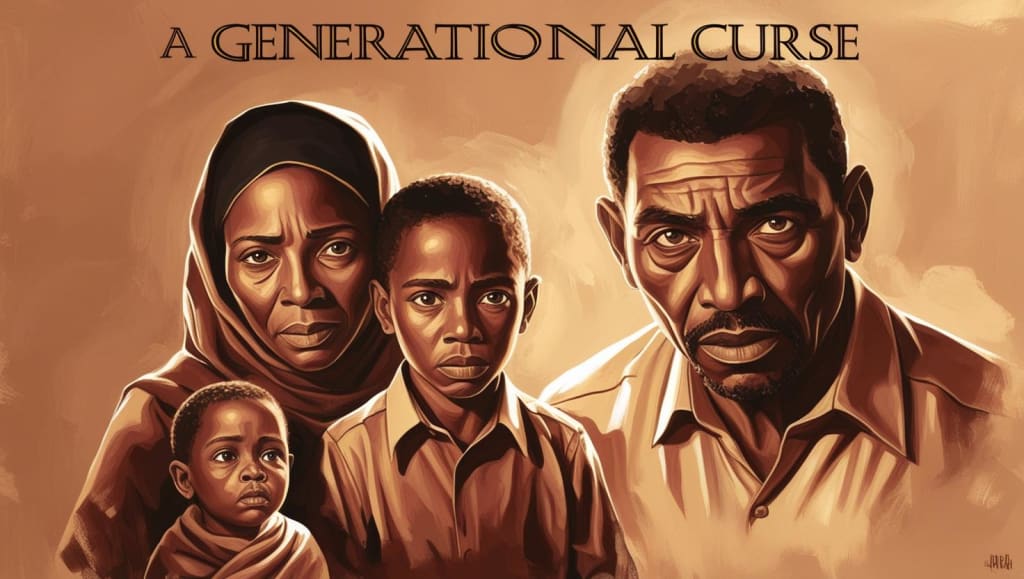
Breaking the Cycle: How to Heal and End Generational Curses
Generational curses aren't just the stuff of superstition. In today's world, they’re real, tangible patterns—cycles of pain, trauma, and dysfunction passed down from one generation to the next. These “curses” often show up as emotional neglect, addiction, abuse, poor communication, financial instability, or toxic belief systems. And while we may not be responsible for the trauma that shaped our families, we *are* responsible for what we do with it.
Breaking a generational curse is one of the most courageous and sacred things a person can do. It requires strength, self-awareness, and an unwavering commitment to heal. It’s hard work. But it’s the kind of work that liberates not just you, but everyone who comes after you.
If you’ve ever thought, *“This ends with me,”* then this guide is for you.
Step 1: Acknowledge the Pattern
You can’t heal what you don’t name. The first step in breaking a generational curse is recognizing that the cycle exists in the first place. This can be painful. It often means seeing your family in a new light, questioning things you once accepted as “normal,” and grieving the version of your childhood you wish you had.
Ask yourself:
- What are the emotional patterns in my family? (e.g., silence, rage, avoidance, manipulation)
- What did I learn about love, conflict, money, gender roles, or self-worth from my parents?
- What behaviors do I repeat that I know are harmful, even if they feel familiar?
Be honest with yourself. This isn’t about blame—it’s about awareness. Awareness is the doorway to transformation.
Step 2: Let Go of Loyalty That Hurts
One of the hardest parts of healing is feeling like you’re betraying your family by telling the truth about your pain. But loyalty that requires your silence, your suffering, or your self-abandonment is not true loyalty.
Breaking a generational curse sometimes means disappointing people. It means saying “no” to traditions that harm you. It means setting boundaries with family members who refuse to change. It might mean becoming the “black sheep” of the family—and that’s okay. The black sheep is often the cycle breaker.
You are not dishonoring your ancestors by healing. You are fulfilling their deepest, unmet wish: to be free.
Step 3: Seek Therapy or Professional Support
Healing deep-rooted trauma is not something you have to do alone. In fact, trying to navigate it alone can lead to burnout, confusion, and emotional exhaustion. Therapy provides a safe space to unpack pain, reprocess memories, and learn new ways of thinking and responding.
Types of therapy that are especially effective for breaking generational trauma include:
- **Inner child work** – healing the wounded younger version of yourself
- **Cognitive Behavioral Therapy (CBT)** – reprogramming harmful thought patterns
- **EMDR** – releasing trauma stuck in the nervous system
- **Family systems therapy** – understanding how your family dynamics shaped you
Even if you can’t afford therapy, there are low-cost clinics, online platforms, support groups, books, and podcasts that can help you start the journey.
Step 4: Learn Emotional Intelligence
Most of us weren’t taught how to identify, express, or regulate our emotions. Many of our parents and grandparents didn’t have the tools—they were in survival mode. Emotional intelligence is the ability to understand and manage your emotions, and it’s a game-changer when it comes to breaking generational curses.
Start by:
- **Naming your emotions** instead of suppressing them (e.g., "I feel anxious right now" instead of "I'm fine").
- **Practicing healthy communication**, like using “I” statements and active listening.
- **Sitting with discomfort** rather than avoiding or numbing it.
The more you connect with your emotional world, the more power you have to rewrite your responses—and model healthier behaviors for others.
Step 5: Set Boundaries Without Guilt
In families where dysfunction is the norm, boundaries can feel like betrayal. But boundaries are not about punishment—they’re about protection. They’re how you teach others (and yourself) what is acceptable in your life.
That might look like:
- Limiting phone calls with toxic relatives
- Saying no without overexplaining
- Refusing to be the emotional dumping ground for others
- Creating physical or emotional distance when needed
You may lose relationships. Some people won’t understand or respect your boundaries. But the relationships that survive and thrive will be rooted in mutual respect—not codependency.
Step 6: Reparent Yourself
If you didn’t receive the love, validation, or support you needed as a child, you can learn to give it to yourself now. This is called *reparenting*, and it’s one of the most powerful tools in breaking a generational curse.
It involves:
- Comforting yourself during emotional distress
- Encouraging yourself with kind words instead of criticism
- Meeting your basic needs (rest, food, movement, connection)
- Creating routines that make you feel safe and stable
You become the parent you needed. And when you learn to nurture yourself, you no longer seek healing through unhealthy relationships or toxic cycles.
Step 7: Forgive—but Only When You're Ready
Forgiveness is a personal journey, not a requirement. It’s not about excusing harmful behavior or pretending the pain didn’t happen. It’s about releasing the grip the past has on your nervous system.
Forgiveness can be for *you*, even if the person never says sorry, even if you never speak to them again. Sometimes it sounds like:
- “You hurt me, and it changed me. But I refuse to let that pain control my future.”
- “I release the hope that the past could have been different.”
- “I no longer carry your shame or your burden.”
You can forgive in silence, from a distance, on your timeline.
Step 8: Build a New Legacy
Breaking a curse isn’t just about what you leave behind—it’s about what you *build* in its place. When you do the work of healing, you create a new standard for love, truth, and emotional safety. You change the story for your children, your nieces and nephews, your community—even your ancestors who never had the chance.
You build:
- A home where children are seen, heard, and valued
- Relationships based on mutual respect and emotional honesty
- A sense of identity rooted in worthiness, not survival
- A family lineage of healing, not harm
You become the blueprint for a new kind of legacy.
Final Thoughts: You Are the Cycle Breaker
Breaking a generational curse is not a one-time decision. It’s a lifestyle. It’s choosing, every day, to do the hard, uncomfortable, often lonely work of healing. It’s choosing to tell the truth when it would be easier to stay silent. It’s choosing love that doesn’t hurt. It’s choosing yourself—not out of selfishness, but out of sacred responsibility.
You are not weak for needing help. You are not dramatic for telling your story. You are not disloyal for setting boundaries. You are brave. You are healing. You are changing history.
And that, my friend, is a kind of magic more powerful than any curse.
About the Creator
Gabriela Tone
I’ve always had a strong interest in psychology. I’m fascinated by how the mind works, why we feel the way we do, and how our past shapes us. I enjoy reading about human behavior, emotional health, and personal growth.
Keep reading
More stories from Gabriela Tone and writers in Confessions and other communities.
The Rhythm of Little Stars
The Rhythm of Little Stars A Journey to Finding the Perfect Baby Schedule When Emma first brought baby Oliver home from the hospital, she thought she was ready. She had read the books, joined the forums, listened to every piece of advice from mothers, grandmothers, neighbors, and strangers in grocery store lines. "Sleep when the baby sleeps," they said. "Feed on demand." "Let them cry it out." "Never let them cry it out."
By Gabriela ToneExclusive • 10 months ago
The Piggy Project
I’ve had so many names in this life I lose track of which ones were ever really mine and which ones I wore because someone needed me to. Some were handed to me before I had words to refuse them, before I knew what they meant, before I knew I could say no. Most weren’t meant to hurt. That doesn’t mean they didn’t leave marks. Marks that told me who I belong to, who I am by way of who claims me, recognizes me in the good and bad, who walks beside me.
By Fatal Serendipity3 days ago in Confessions
My Voice Is Back
There was a strange silence in my account for a while. Not the peaceful kind. The heavy kind. It was the kind of silence that lingers in the background, even when everything else looks normal. The stories were still there. The platform was still moving. People were still writing, sharing, reacting. But for me, something essential had paused. A part of my participation had been quietly switched off.
By Aarsh Malik5 days ago in Confessions


Comments
There are no comments for this story
Be the first to respond and start the conversation.