
Beyond the screen: The importance of accessibility considerations for events and physical spaces
I held a training session and failed to consider accessibility.

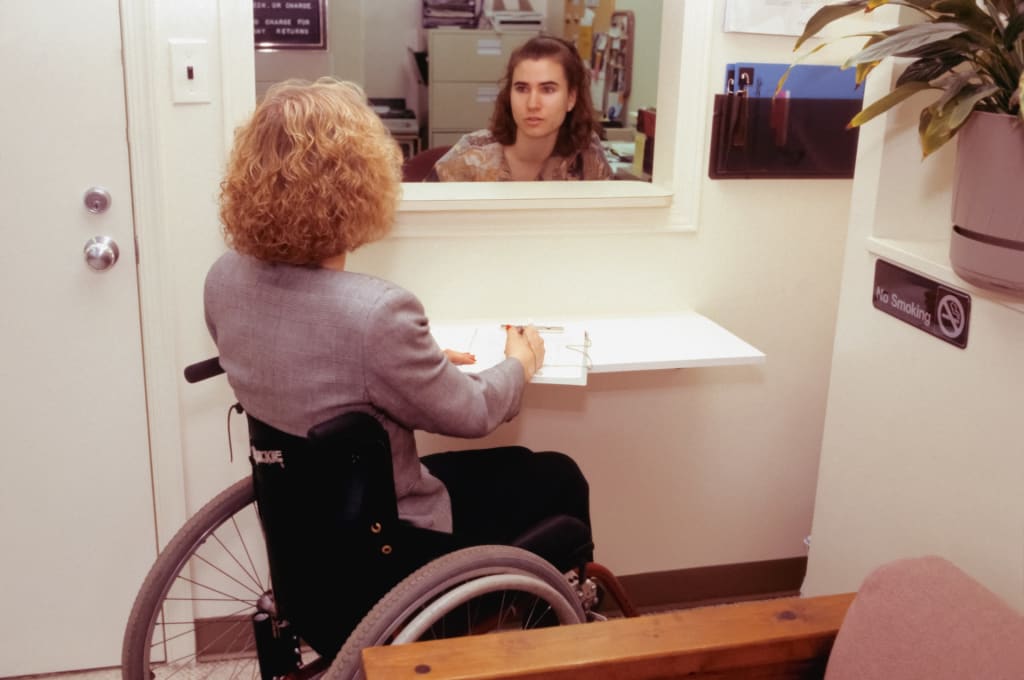
I recently held a training session to train employees on using our company’s new computer system and I failed to consider the accessibility of the training room, which was located in the company’s basement with no lift access, only staircases.
And then, a participant in a wheelchair showed up.
As the participant switched to his crutches and slowly made his way down the staircases to get to the training room, I reflected on what I should have done differently.
1. Ask for your guest’s accessibility requirements
When collating RSVPs for an event, we would often only ask for their dietary requirements. Accessibility requirements are just as important and should be included as well.
Some people may not mention their accessibility requirements unless they are asked, as they may not want to draw attention to their disability or feel like they are inconveniencing others. In addition, some individuals may not be aware of the accommodations available to them or how to ask for them. Others may have come across bad experiences in the past where their requests were not taken seriously or were met with resistance, leading them to avoid asking for accommodations in the future.
Nonetheless, it takes little effort to include an additional line in your email or RSVP form to ask if your guest has any accessibility requirements.
2. Do a site recce prior to deciding on the venue
We should always visit the venue to assess its suitability before deciding on it. Some accessibility considerations include:
i. All entrances should be wheelchair accessible and have ramps, elevators, or lifts.
ii. The venue should have ample accessible parking spaces that are located as close as possible to the main entrance.
iii. Restrooms should be nearby, wheelchair accessible, and have grab bars, lower mirrors, and sinks.
iv. The venue should have designated accessible seating areas with sufficient space for wheelchairs and companions.
v. The lighting and sound should be adjustable for the comfort of individuals with hearing or visual impairments.
3. Staff considerations
Staff members who work at the event should be trained to provide assistance to people with disabilities.
People with disabilities may use assistive technologies such as hearing aids, wheelchairs, or screen readers. Train the staff members to understand how to use these technologies and how to assist attendees who use them.
Sign language interpreters should also be made available for events where deaf or hard-of-hearing people are in attendance.
Assistance animals (for example, guide dogs) should also be allowed to accompany their owners to the event and stay by their side.
4. Event materials considerations
All materials associated with the event should be available in an accessible format. Some examples include:
i. The event website should be designed to meet accessibility standards, with alt-text, subtitles, and captions for all visual and audio content.
ii. All printed materials and signage should be easy to read with large fonts, high-contrast text, and images.
5. Communication considerations
Effective communication is essential to ensure that all participants can fully engage in the event.
The audio-visual equipment should be of high quality, and all visual content should be accompanied by captions or subtitles.
Communication devices, such as FM systems or hearing loops, should be available for people with hearing impairments.
6. Emergency considerations
All emergency procedures should be designed with accessibility in mind.
An emergency evacuation plan should be in place, which includes provisions for people with disabilities. For example, evacuation chairs should be made available. An emergency communication system should be established to alert all participants, including those with hearing impairments, of any emergency situations.
Conclusion
As a digital product designer, I was too focused on the digital world and neglected the physical world. Accessibility considerations should be an integral part of our lives to ensure that everyone can participate fully, regardless of their physical or cognitive abilities.
I’ve learned my lesson and I hope you have learned something useful from my mistake too.
*****
I’m starting out as a writer. If you enjoyed reading what I’ve written, click on the like button or send a tip. Let’s support each other.
About the Creator
Skyler Lin
Hello, I am a newcomer to the world of writing and I enjoy making meaningful human interactions through words, lyrics and designs. Also a green tea and sushi lover.
Keep reading
More stories from Skyler Lin and writers in Confessions and other communities.
The Forgotten Wars That Changed the World
History is often told through the stories of famous wars. Names like the First World War, the Second World War, and the Napoleonic Wars dominate textbooks, documentaries, and public memory. Yet the truth is that many lesser-known conflicts quietly reshaped the world just as dramatically. These wars may not always appear in school lessons, but their consequences still influence modern borders, political systems, and global power structures.
By Aiman Shahid5 days ago in Confessions



Comments
There are no comments for this story
Be the first to respond and start the conversation.