
“Be Careful What You Believe—Even Your Mind Can Trick You”
How I Escaped the Illusions My Own Thoughts Created—and Found Truth Beneath the Lies
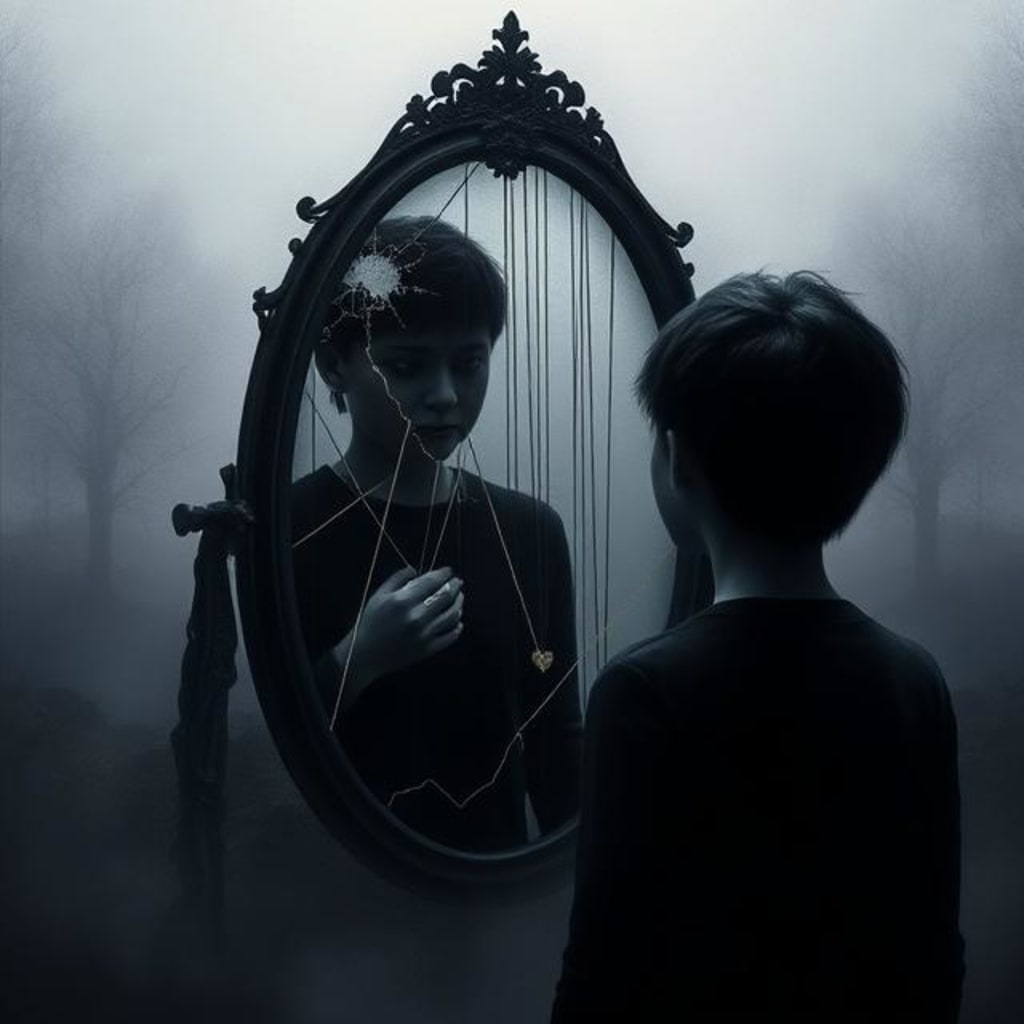
I believed my thoughts were the truth.
Every anxious whisper, every harsh inner criticism, every assumption I made about what people were thinking of me—felt real.
Until one day, I realized:
My mind was lying to me.
And I believed it for years.
Chapter 1: The Voice in My Head
For the longest time, I lived under the rule of an invisible dictator—my own thoughts.
“Don’t say that. They’ll think you’re stupid.”
“You’re not good enough to do this.”
“They’re probably laughing at you behind your back.”
These weren’t random thoughts. They were narratives I carried like truths. Scripts written over years by fear, shame, and childhood conditioning. I didn’t question them. I obeyed them.
And why wouldn’t I? They came from inside me.
But that’s the mistake most people make.
We assume that if a thought arises in our mind, it must be true.
It isn’t.
Chapter 2: The Day I Cracked
It started on a Tuesday.
I had just sent a message to a group of friends, suggesting a get-together. Hours passed. No response.
Immediately, my mind started its usual monologue.
“They’re ignoring you.”
“You’re not really part of the group.”
“You said something wrong last time and now they’re done with you.”
It was a wave of paranoia and shame that crashed so hard, I had to put my phone face-down and take a walk.
That walk changed my life.
Because on that walk, I asked a question I had never dared to ask before:
“What if none of this is true?”
The silence that followed was terrifying.
And then… liberating.
Chapter 3: Belief Is a Filter
Your brain is a prediction machine. It doesn’t just observe reality—it interprets it. Based on past experiences, memories, trauma, culture, upbringing—it builds belief systems.
Then it filters everything you see, hear, and experience through those beliefs.
If you believe you’re not worthy, you’ll interpret compliments as pity.
If you believe people always leave, you’ll see every silence as abandonment.
If you believe you’re broken, you’ll twist every success into a fluke.
That’s what I had been doing. My thoughts weren’t trying to hurt me. They were trying to protect me, using outdated data from an old version of myself.
But the danger was real:
I was living in a reality shaped by lies.
Chapter 4: Meeting the Trickster Within
I started reading about cognitive distortions—mental traps we all fall into. I recognized every one:
Catastrophizing: Expecting the worst-case scenario.
Mind reading: Assuming I knew what others thought.
Filtering: Only focusing on the negative.
Labeling: Defining myself by a single mistake.
It was like someone had handed me a flashlight and said, “Look. Your mind has tricks.”
At first, I felt betrayed by my own brain. But then I realized something powerful:
My mind wasn’t my enemy.
It was a scared child doing its best to protect me.
It needed guidance—not blind obedience.
Chapter 5: Rewriting the Narrative
I began a practice I still use to this day: Thought Inquiry.
Every time I had a painful belief, I’d write it down and ask:
Is this absolutely true?
What evidence do I have?
How do I feel when I believe this?
Who would I be without this thought?
Here’s one example:
Belief: “No one really likes me.”
Evidence: They didn’t reply to my message.
Counter-evidence: They’ve invited me out before. They’ve supported me. One is probably just busy.
Feeling when I believe this: Sad, paranoid, withdrawn.
Who would I be without it? Open, relaxed, confident. I’d probably send another message or just trust they’ll get back to me.
Just asking those questions broke the spell.
Chapter 6: Learning to Pause
The trickiest part wasn’t identifying false thoughts—it was pausing before believing them.
We’re conditioned to believe our minds instantly.
The real mastery is in observing your thoughts without reacting to them.
Now, when I feel that familiar surge of self-doubt or fear, I try to pause and say:
“Okay. That’s a thought. Let me look at it before I believe it.”
Sometimes the thought is valid. Sometimes it’s pure fiction.
The pause gives me power.
Chapter 7: The Stories We Inherit
Here’s another truth I learned:
Not all thoughts are even yours.
Many of the most damaging beliefs in your mind were planted there by others—parents, teachers, society, past partners.
“You’re too emotional.”
“You’ll never amount to anything.”
“Smart people don’t fail.”
These aren’t thoughts. They’re inherited scripts. We carry them like scars, repeating them in our own voice until they feel like our identity.
Healing meant going back and finding where those beliefs started.
It meant meeting my younger self, the one who heard those words, and saying:
“They were wrong. You don’t have to carry that anymore.”
Chapter 8: Belief vs. Truth
Here’s what I’ve come to believe:
Beliefs are not truths. They are agreements we make—consciously or unconsciously—with ideas.
And once you realize that, you can begin to break those agreements.
I no longer believe that I am unworthy.
I no longer believe that being sensitive is a weakness.
I no longer believe that every silence is rejection.
Do those thoughts still show up? Yes. But now I recognize them as shadows—not monsters.
Chapter 9: Living Beyond the Lies
My life has changed.
Not because the world changed—but because my perception did.
I take risks I wouldn’t have before.
I speak up in rooms I used to shrink in.
I no longer spend hours dissecting texts or conversations, trying to read minds.
Instead, I ask. I clarify. I assume good intentions.
That shift alone has saved me years of unnecessary suffering.
Epilogue: A Warning and a Promise
If you’ve read this far, I want to tell you something:
Be careful what you believe—especially if it comes from your own mind.
Your thoughts are not always your friends.
They’re not always true.
But they are a starting point.
If you learn to observe them, question them, and rewrite the false ones—you will find something beneath them far more powerful than belief.
You’ll find truth.
And truth—unlike belief—will set you free.
About the Creator
Keep reading
More stories from Hamza Habib and writers in Confessions and other communities.
“Why Most People Don’t Think Deeply—And How I Started”
I used to live at the surface. My thoughts, emotions, and decisions skimmed the top layer of life, like a skipping stone gliding across a lake. The surface was fast. It was easy. It was… safe. I never paused long enough to notice that I was never really thinking—just reacting.
By Hamza Habib9 months ago in Confessions
The Royal Moment That Made Me Rethink Fame, Forgiveness, and Family
Sometimes the most fascinating stories about public figures are not about fame or success. They are about family. Recently, while reading news about Prince Harry and his relationship with King Charles III, I found myself thinking about how complicated family dynamics can become when the entire world is watching.
By CelebCast Central3 days ago in Confessions




Comments
There are no comments for this story
Be the first to respond and start the conversation.