
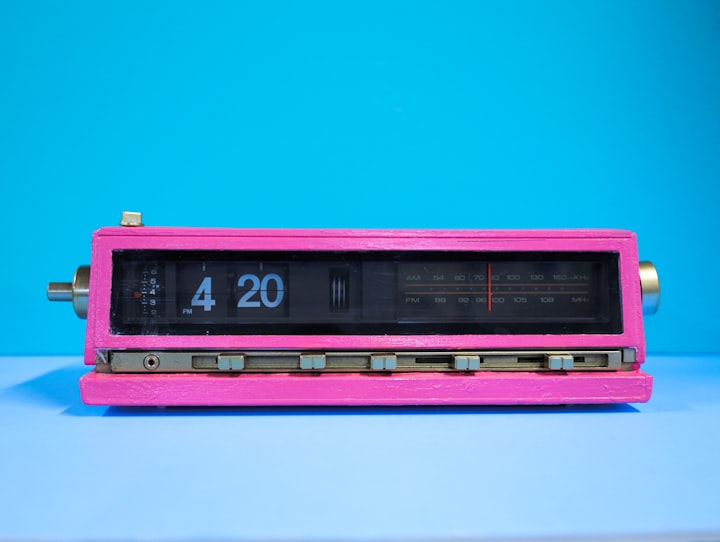
A radio
Compassion for a gang member in the hospital

My patient was trying to commit suicide by refusing to treat a bladder infection. I looked down at him, our first meeting. His aura was black, indicating the premeditated murder of a human. Guess they hadn’t caught him for that one. His gang tats were Latin American and his eyes were psi-black, indicating he didn’t like me at all.
I wasn’t fussed, he couldn’t do much about it, paralyzed from the neck down.
“It’s not going to work,” I told him. His lip sheened with a fine perspiration, cheeks pink. He was mid-thirties, although his body was atrophying and softening with immobility.
His second try with this method. I admired his doggedness. I would do the same in his shoes… well socks I noted. Shoes weren’t going to be necessary for him ever again.
“You’re just going to have a fever, and be miserable, and then get better anyway. You are too healthy. No judgment, but you might as well let me treat it.” He snapped something irremediably foul about my genitalia in Spanish. “Hablo Espanol,” I said. “Yo se,” he said.
An impasse.
We looked at each other, grudging respect. I used to work gang intervention in LA. This wasn’t California, but we understood each other perfectly nonetheless. Just because someone is paralyzed, doesn’t mean they are nice. In the prison wing of our hospital, I hadn’t expected nice. Or reasonable. Now he seemed curious, I wasn’t the normal white girl-doctor. I wasn’t going to cut him any slack.
“Okay,” I said. “I’ll be back tomorrow.”
His chart said he’d been in the unit for months. In the general population, he would be prey for the other inmates, so he stayed in limbo at the hospital, but it wasn’t a quad ward. The nursing staff had no specialty training and there was no rehab medicine. The TV bolted overhead was his only entertainment, changing the channel wasn’t an option.
It was hell I thought. This was literal hell on earth.
I returned the next day. A perfunctory exam, aside from the fever his clinical status hadn’t changed in months.
“How long have you been in the bed?” I asked.
“What’s it to you? he demanded. He was irritable, the infection was exactly as I predicted.
“If I had to lie here without moving I would be suicidal too,” I said. He held my gaze, my honesty unexpected.
“Eight months,” he said.
“What would make you want to live?” I asked.
He looked away from me. “I just want to go outside and feel the sun,” he muttered softly, unexpectedly. “Or listen to music, I used to like the radio.” Then grudgingly, “I’ll take the antibiotics.”
I doubted he had been that candid in years. In unsafe environments, you never disclose true desires, people just use them to hurt you. I knew that from childhood — I suspected he did too.
Exiting by the guard station I investigated. The main prison allowed daily yard walks and prisoners had a commissary that sold radios. But the hospital ward lacked these amenities. He hadn’t been convicted so he couldn’t be transferred to the state inmate quadriplegic ward.
The guard was a young Chicano man. Perky, intelligent, and active. “Don’t let him con you,” he warned. “That said, it’s a bad case, he’s here indefinitely and it’s a miserable existence.”
I trotted to the attending in the trauma bay. A young man from an urban center back East, New York, or perhaps Boston. The smartest surgeon on our team, he’d moved here for the politics. He propped pointy cowboy boots on the desk. “Let him rot,” he said. “He killed a cop.”
“He allegedly killed a police dog when the SWAT team broke into his house unexpectedly, in return, they shot him eight times,” I said. “He hasn’t been convicted of any offense yet.”
“A police dog is still a cop and did more for society than that drug dealer,” he snapped. “You're a bleeding heart Californian aren’t you?”
I didn’t tell him what people from Idaho said about dude-ranch cowboys wearing shiny boots. “It doesn't matter where I’m from,” I said, “What matters is that this man is physically incarcerated by his injuries more than he could ever be legally imprisoned. We couldn’t strap a healthy man to a bed for eight months with no intellectual stimulation even with a conviction, what gives us the right to do so by inaction?”
“Why don’t you fix it,” he said. “I don't want to hear about it.”
“Thank you.” I said, “I will.”
Easier said than done. I spent precious hours of leisure time navigating the prison system. Arguing for the human rights of an inmate who didn’t like me (or my genitalia) much. Months after the rotation ended, I wrote impassioned letters about human-rights abuses, the need for quadriplegics to access art and nature therapy, and how if we can’t do it in Guantanamo, we shouldn’t be able to do it in Texas.
White girl I might be, but white girls are good at one thing, even if they are from Idaho: writing bleeding-heart letters.
I saw the prisoner again before I left — the residency, medicine (it was a tough year). There was a cheap grey radio taped to the side of his bed. Tinny mariachi music wailed on the hot summer air. The TV was off and his face was beatific. Other senses can be heightened in quadriplegics. He just nodded at me stone-faced. I couldn’t stop smiling.
“He goes outside once a week now.” The guard reported. “Honestly, we like it too, we don’t get much fresh air here either.” He hesitated, this slim man, a mirror of my patient if things, choices, had gone differently. “You know, you can’t judge anyone here… when you do this job.” He said carefully, with a direct gaze. “The doctors don’t always understand. But the inmates are all just humans, it doesn’t matter how they got here.”
Compassion can be surprising — who has it, who doesn’t.
Originally published at https://www.kevinmd.com on February 8th, 2022. Reprinted with permission.
About the Creator
Drea Burbank, MD
Drea is a digital nomad with a yoga addiction and a propensity to profanity.
Keep reading
More stories from Drea Burbank, MD and writers in Confessions and other communities.
The Piggy Project
I’ve had so many names in this life I lose track of which ones were ever really mine and which ones I wore because someone needed me to. Some were handed to me before I had words to refuse them, before I knew what they meant, before I knew I could say no. Most weren’t meant to hurt. That doesn’t mean they didn’t leave marks. Marks that told me who I belong to, who I am by way of who claims me, recognizes me in the good and bad, who walks beside me.
By Fatal Serendipity2 days ago in Confessions


Comments
There are no comments for this story
Be the first to respond and start the conversation.