
Under Prague’s Lights: What Slavia’s Fight Against Barcelona Really Meant
Watching Slavia Praha face Barcelona wasn’t about the result—it was about witnessing football’s quiet rebellion against inevitability.

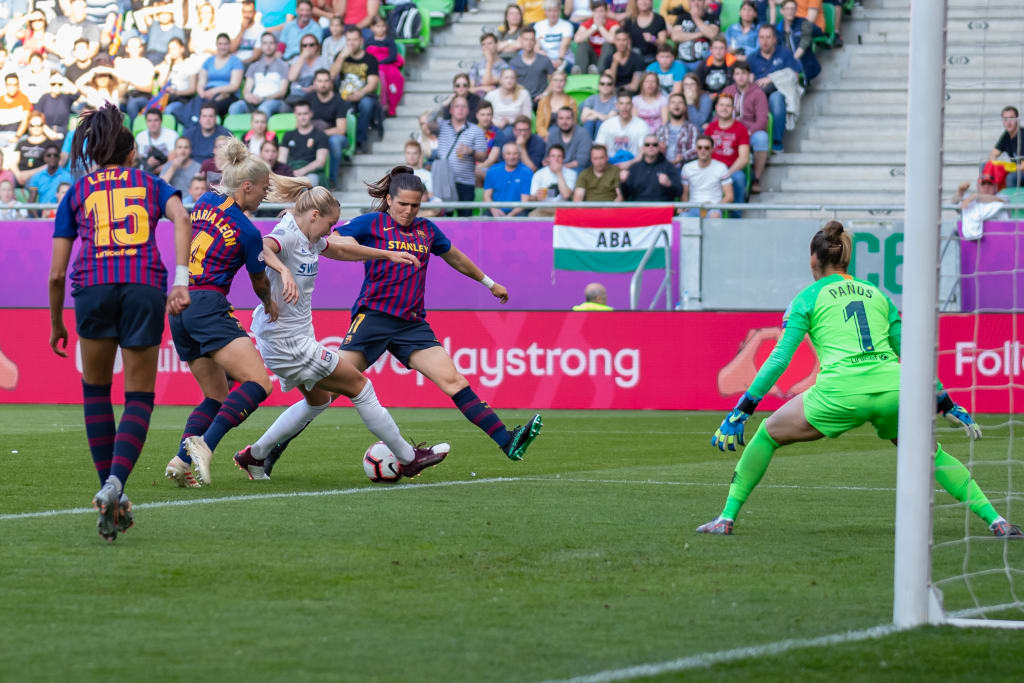
When I looked at the fixture list and saw “Slavia Praha vs Barcelona,” I didn’t expect much beyond a respectful defeat. European nights tend to follow a cruel rhythm when smaller clubs host giants: the crowd sings, the underdog strains, and eventually, the inevitable happens. But as the ball rolled under the floodlights of Eden Arena, something about Slavia’s raw insistence on existing disrupted that rhythm.
I remember the atmosphere first—the smoke curling up into a cold Prague sky, the fans cloaked in scarves more like uniforms than accessories. They didn’t hope for a miracle; they demanded defiance. The match was less about winning and more about refusing to bow before Barcelona’s history. It wasn’t just a football game; it was a declaration of relevance.
Barcelona arrived with their typical aura—possession-heavy superiority, quiet confidence, and the gravitational pull of names like Messi (even if he wasn’t there this time), Lewandowski, or Pedri. Yet what struck me was not the elegance of Barcelona’s patterns but the way Slavia tore through them like misplaced punctuation—interrupting script with sweat. Every tackle felt personal, every counterattack felt like a conversation between effort and expectation.
Football today often feels algorithmic. Superclubs function like corporations—streamlined, predictable, and somewhat detached from the neighborhoods they once represented. Slavia, on the other hand, felt vividly human. Their players didn’t glide; they stumbled, recovered, yelled, and pressed like men fighting for proof of their existence on that stage. Watching them was a reminder that sport, at its purest, is theater built on improbability.
I caught myself leaning forward during an early Slavia counterattack. The pass wasn’t perfect—too heavy, rolling just beyond the forward’s reach—but the crowd roared as though it had gone in. That roar was the sound of a city rediscovering its pulse. For a moment, Barcelona looked mortal. The geometry of their game faltered, undone not by superior tactics but by sheer volume, by belief’s noise.
By halftime, it wasn’t the dominance Barcelona displayed; it was control mixed with discomfort. They wanted composure, but Slavia’s impatience refused to let the match breathe. Every misplaced pass drew applause from the home crowd, as if small failures by the giants validated the locals’ effort. When the inevitable Barcelona goal came, it didn’t silence the stands. Instead, the noise swelled higher, as if conceding was simply another test of endurance.
The match’s real beauty lived in its imperfections. Slavia’s equalizer—a scrappy, untidy goal—was everything football punditry hates and everything football is supposed to be. It was a rebellion against structure, a moment born from chaos. I screamed before realizing I wasn’t rooting for a side; I was rooting for the possibility that belief still mattered.
Of course, Barcelona found its way back. They always do. Yet even as the scoreboard returned to expected order, something had shifted. The second half unfolded not as domination but as negotiation—a push and pull between pedigree and persistence. When the final whistle blew, and Slavia’s players collapsed to their knees, I didn’t feel pity. I felt admiration. Losses like this one carry weight because they are shared differently between those who give everything and those who expect to win.
Afterward, walking through Prague’s narrow streets, I thought about how little football owes to justice. It’s indifferent to who deserves what. But sometimes, a match like this offers a more intimate justice—the kind that exists in memory. I realized Slavia didn’t need the victory to claim something meaningful. They had already made Barcelona adjust, sweat, and hesitate. They had forced art into an argument.
Maybe that’s what I love most about football’s uneven landscape: the defiance of scale. For ninety minutes, money and fame are reduced to effort and nerve. Every time a smaller club stands upright under impossible odds, the sport feels closer to its roots. Watching Slavia Praha that night reminded me that the beauty of football lives not in its certainty but in its interruptions.
Football, like life, is richest when someone forgets they’re supposed to lose—and decides not to.
About the Creator
Trend Vantage
Covering the latest trends across business, tech, and culture. From finance to futuristic innovations, delivering insights that keep you ahead of the curve. Stay tuned for what’s next!
Keep reading
More stories from Trend Vantage and writers in Cleats and other communities.
Ultimate Guide to NFL: Top Highlights, Players, and Game Day Tips
The National Football League (NFL) is the premier professional American football league in the United States, renowned for its intense competition, rich history, and cultural significance. Established in 1920 as the American Professional Football Association, it was renamed the NFL in 1922 and has since grown into a multi-billion dollar enterprise with a massive global following.
By Trend Vantage5 months ago in Cleats
Why the Titans’ Hiring of Robert Saleh is a Risky Move
The Tennessee Titans’ decision to hire Robert Saleh as their new head coach has generated considerable buzz, but a closer examination suggests this move carries significant risk. While Saleh brings a strong defensive pedigree, having been the defensive coordinator for the San Francisco 49ers, past performance and current team circumstances make it unclear whether he can deliver meaningful success in Tennessee.
By Logan M. Snyderabout 7 hours ago in Cleats
Top 5 Best Fielders in WPL History
The Women's Premier League (WPL) has quickly become one of the most exciting T20 leagues in women's cricket. From strong batting to smart bowling, the league showcases world-class talent every season. But it is the fielding that often changes the outcome of tight matches. The best fielders in WPL have proven that quick reflexes, safe hands, and smart positioning can make the difference between winning and losing.
By Sports Record and Stats 6 days ago in Cleats


Comments
There are no comments for this story
Be the first to respond and start the conversation.