
The Treasure of the Sierra Madre (1948) Review
1948 American Western film written and directed by John Huston
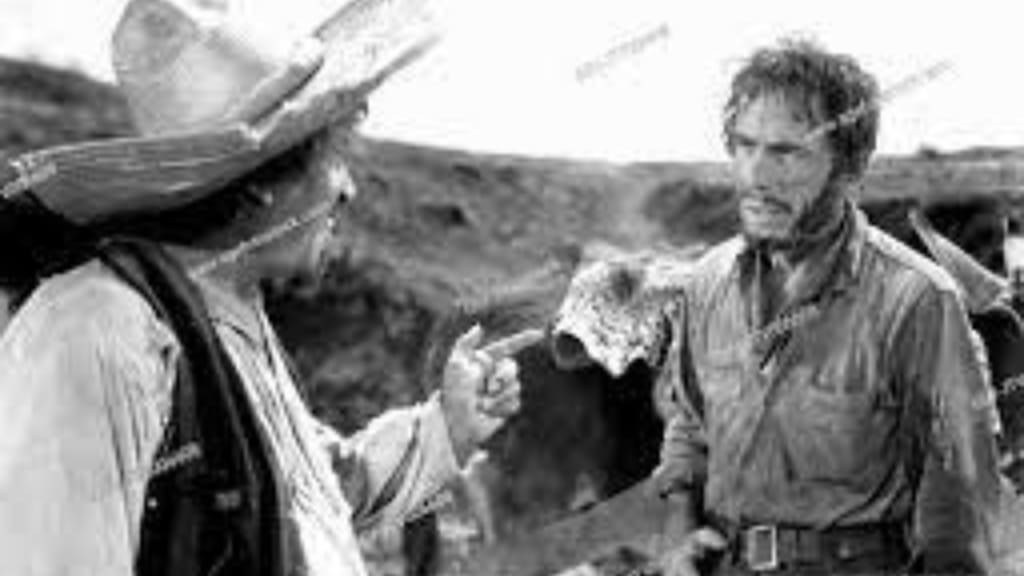
The Treasure of the Sierra Madre is a 1948 adventure film directed by John Huston and starring Humphrey Bogart, Walter Huston (the director's father), and Tim Holt. The film tells the story of three down-on-their-luck Americans who journey to Mexico in search of gold. Along the way, they must confront various challenges and conflicts, both internal and external, as they become consumed by their quest for riches.
One of the strengths of The Treasure of the Sierra Madre is its exploration of the darker aspects of human nature. The film presents a bleak view of humanity, in which greed and paranoia reign supreme. The characters are all flawed and morally ambiguous, and their pursuit of wealth brings out the worst in them. The film's themes are further reinforced by its stark, noir-like cinematography, which emphasizes the shadows and contrasts of the Mexican landscape.
The three main characters are all well-drawn and compelling. Humphrey Bogart plays Fred C. Dobbs, a desperate and cynical drifter who becomes increasingly paranoid and violent as the film progresses. Walter Huston plays Howard, an experienced prospector who provides the voice of reason and wisdom. Tim Holt plays Curtin, a young and idealistic prospector who struggles to balance his desire for wealth with his sense of morality.
The performances in the film are uniformly excellent, with each actor bringing nuance and depth to their roles. Bogart in particular is outstanding, delivering one of his most memorable and complex performances as Dobbs. The character's descent into madness and violence is both chilling and tragic, and Bogart portrays it with a raw intensity that is truly remarkable.
The film's screenplay, also written by Huston, is another of its strengths. The dialogue is sharp and memorable, and the story unfolds in a way that is both suspenseful and thematically rich. The film explores issues of trust, greed, and morality in a way that is both thought-provoking and entertaining.
One of the film's most iconic scenes is the sequence in which Dobbs goes insane and begins ranting about the other characters' supposed betrayal. This scene is a masterclass in acting and filmmaking, with Bogart delivering a performance that is both terrifying and heartbreaking. The scene is also notable for its use of close-ups and shadows, which help to emphasize the character's descent into madness.
Another standout aspect of the film is its use of location shooting in Mexico. The film was shot on location in various parts of Mexico, including Durango, Tampico, and Mexico City. The landscapes and architecture of these locations are captured beautifully on film, giving the film an authentic and immersive feel.
The Treasure of the Sierra Madre has had a lasting impact on cinema, both as a classic film in its own right and as an influence on later films. The film has been referenced and parodied in various other works, including The Simpsons and Family Guy. It has also been cited as an influence on later filmmakers, including Quentin Tarantino and the Coen brothers.
In conclusion, The Treasure of the Sierra Madre is a classic adventure film that explores the darker aspects of human nature with intelligence and depth. The film's themes of greed, paranoia, and morality are timeless, and its performances and screenplay are both outstanding. Humphrey Bogart's performance as Dobbs is particularly noteworthy, and the film's use of location shooting in Mexico gives it a sense of authenticity and immersion. The Treasure of the Sierra Madre is a must-see for any fan of classic cinema, and it remains as powerful and relevant today as it was when it was first released over 70 years ago.
About the Creator
Keep reading
More stories from Nishank Koul and writers in Cleats and other communities.
Yojimbo (1961) Review
Yojimbo, directed by Akira Kurosawa, is a 1961 samurai film that has become a classic of Japanese cinema. The film tells the story of a ronin, or masterless samurai, who wanders into a small town in the midst of a brutal conflict between two rival gangs. The ronin, named Sanjuro, decides to play the gangs against each other in order to profit from the chaos.
By Nishank Koul3 years ago in Cleats
Top 5 Highest Individual Scores for RCB in WPL
Royal Challengers Bangalore (RCB) has seen some incredible batting performances in the Women's Premier League (WPL). Over the seasons, several players have delivered match-winning innings, scoring big and giving RCB crucial advantages. The team's highest individual scores for RCB in WPL reflect both aggressive hitting and smart batting under pressure.
By Sports Record and Stats 4 days ago in Cleats
Wild Card Weekend Recap: What Happens Now?
I think I figured out why I love Wild Card Weekend so much. It's because it's the first playoff anything of the calendar year. The NFL season starts in the fall, and once upon a time, the champion was crowned either on or slightly before New Year's. The evolution of the NFL schedule has resulted in the playoffs starting just into the New Year, and currently, the final week of the season falls on the first weekend of the New Year, with Wild Card Weekend coming a week after that. So yes, chronologically, the NFL's Wild Card Weekend serves as the first playoff anything of the calendar year.
By Clyde E. Dawkins7 days ago in Unbalanced



Comments
There are no comments for this story
Be the first to respond and start the conversation.