
The Significance of Cricket: A Sport that Unites, Empowers, Preserves Cultural Heritage and is the King of Sports.
Cricket: Rules, History and Importance

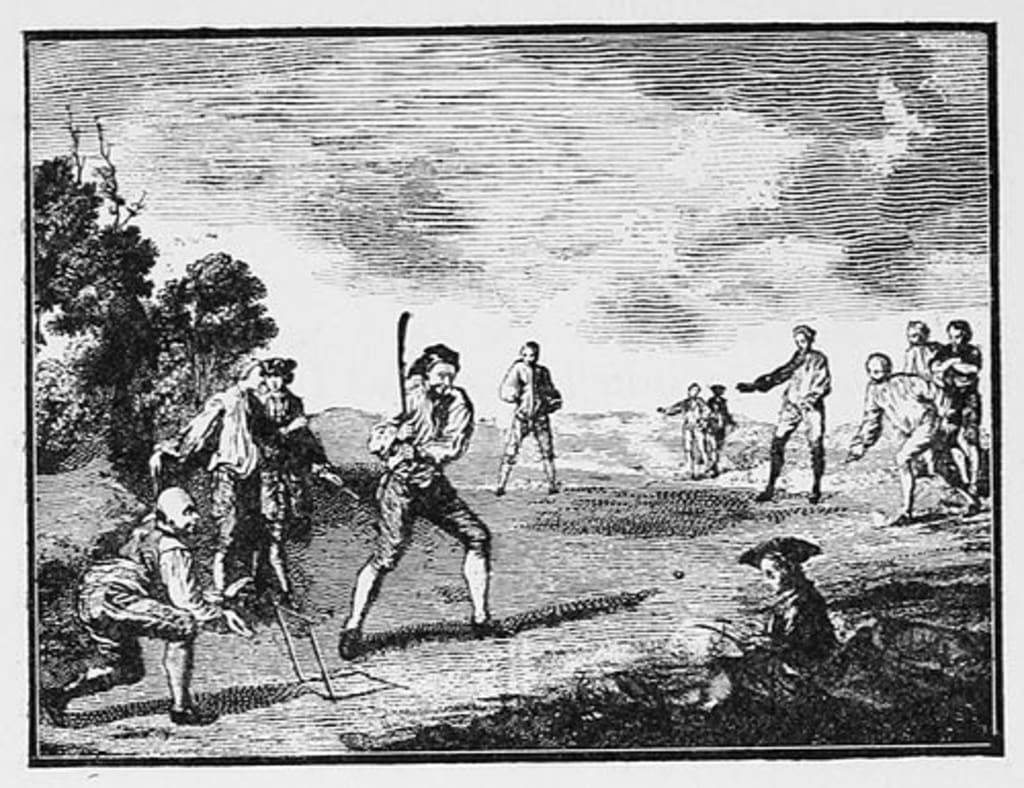
Cricket is a sport played between two teams of eleven players each. The game is believed to have originated in England in the 16th century, and has since become popular in countries such as Australia, India, South Africa, and the West Indies.
History:
Cricket has a rich and fascinating history. The earliest recorded cricket match took place in Kent, England, in 1646, although the game may have been played in some form for centuries before that. Cricket was played by the British Empire's colonial subjects, and it spread to other parts of the world during the 18th and 19th centuries.
Rules:
Cricket is played on a circular or oval-shaped field with a rectangular 22-yard-long pitch in the center. The objective of the game is for one team to score more runs than the other team. The team that scores the most runs at the end of the match wins.
The batting team sends out two players at a time to score runs, while the fielding team has all 11 players on the field at the same time. The bowler throws the ball to the batsman, who tries to hit the ball and score runs by running back and forth between the wickets.
The types of cricket matches include Test matches, One Day Internationals (ODIs), and Twenty20 (T20) matches.
Test matches are the longest form of cricket, lasting up to five days, and are played between two international teams. Each team has two innings, and the team with the most runs at the end of the match wins.
ODIs are played over a single day, with each team having one innings. The team that scores the most runs at the end of the match wins.
T20 matches are the shortest form of cricket, lasting about three hours. Each team has one innings, and the team that scores the most runs at the end of the match wins.
In all types of cricket matches, there are various rules and regulations that govern gameplay, including the use of equipment such as the ball, bat, and protective gear, as well as fielding positions, the number of overs, and the umpires' decisions.Cricket is a sport that promotes unity, boosts the economy, promotes social change, and preserves cultural heritage. It has a large global following and brings people together from diverse backgrounds and cultures. Cricket generates significant revenue through ticket sales, broadcasting rights, sponsorships, and merchandise, providing employment opportunities for many people. It has been used as a tool to promote peace and equality and has become a part of the cultural identity of many nations. Overall, cricket is an important sport with significant cultural, economic, and social importance.
Cricket offers several health benefits for both players and spectators. The sport involves running, jumping, throwing, and catching, which helps to improve cardiovascular health and muscular endurance. The repetitive motions of batting, bowling, and fielding also help to improve hand-eye coordination, balance, and agility.
In addition, playing cricket requires teamwork, communication, and strategic thinking, which can help to improve mental health and cognitive function. Furthermore, cricket is played outdoors, providing exposure to sunlight and fresh air, which can boost vitamin D levels and improve mood.
Spectating cricket can also have health benefits, as it encourages social interaction and can help to reduce stress and anxiety. Overall, cricket is a sport that offers both physical and mental health benefits, making it a great choice for those looking to improve their overall wellbeing.
The top 10 cricket countries (based on the ICC rankings as of April 3, 2023) are:
England
India
New Zealand
Australia
South Africa
Pakistan
Bangladesh
Sri Lanka
West Indies
Afghanistan.
About the Creator
Keep reading
More stories from Fawaz Haider and writers in Cleats and other communities.
The Courage to Keep Writing
Jack was a young man who had a dream of becoming a successful writer. He loved to read books and write stories since he was a child, but he never had the courage to share his work with anyone. He was afraid of rejection and criticism, and he doubted his own abilities. He thought he was not good enough to be a writer.
By Fawaz Haider3 years ago in Motivation
Top 5 Highest Successful Chases by New Zealand Against India in ODIs
New Zealand has always been a strong team when it comes to chasing big totals in One Day Internationals (ODIs). Over the years, they have produced some unforgettable performances against India. In this article, we explore the top 5 highest successful chases by New Zealand against India in ODIs. These matches highlight New Zealand's batting depth, strategic approach, and ability to handle pressure against a strong Indian bowling attack.
By Sports Record and Stats 5 days ago in Cleats
Top 10 Batsmen with Most Runs in ODI Cricket
One-Day International (ODI) cricket has seen many legendary batsmen who have left a lasting mark on the sport. These players are admired for their ability to score consistently, handle pressure, and build big innings. Over the years, ODI cricket has produced some of the finest batters who have achieved the most runs in ODI cricket.
By Sports Record and Stats about 9 hours ago in Cleats



Comments
There are no comments for this story
Be the first to respond and start the conversation.