
Is Ruben Amorim Part of the Problem at Old Trafford?
Can Ruben Amorim Turn Around United's Fortunes?

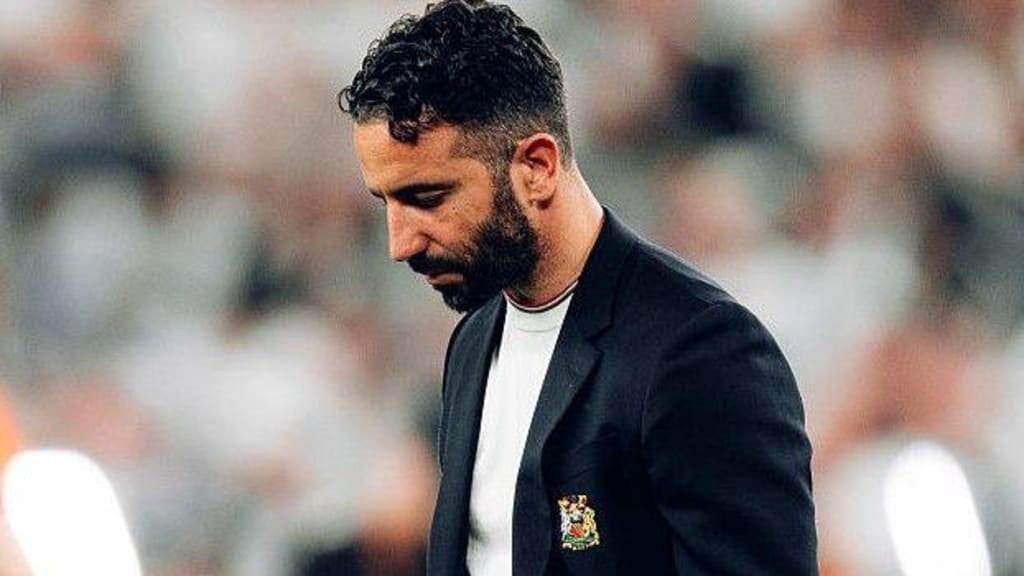
As the dust begins to settle on the 2024 Europa League final, the true scale of the challenge facing runners-up Manchester United is beginning to dawn. Certainly, head coach Ruben Amorim cut a despondent and apologetic figure at full-time, against a backdrop of fan and player unrest.
The first six months of Amorim’s Old Trafford reign have been tumultuous, from the decision to jettison Marcus Rashford after only three matches to a run of just six wins in 26 Premier League matches.
After the failure to win the Europa League and qualify for the UCL next season, both Amorim and the club now find themselves at a crossroads. But is Amorim really part of the problem at Old Trafford, and can he possibly be part of the solution?
How has Amorim Fared at Old Trafford?
When Ruben Amorim arrived at Old Trafford on November 1st, 2024, Manchester United were joint four points off the Champions League places and unbeaten in their previous four matches. So, although they were 13th in the league, fans were still hopeful that the new coach could secure European qualification.
Amorim also had a burgeoning reputation as one of the world’s most promising coaches, having taken Sporting Lisbon to two domestic titles in just four seasons.
However, the Portuguese has actually taken United backwards, both in terms of results and the quality of their performances. His run of six victories in 26 EPL matches underpins a paltry win-rate of just 23.07, while Amorim has recorded 14 league defeats and seven at home.
The club is 16th in the Premier League table since Amorim’s arrival, and just 10 points off the bottom three. They’ve only scored 30 goals in 26 matches too, with the team producing plodding and turgid football while continuing to look vulnerable in wide defensive areas.
He has fared slightly better in cup competition, winning 10 out of 15 ties and losing just three. However, one of these defeats came in Bilbao in the showpiece Europa League final, while Fulham and Spurs eliminated United from the FA Cup and League Cup respectively.
Amorim’s overall record has yielded 16 victories from 41 matches, and a win-rate of just 39.02%. The Portuguese coach has failed to win 25 of these games and lost 17, which is the lowest since Frank O’Farrell’s tenure between 1971 and 1972 (37.04%).
The Europa League Final - United in Microcosm
Of course, Amorim could have salvaged something from the season with a win in Bilbao, namely UCL qualification and a much-needed cash windfall of £100 million.
Despite dominating possession and conceding just a single attempt on goals against Spurs, however, United were completely toothless and struggled to create enough in the attacking third.
Not for the first time this season, Amorim picked a flawed and seemingly confused starting 11. The selection of Noussair Mazraoui and Patrick Dorgu as wing backs left United without any thrust or end product in the wide areas, for example, while Mason Mount was completely ineffective in one of the number 10 positions.
Bruno Fernandes was also completely nullified in a deeper central midfield role, rendering him unable to create in the final third and join an isolated Rasmus Hojlund in the Spurs box. Luke Shaw looked barely fit and passive at left centre back, while Alejandro Garnacho (who remains one of the few Manchester United players to show for the ball and commit defenders) was left idling on the bench for more than 70 minutes.
Although much of the criticism aimed at Amorim is focused on his tactical inflexibility and devotion to the 3-4-2-1 shape, this match was another example of the Portuguese manager’s inability to select a balanced team that combines physicality and defensive cover with technique and movement in attack.
He also failed to respond to the pattern of the match as it unfolded. Even as Spurs dropped increasingly deeper in the second half, he resisted the urge to introduce Garnacho in attack, or switch Amad Diallo to right wing back and introduce an additional forward player.
When he did make changes, they were too late and largely like-for-like, suggesting that he struggles to be proactive and change games even within his preferred formation.
Amorim’s Stubbornness and ‘Scorched Earth’ Approach
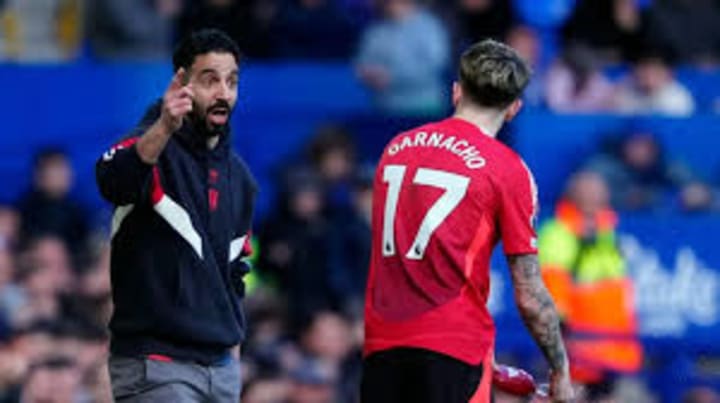
His tactical flaws and stubbornness aside, Amorim has also adopted a questionable, ‘scorched earth’ approach since rocking up at Old Trafford.
This saw Rashford banished from the first team after scoring three goals in three matches, with Amorim citing vague concerns about the forward’s attitude in training. Sure, nobody is suggesting that the inconsistent Rashford can be relied upon to take United forward in the future, but he had scored seven goals in 19 starts prior to the fallout and would have offered an additional option in attack as the season progressed.
His treatment of Garnacho has also raised eyebrows. The Argentine was also initially jettisoned alongside Rashford, and endured a series of ups and downs since being recalled to the squad. His outburst at the end of the Europa League final also suggests that he’s going to leave in the summer, despite being the club’s second-top scorer in 2024/25.
By also refusing to showcase any kind of tactical flexibility, Amorim has left his team struggling in a sophisticated formation that exposes their collective lack of pace, technique and physicality. His reliance on the 3-4-2-1 shape has also undermined United’s core attacking strengths, which could be found on the wings and in Bruno Fernandes as an advanced number 10.
Should United Stick with Amorim?
Ultimately, these factors and United’s torrid form leaves Amorim under intense scrutiny and pressure. At the same time, he’ll only have nominal funds with which to strengthen in the summer, at least without selling top players like Garnacho, Fernandes and the talented Kobbie Mainoo.
The club therefore has to decide whether it’s right to proceed with Amorim and invest in players for his specific system and style of play. If not, they must determine a clear and viable alternative, whether they intend to rebuild slowly in line with their financial circumstances or take risks in an attempt to climb the table quicker.
For now, it seems as though the club remains behind Amorim, and the Portuguese will be backed in the summer as he looks to reverse fortunes on the pitch. However, he’ll have to hit the ground running next season, and at least ensure that the team is able to play effectively in his preferred 3-4-2-1 formation.
If given time and funds, Amorim could still prove part of the long-term solution at Old Trafford. However, this appears a distant and fanciful dream as the 2024/25 season draws to a close, especially if Amorim refuses to adjust his approach at all or leverage a system that makes the most of the players at his disposal.
About the Creator
Keep reading
More stories from Lewis Humphries and writers in Cleats and other communities.
For Vocal - What Has Arne Slot Changed at Liverpool?
When Jurgen Klopp departed Anfield in the summer, many predicted a period of turbulence and transition for the Reds. After all, the German remains one of the game’s most revered and decorated coaches, while he managed to win eight trophies during his time on Merseyside.
By Lewis Humphriesabout a year ago in Cleats
The Cleats That Carried Messi
In the dusty streets of Rosario, Argentina, a young boy named Lionel Messi spent countless hours kicking a tattered ball with friends, wearing scuffed and worn-out cleats that had been handed down from older cousins, and although the shoes were small, fragile, and often ripped at the seams, they molded perfectly to his feet, becoming more than footwear; they became extensions of his body, allowing him to dribble past defenders with an uncanny fluidity, turn sharply without losing balance, and strike the ball with precision that astonished everyone who watched him, and as he ran barefoot on certain occasions when the cleats failed, he realized that skill and determination were more important than perfect equipment, because greatness was built on effort, perseverance, and the will to excel even when conditions were far from ideal.
By The Curious Writera day ago in Cleats
Thief In The Night
To the thief in the night that took and replicated what once was mine: Honestly, I feel kind of bad for you. It’s funny, because we hardly know each other. I only know of you through the magazines you’ve written and the broadcasts you have televised in the past — as well as through the public mentions of you from your show business connections there.
By Snarky Lisa8 days ago in Humans


Comments (1)
Amorim's tenure at Man United has been rough. His win rate in the EPL is abysmal, and the team's style of play is uninspiring. They've struggled to score goals and look shaky defensively. In cup competitions, he's had some success but that Europa League final loss is a big blow. Do you think he should be given more time to turn things around, or is it time for a new manager?