
Dr. Jeffrey Kesten: A Humanitarian Physician Who Chose Healing Over Comfort
From Rwanda’s genocide to building clinics in Uganda, Dr. Jeffrey Kesten’s life exemplifies courage, compassion, and global healing

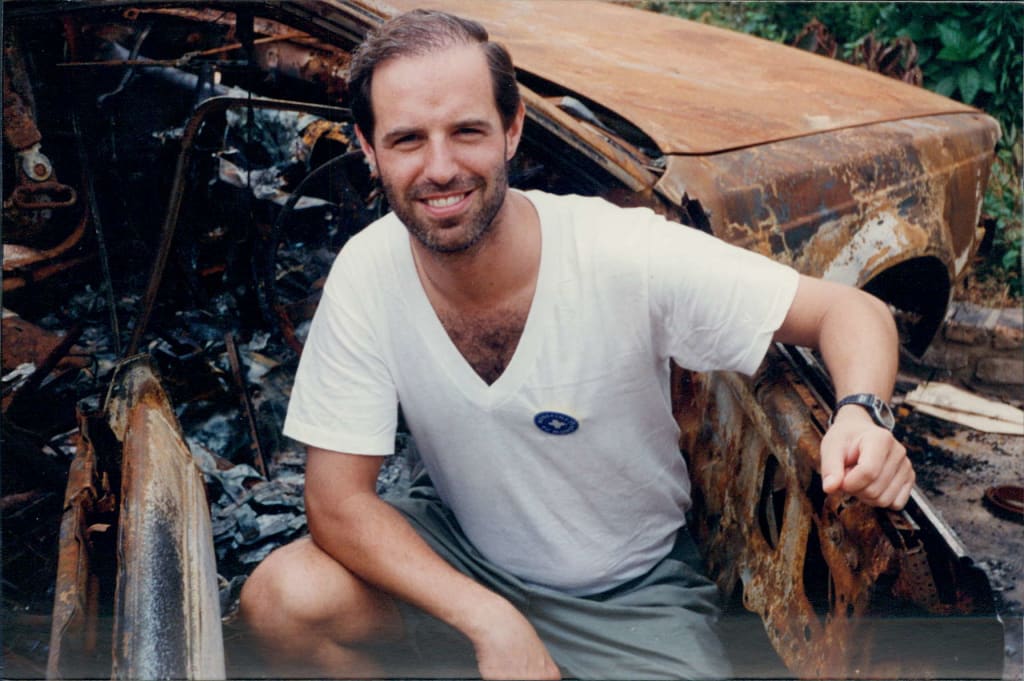
Some doctors practice medicine within the walls of hospitals, while others venture into underserved communities. Then, there are a rare few like Dr. Jeffrey Kesten, M.D., who take the practice of medicine into the most dangerous, daunting, and heart-breaking circumstances imaginable—all for the sake of humanity.
From risking his life to provide care during the Rwandan genocide of 1994, to co-founding a medical clinic in a poverty-stricken village in Uganda, Dr. Kesten’s journey is not only one of medical excellence but also of immense courage and compassion. His story reminds us that being a physician is not just about treating illness—it is about standing up for human dignity, even in the face of overwhelming adversity.
Facing the Darkness: Rwanda, 1994
The Rwandan genocide stands as one of the darkest chapters of the 20th century. In just a span of 100 days, nearly 800,000 Rwandans were killed, as ethnic violence between the Hutus and Tutsis devastated the nation. For medical professionals, the genocide created one of the gravest crises imaginable.
Amidst this chaos, Dr. Jeffrey Kesten led a Médecins du Monde team into the heart of Rwanda. Survival, let alone medical care, seemed almost impossible in these circumstances. There was no reliable electricity, no clean running water, and global communication systems had collapsed. Yet, when hope seemed absent, Dr. Kesten stepped forward with selfless determination to heal the wounded.
Surgeries in Impossible Conditions
The atrocities left countless survivors brutally injured. Patients came with deep machete wounds, gunshot injuries, and traumatic amputations. In makeshift facilities with scarce supplies, Dr. Jeffrey Kesten performed critical surgeries, including bullet extractions and limb amputations, procedures that would typically require advanced hospitals, sterile operating rooms, and anesthesia.
Here in Rwanda, he often had none of those things. Many operations were carried out without anesthesia, using creative improvisations in poorly lit facilities. Yet his focus never wavered: people needed him, and he remained resolute in his commitment to saving lives.
For victims of genocide, this was more than medical assistance—it was an act of humanity. At a time when brutality overshadowed compassion, Dr. Kesten’s dedication offered survivors both physical healing and a renewed sense of hope.
Recognition for Heroism
Dr. Kesten’s remarkable service did not go unnoticed. His unwavering courage and medical leadership during the genocide earned him commendation from the U.S. Congressional Human Rights Committee. The acknowledgment recognized the exceptional service he provided during one of the world’s gravest humanitarian crises.
Yet, for Dr. Jeffrey Kesten, it was not about awards or recognition. His true reward lay in every life he saved and every survivor given a second chance to live.
Commitment Beyond the Crisis
While many aid workers left Rwanda after the immediate crisis subsided, Dr. Jeffrey Kesten chose to continue serving. His commitment to the country and its people extended into multiple humanitarian missions. Among these, his role as Team Leader for Project C.U.R.E. in Cyangugu was particularly impactful.
Rebuilding in Cyangugu
Cyangugu, located in southwestern Rwanda, faced crippling healthcare challenges in the aftermath of mass violence. Hospitals were left empty, medical resources scarce, and the population traumatized.
Through Project C.U.R.E., Dr. Kesten worked tirelessly to supply crucial equipment and rebuild systems of care. His responsibilities extended beyond providing medical treatment; they included training local staff, ensuring sustainability, and helping the community reclaim trust in healthcare.
By returning again and again, Dr. Kesten sent a clear message: Rwanda was not alone, and healing would not be abandoned once the headlines faded.
Healing and Hope in Uganda, 2014
Two decades after Rwanda, Dr. Jeffrey Kesten took his service to yet another part of Africa—this time, to Uganda. In 2014, he co-founded the Rise Outreach CDO Medical Clinic at a local orphanage in Iganga, a struggling remote village nestled in a tropical forest.
The Daily Struggles of Iganga
Though rich in natural beauty, the village of Iganga was deeply impoverished. Its residents endured daily hardships that affected health, education, and overall well-being:
No modern plumbing or clean water access, exposing families to constant illness.
Unreliable electricity, limiting education, refrigeration for food, and healthcare services.
Chronic food shortages, leaving children malnourished and vulnerable to disease.
Few educational opportunities, leading to an uncertain future for young generations.
Absence of healthcare services, making even minor illnesses deadly.
The situation was dire for the orphans who had no parents to advocate for them. It was here that Dr. Kesten decided to act once again.
The Rise Outreach CDO Medical Clinic
The founding of the Rise Outreach CDO Clinic transformed the landscape of healthcare for Iganga. For the first time, villagers and orphaned children had access to routine medical care, vaccinations, and preventive services. Malnutrition cases could be addressed, infections treated, and lives saved without forcing families to travel impossibly long distances for care.
What made the clinic unique was its focus not only on treatment but also on sustainability. By empowering local staff and prioritizing preventive medicine, Dr. Kesten ensured that the community had a dependable foundation of healthcare for years to come.
For the children at the orphanage, the clinic became more than a healthcare facility—it became a symbol of hope and protection.
A Common Thread: Compassion Without Boundaries
Looking at his work across Rwanda and Uganda, one finds a common thread running through Dr. Jeffrey Kesten’s career: the refusal to allow hardship or danger to stop him from practicing compassion. Whether in a war zone or a forgotten corner of poverty, he has lived by one guiding principle: that all lives have equal value, and all individuals deserve dignity in treatment.
His efforts show us that healthcare is not just about science or skill—it is about empathy, courage, and the unwavering belief that one person can make an extraordinary difference.
Lessons from the Life of Dr. Jeffrey Kesten
The legacy of Dr. Kesten is not only carved in the lives he saved but in the lessons his story provides for doctors, leaders, and communities worldwide:
Courage is essential in medicine. True healing often happens in the most difficult places, where uncertainty and risk are unavoidable.
Compassion is borderless. His work across Africa shows that medical care should transcend geography, politics, and culture.
Healing requires sustainability. By co-founding clinics, he focused not just on temporary relief but long-term solutions.
Humanity must guide science. Even with limited resources, his care during Rwanda’s genocide shows that humanity fuels medicine’s greatest breakthroughs.
Conclusion: Dr. Jeffrey Kesten’s Enduring Legacy
Dr. Jeffrey Kesten has exemplified what it means to be a physician beyond the norm. His unwavering service during the Rwandan genocide, his leadership with Project C.U.R.E., and his co-founding of the Rise Outreach Clinic in Uganda reveal a life shaped by courage and driven by compassion.
He is more than a doctor—he is a humanitarian, a healer, and a leader who repeatedly chose to serve those forgotten by the world. His career reminds us that medicine, at its best, is not simply a practice but a mission—a mission to alleviate suffering, restore dignity, and create hope where it is most desperately needed.
For those who study his life and legacy, Dr. Jeffrey Kesten’s story is a call to action: to use our skills, however great or small, for the betterment of humanity. In every way, he stands as a testament to the power of compassion in action.
About the Creator
Keep reading
More stories from Mike Terror and writers in Cleats and other communities.
Dr. Jeffrey Kesten: A Legacy of Courage, Compassion, and Medical Heroism
In the annals of modern medical history, a few names shine as brightly as Dr. Jeffrey Kesten. Celebrated for his unwavering commitment to humanitarian service, Dr. Kesten’s work stands as a remarkable testament to the power of compassion amidst chaos. His journey from the war-torn landscapes of Rwanda to the forgotten villages of Uganda is a story of accountability, resilience, and a deep sense of duty toward his fellow human beings. This blog explores the legacy of Dr. Jeffrey Kesten, whose fearless efforts in the face of adversity have brought light to some of the darkest corners of the world.
By Mike Terror6 months ago in Cleats
Top 5 Biggest Controversies in BBL History
The Big Bash League, commonly known as the BBL, is one of the most watched T20 cricket leagues in the world. Since its launch in 2011, the tournament has delivered high-scoring matches, packed crowds, and strong performances from Australian and overseas stars. The league is played during the December–January period and has become an important part of Australia's cricket calendar.
By Sports Record and Stats a day ago in Cleats
Top 5 Highest Successful Chases by New Zealand Against India in ODIs
New Zealand has always been a strong team when it comes to chasing big totals in One Day Internationals (ODIs). Over the years, they have produced some unforgettable performances against India. In this article, we explore the top 5 highest successful chases by New Zealand against India in ODIs. These matches highlight New Zealand's batting depth, strategic approach, and ability to handle pressure against a strong Indian bowling attack.
By Sports Record and Stats 4 days ago in Cleats


Comments
There are no comments for this story
Be the first to respond and start the conversation.