
Argentina, Albania, and Four Others Penalized by FIFA for Racist Behavior During Matches
Argentina
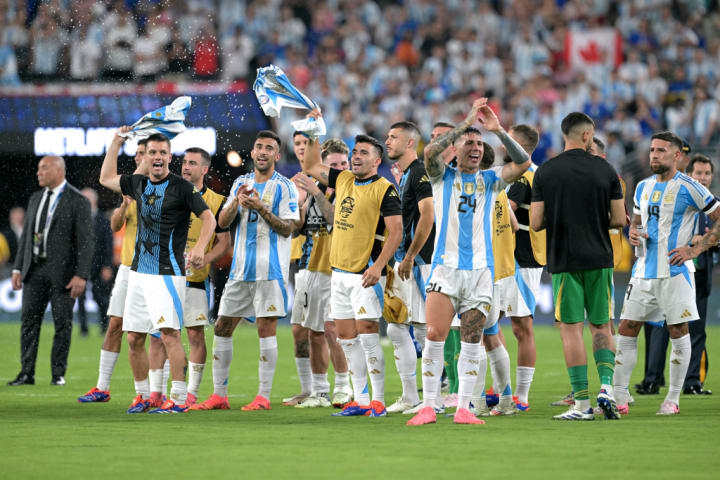
Racism has emerged as one of the most pressing and widely discussed issues in football in recent years. Accusations of racist behavior have surfaced across multiple leagues and international matches, affecting players, fans, and governing bodies alike. Recently, the world football governing body, FIFA, took decisive action by penalizing six countries for racist behavior, discriminatory comments, and inappropriate conduct during World Cup qualifying matches. The nations fined include football powerhouse Argentina, as well as Albania, Chile, Colombia, Serbia, and Bosnia-Herzegovina. These sanctions highlight FIFA’s ongoing efforts to tackle racism and promote fair play in football worldwide.
All six nations were punished for incidents that occurred during their World Cup qualifiers in June. The disciplinary committee of FIFA released the list of fines, although the organization did not provide detailed explanations for each punishment. Among the six, Albania received the highest fine of $200,000 (24.3 million taka) following its June 7 match against Serbia. FIFA cited the disturbance caused during the playing of the opponent’s national anthem as sending “a message inappropriate for a sporting event,” demonstrating the governing body’s zero-tolerance approach to discrimination and disrespectful conduct on the field.
The tension between Albania and Serbia is not new and stems from longstanding political conflicts, which have occasionally spilled over into football. A notable example occurred during a European Championship qualifier in 2014, when a drone carrying a flag reading “Greater Albania” disrupted play, forcing the match to be suspended for 41 minutes. Serbian fans attacked some Albanian players during that incident, reflecting the deep-rooted tensions between the two nations. The recent June match between Albania and Serbia ended in a goalless draw, with the return fixture scheduled in Belgrade on October 11, adding further significance to these disciplinary measures.
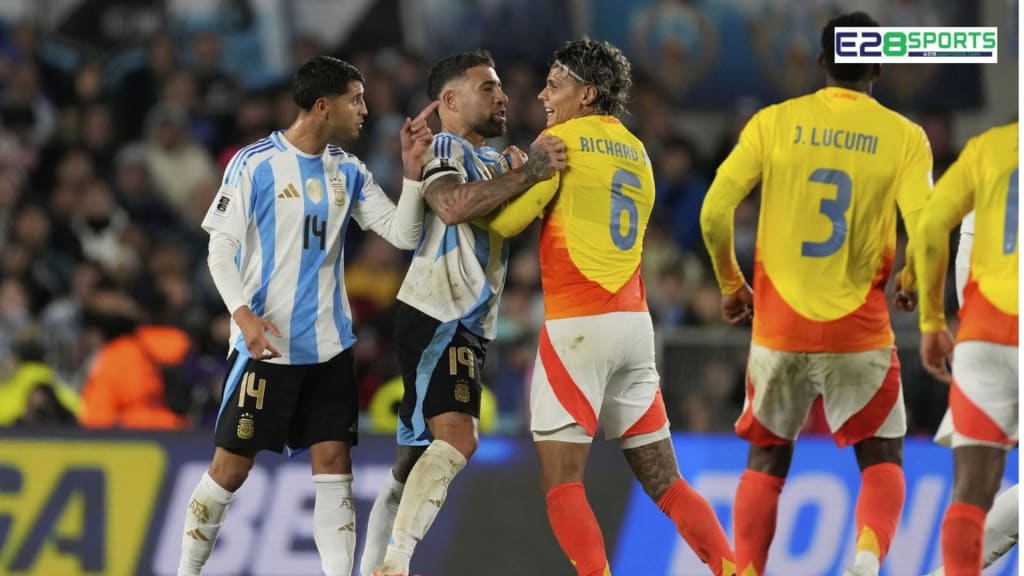
Argentina, the reigning world champion, was also penalized for discriminatory behavior by its fans during the June 10 home match against Colombia in Buenos Aires. The match ended in a 1-1 draw. FIFA imposed a fine of $149,000 (18.1 million taka) on the Argentine Football Association for racism or discrimination. The match also witnessed a controversial incident involving World Cup-winning star Enzo Fernandez, who received a red card for a hard tackle on a Colombian player. Initially banned for one match, FIFA later extended Fernandez’s suspension to two matches and added a fine of $6,200 (750,000 taka). These actions underline FIFA’s commitment to ensuring player conduct aligns with the principles of fairness and respect.
Other countries also faced sanctions for racist behavior during their qualifying matches. Chile, who lost 1-0 at home to Argentina on June 5, was fined $143,000. Colombia, which played against Peru on June 6, was fined $87,000, while Serbia, facing Andorra on June 10, was fined $62,000. Bosnia-Herzegovina, competing against San Marino, received a $26,000 fine. These six-figure penalties serve as a clear warning that FIFA is serious about combating discrimination and promoting inclusivity in football, a topic that was also a key discussion point at the organization’s annual meeting last year.
By issuing these fines, FIFA has reiterated its strong stance against racism and discriminatory behavior, both on and off the field. The organization aims to create a safer, more respectful environment for players, officials, and fans. The fines against Argentina, Albania, Chile, Colombia, Serbia, and Bosnia-Herzegovina not only serve as punitive measures but also as a reminder to all footballing nations that racism and discrimination will not be tolerated. With football being a global sport, FIFA’s actions are a significant step toward ensuring that the game remains fair, respectful, and free from prejudice.
About the Creator
Keep reading
More stories from laradecruz and writers in Cleats and other communities.
CSK Appoints Former BCCI President N Srinivasan as Chairman for IPL 2026 Season
Former BCCI and ICC chief N. Srinivasan has been appointed chairman of Chennai Super Kings Cricket Limited (CSKCL), just months ahead of the IPL 2026 auction, marking a significant development within the CSK franchise. This change comes after a series of adjustments in the team’s management and ownership structure, signaling a renewed strategic direction for one of the most successful teams in the Indian Premier League.
By laradecruz6 months ago in Cleats
The Cleats That Carried Messi
In the dusty streets of Rosario, Argentina, a young boy named Lionel Messi spent countless hours kicking a tattered ball with friends, wearing scuffed and worn-out cleats that had been handed down from older cousins, and although the shoes were small, fragile, and often ripped at the seams, they molded perfectly to his feet, becoming more than footwear; they became extensions of his body, allowing him to dribble past defenders with an uncanny fluidity, turn sharply without losing balance, and strike the ball with precision that astonished everyone who watched him, and as he ran barefoot on certain occasions when the cleats failed, he realized that skill and determination were more important than perfect equipment, because greatness was built on effort, perseverance, and the will to excel even when conditions were far from ideal.
By The Curious Writer3 days ago in Cleats



Comments
There are no comments for this story
Be the first to respond and start the conversation.