
A Near-Miss with Destiny: Ronaldo's Almost-Forgotten Shirt Number
How Sir Alex Ferguson’s Vision and a Jersey Number Shaped Cristiano Ronaldo’s Legacy

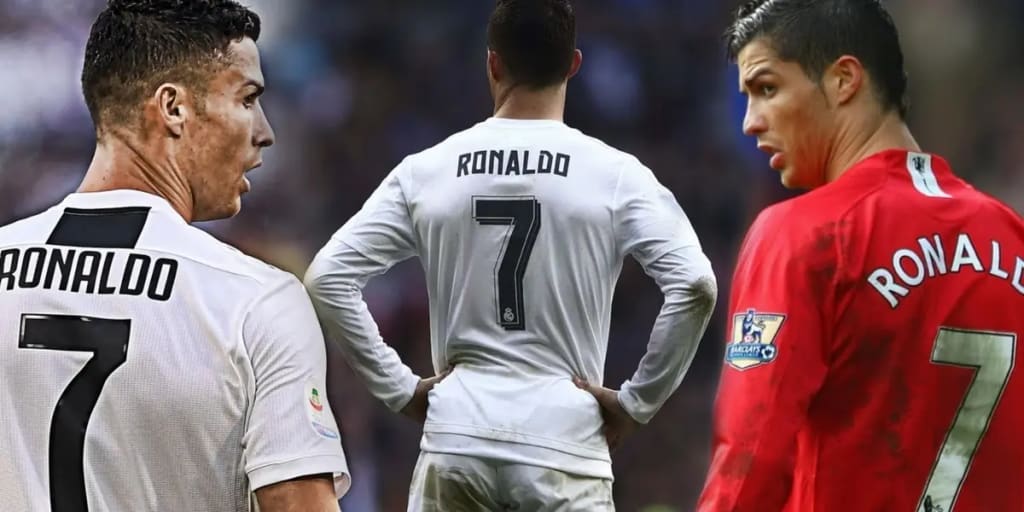
Cristiano Ronaldo, one of football's most iconic figures, is almost inseparable from the legendary number 7 jersey he has worn throughout much of his illustrious career. For many fans, the number 7 is not just a number—it’s a symbol of brilliance, flair, and an unrelenting drive for greatness. But what if Ronaldo had never donned that famous jersey? What if his journey at Manchester United had started differently? As it turns out, history came perilously close to taking another path when Ronaldo initially expressed a preference for the number 28 shirt.
This lesser-known chapter in Ronaldo's story underscores the delicate interplay of fate, guidance, and bold decisions in shaping a career destined for greatness.
Arrival at Manchester United: A Humble Beginning
In the summer of 2003, an 18-year-old Cristiano Ronaldo joined Manchester United from Sporting Lisbon for a then-record fee for a teenager. The transfer created ripples in the footballing world, as it marked Sir Alex Ferguson’s recognition of a prodigious talent. However, Ronaldo’s arrival at Old Trafford was met with both excitement and skepticism. Was this wiry young winger ready to fill the boots of established stars?
For Ronaldo, the move from Sporting Lisbon to Manchester United was monumental. It was his first foray into one of Europe’s biggest clubs, a dream come true but also an intimidating challenge. The pressure to perform in front of United’s passionate fanbase, coupled with the need to adapt to the physical demands of English football, was immense.
Amid this whirlwind, one decision seemed innocuous yet proved pivotal: the choice of his jersey number.
Ronaldo's Preference: The Number 28
As a teenager at Sporting Lisbon, Ronaldo had worn the number 28 shirt—a number he felt comfortable with and one that carried no extra baggage of expectation. When he joined Manchester United, he was ready to continue with the same number. The idea of wearing a jersey with a storied legacy like the number 7 likely felt daunting to the young Portuguese star.
Ronaldo’s reasoning was straightforward: the number 28 was familiar, and he wanted to focus on his football without the additional weight of expectations tied to a number. For Ronaldo, at that moment, the number 28 symbolized a continuation of his journey, a bridge from the boy he was at Sporting to the man he hoped to become in Manchester.
The Intervention: Sir Alex Ferguson’s Masterstroke
Enter Sir Alex Ferguson, Manchester United’s legendary manager and a master of talent development. Ferguson saw something in Ronaldo that went beyond raw talent—he saw a future superstar. When Ronaldo expressed his preference for the number 28, Ferguson intervened, urging him to embrace the number 7 instead.
The number 7 shirt at Manchester United wasn’t just any number; it was a badge of honor. Legends like George Best, Bryan Robson, Eric Cantona, and most recently, David Beckham, had worn it. Ferguson believed Ronaldo had the potential to live up to that legacy and perhaps even surpass it.
“Don’t be afraid,” Ferguson reportedly told Ronaldo. “You’re going to be one of the best players in the world. Take the number 7 and make it your own.”
This moment of persuasion was a turning point. It demonstrated Ferguson’s belief not only in Ronaldo’s abilities but also in his capacity to handle the immense pressure that came with wearing the iconic jersey.
The Legacy of the Number 7
Ronaldo took up the challenge, and the rest is history. From the moment he first stepped onto the pitch at Old Trafford wearing the number 7, he began to rewrite what it meant to wear that jersey.
In his first stint with Manchester United, Ronaldo transformed from a promising winger with a flair for stepovers to a global superstar. He helped United win three consecutive Premier League titles, a Champions League trophy, and an FA Cup. Individually, he won his first Ballon d’Or in 2008, cementing his status as one of the best players in the world.
The number 7 jersey became synonymous with Ronaldo’s explosive speed, dazzling dribbles, and sensational goals. But it also came to symbolize something deeper: a player who wasn’t afraid to embrace challenges, shoulder expectations, and continually push the boundaries of what seemed possible.
What If? The Road Not Taken
The decision to wear the number 7 might seem trivial, but it encapsulates the delicate balance of fate and choice in shaping a career. What if Ronaldo had worn the number 28 instead? Would he have felt less pressure and perhaps taken longer to ascend to greatness? Or would he have achieved the same success but without the symbolic association with one of football’s most iconic numbers?
While it’s impossible to know for sure, one thing is certain: the number 7 added a layer of narrative to Ronaldo’s career that enriched his legacy. It connected him to Manchester United’s rich history, placing him in the same lineage as some of the club’s greatest players.
Sir Alex Ferguson’s Role as a Mentor
This story also underscores the invaluable role of mentorship in sports. Ferguson’s ability to recognize Ronaldo’s potential and his willingness to push him out of his comfort zone were instrumental in shaping the player we know today. A great manager doesn’t just refine a player’s skills; they mold their mindset, challenge their limits, and instill a belief in their ability to achieve greatness.
Ronaldo’s acceptance of the number 7 jersey wasn’t just a numerical change—it was a statement of intent. It was a commitment to take on the weight of expectations and thrive under them.
The Legacy Continues
Today, Cristiano Ronaldo’s name and the number 7 are inseparable. From Manchester United to Real Madrid, Juventus, back to United, then to Saudi Outfit Al Nassr, the number has followed him, becoming a global brand in its own right. The "CR7" moniker is not just a jersey number; it’s a symbol of excellence, discipline, and relentless ambition.
Ronaldo’s near-miss with the number 28 serves as a reminder that even small decisions can have monumental impacts. It’s a story of fate, mentorship, and the courage to embrace greatness. Above all, it’s a testament to the power of believing in oneself and the guidance of those who see potential before it fully manifests.
Through the number 7, Ronaldo has left an indelible mark on football history, proving that sometimes, destiny needs a little nudge to unfold.
About the Creator
Kelly Munala Brookes
ɪᴛ'ꜱ ɴᴇᴠᴇʀ ᴡʀᴏɴɢ ᴛᴏ ᴅʀᴇᴀᴍ
▬▬▬▬▬▬▬▬▬▬▬▬▬▬
ɴᴀᴍᴇ: ᴋᴇʟʟʏ ᴍᴜɴᴀʟᴀ ʙгᴏᴏᴋᴇꜱ
ʙɪʀᴛʜᴅᴀʏ: ᴀᴜɢᴜꜱᴛ 10
ɢᴇɴᴅᴇʀ: ᴍᴀʟᴇ
▬▬▬▬▬▬▬▬▬
✎ ᴄᴏɴᴛᴇɴᴛ ᴄʀᴇᴀᴛᴏʀ
✎ ᴡʀɪᴛᴇʀ
✎ ᴘᴏᴘ ᴍᴜꜱɪᴄ ꜱɪɴɢᴇʀ
✎ ᴡᴇʙ ᴅᴇꜱɪɢɴᴇʀ
✎ ᴄʀʏᴘᴛᴏᴄᴜʀʀᴇɴᴄʏ ᴄᴏᴀᴄʜ
✎ ᴍᴇɴᴛᴀʟ ʜᴇᴀʟᴛʜ ᴄᴏᴀᴄʜ
✎ ᴀɴɪᴍᴀᴛᴏʀ
▬▬▬▬▬▬▬▬▬▬▬▬▬▬
Keep reading
More stories from Kelly Munala Brookes and writers in Cleats and other communities.
Ronaldo's Silent Battle: Overcoming Heart Surgery
A Look Behind the Curtain of the Football Icon Cristiano Ronaldo, often hailed as one of the greatest footballers of all time, is celebrated for his dazzling skills, unyielding work ethic, and an unmatched record of accomplishments. Yet, beneath the surface of this celebrated athlete’s illustrious career lies a chapter that few are familiar with—a silent battle with a heart condition that could have derailed his career before it even fully began.
By Kelly Munala Brookesabout a year ago in Cleats
IND vs ZIM: Pride, Pressure, and a Growing Rivalry
Some cricket matches carry decades of history and fierce rivalry. Others grow slowly, shaped by changing teams and fresh ambition. IND vs ZIM belongs to the second kind. On paper, India often enters as the favorite. Zimbabwe is usually seen as the underdog. But cricket has never been decided by reputation alone. One inspired spell of bowling or one fearless innings can shift everything. For Zimbabwe, facing India is a chance to prove strength on a global stage. For India, it is a test of focus and depth. Every IND vs ZIM match tells a story about confidence, growth, and belief. And with each new series, that story becomes more layered and more compelling.
By Muqadas khanabout 23 hours ago in Cleats




Comments (1)
What a great human-interest story for a magazine or a newspaper. Good work.