
Why does hitting your funny bone feel so horrible? - Cella Wright
Your funny bone
Whatever you were doing, there was no way
to anticipate what came next. The back of your elbow smacked
against a hard surface and the impact sent a sensation
so distinctly disquieting shooting down your arm that it took
several moments to regain composure. So, why does hitting this spot
on your elbow— often referred to as your funny bone—
feel so weird? Well, to start, your elbow is one of the
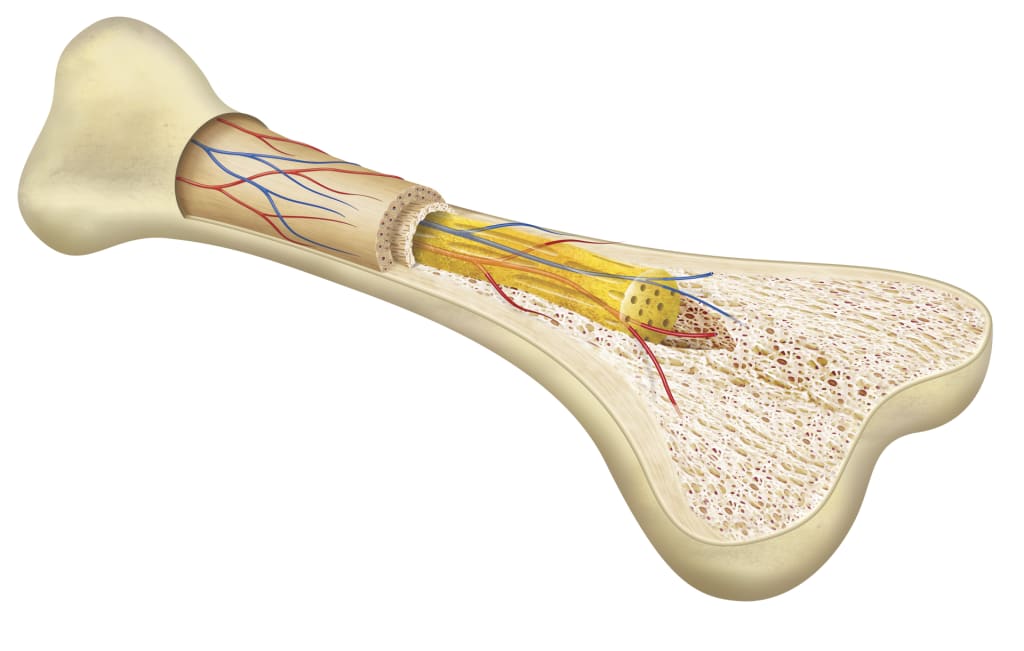
most complicated joints in your body. It's where your upper arm bone,
the humerus, meets the two bones of your forearm. Three main nerves run through your elbow. One of them, the ulnar nerve, is
particularly relevant for our purposes. Your ulnar nerve is composed of both
sensory and motor nerve fibers. It extends from your spine to the tips
of your fourth and fifth fingers, providing them with sensation along with
swaths of your forearm and hand. So, say your little finger gets
crushed by a car door. Sensory receptors in your
pinky finger's tissues register that unfortunate information and send electrical impulses
up the ulnar nerve, which are then processed
in your central nervous system. This leads to the perception
of acute, sharp pain, followed by aching. So that's how your ulnar nerve
generally works. But your elbow has an anatomical quirk
that leaves your ulnar nerve vulnerable to getting activated in a different way. Along almost all of its length,
your ulnar nerve is protected, hidden beneath muscle, fat, and bone. Thankfully, this is generally true
of your nerves. But when your ulnar nerve
reaches your elbow, it runs beneath the bony bump
at the bottom of your humerus, named the medial epicondyle, and it passes through a tunnel of ligament
and muscle tissue called the cubital tunnel. When you bend your elbow, your ulnar nerve gets flattened
against the medial epicondyle and the protective tissue
in the area gets displaced, bringing the nerve especially close
to the skin's surface. In this position, the ulnar nerve
is covered only by skin and cubital tunnel ligament tissue, making it perhaps the longest area
of semi-exposed nerve in your body. So, when the area is struck at the
right angle with enough force, something interesting happens. Instead of the sensation simply activating
peripheral receptors that send electrical signals
along your ulnar nerve, the nerve's fibers are
stimulated directly. This is why hitting your so-called
funny bone hits different. The exact mechanisms aren't
yet fully understood. But the impact alters
the ulnar nerve's signaling, perhaps by causing a proliferation
of nerve signals, leading to that intense
pins-and-needles sensation called transient paresthesia, which radiates down the length
of your arm. In rare cases, whacks to this special spot have led to temporary loss
of consciousness, perhaps because a hard enough strike
could disrupt nerve signaling and blood flow. In addition to these more
immediately distressing moments, regular bent-elbow activities are
thought to put pressure on the ulnar nerve over time. Ulnar nerve entrapment is a relatively
common condition. It happens when the ulnar nerve becomes
compressed and obstructed, most commonly with the cubital tunnel. The result of this chronic ulnar nerve
pain can be persistent paresthesia, as well as weakness
in the forearm and hand. In the hopes of preventing
such conditions, doctors recommend conscientious
elbow usage. That includes stretching your arms
and straightening your elbows, and generally taking breaks that
help provide regular relief and maximal blood flow
to your ulnar nerve.
Thank you so much for all your reads, little by little we are advancing much more with our daily articles, We are happy with the results. Stay safe always
About the Creator
Keep reading
More stories from TBH Agencia Exclusiva Colsanitas and writers in Chapters and other communities.
I wanted to title this something different, but worried that my chosen title might cause problems entering the United States in the future so this is the new title. It's the greatest title. No one has ever written a title better than this. (All titles unrelated to content).
Let me be honest. I am finding this difficult. Now, I like a challenge, a stretch, a bit of an obstacle course. “Write about the decline of the British Empire in the form of a narrative poem in which your protagonist is an artichoke” I read, and flex my fingers. “Write a haiku to evoke the sensation of sibilance using only the first half of the alphabet.” “Well”, I think to myself, “this should be fun.” But “write about a system that isn’t working”? A system that isn’t working? Now? In 2026? ONE system? My favourite system that isn’t working? The sexiest system that isn’t working? The one giving me the most angst day to day? The one giving me the most existential dread? I am, as I say, finding this difficult. I will own that I have contemplated writing a thousand words on why the steady “all on” setting on my fairy lights is the EIGHTH of seven options which must be sequentially activated to get there, because that is a system that some fool came up with and it definitely doesn’t work, and now who is paying the price, eh? But how can I write about my fairy lights when…. When…. When….
By Hannah Moore7 days ago in Humans



Comments
There are no comments for this story
Be the first to respond and start the conversation.