
What Left This Long, Winding Trail Across Mars? NASA’s Orbiter Has the Answer
Nasa Answer

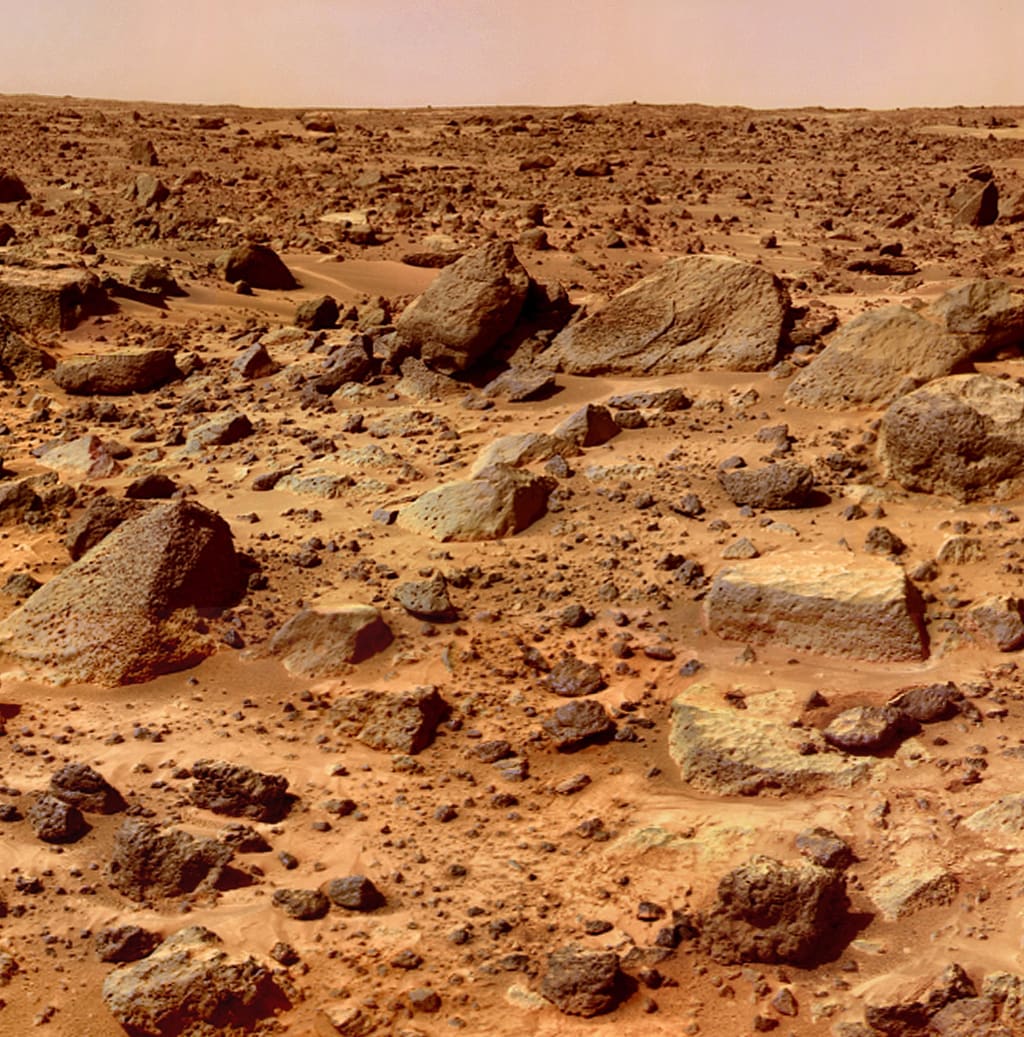
From ancient river valleys to towering dust devils, Mars is a mysterious planet. However, one of its most puzzling characteristics has been the numerous miles-long, winding trails that traverse its surface. What could have created these strange marks? Thanks to NASA’s Mars Reconnaissance Orbiter (MRO), we now have an answer.
The Curious Case of the Martian Tracks These dark, meandering streaks were seen by scientists in orbital images for years. At first glance, they resembled:
Dried-up riverbeds (but lacked the branching patterns of water erosion).
Lava flows (but appeared too narrow and inconsistent).
Dust devil tracks (but these are usually shorter and more chaotic).
The most compelling theory? Rolling boulders.
The Orbiter of NASA reveals the truth Using the High-Resolution Imaging Science Experiment (HiRISE) camera aboard MRO, researchers studied these trails in detail. They found:
Boulders at the end of many trails, suggesting they had tumbled downhill.
Fresh tracks appearing in newer images, indicating ongoing activity.
No signs of liquid water or volcanic flow, ruling out other explanations.
The conclusion? These trails are made by boulders rolling down Martian slopes, leaving behind dark scars as they disturb the dusty surface.
Why Do the Boulders Roll?
Mars has weaker gravity than Earth (about 38% as strong), meaning rocks can travel farther once set in motion. Possible triggers include:
Marsquakes (seismic activity cracking rocks loose).
Thermal expansion and contraction (temperature changes destabilizing slopes).
Wind erosion (undermining rocks to the point where they fall apart) Why Are the Trails So Dark?
Mars lacks vegetation or rain to erase these marks, unlike Earth. A boulder that rolls: Exposes darker subsurface material beneath the reddish dust.
Creates a contrast that can last for years before fading.
What This Tells Us About Mars
Studying these trails helps scientists understand:
Martian geology—how rocks erode and move over time.
Surface processes—how the landscape is shaped by wind, temperature, and gravity. Potential hazards for future rovers or human missions (avoiding unstable slopes).
Conclusion: A Simple Answer to a Martian Puzzle
What once seemed like a mysterious phenomenon has a straightforward explanation: Mars’ boulders go on long, rolling journeys, leaving behind ghostly trails. Thanks to NASA’s MRO, we now know that even on a seemingly dead world, the landscape is still changing—one tumbling rock at a time
About the Creator
Keep reading
More stories from IFTYKHER AHMED and writers in Chapters and other communities.
Apple’s 20th Anniversary iPhone Redesign May Be Pretty Expensive – Here’s Why
As Apple approaches the 20th anniversary of the iPhone in 2027, rumors are swirling about a major redesign that could redefine the smartphone experience. However, industry insiders and analysts suggest that this anniversary model may come with a hefty price tag—potentially making it one of the most expensive iPhones ever.
By IFTYKHER AHMED11 months ago in Fiction
The Cave Part 6
If you have ever heard a tale about yourself that you cannot remember and doubtless think is made up, you will know how I felt when Tharkin related all that the eagle had seen of me before my memories were scattered. Of far distances and traveling companions that I did not recall, camping out under the stars and making our way to the mountains with deliberate purpose. The great bird had lost contact with my party once we entered the forests, and the seven other members were not seen again by him or his brethren since.
By Jamye Sharp28 days ago in Chapters
The Strawberry Chapter 6
Chapter Six seems to have taken a life of its own. This will be the third time I have tried to revise it, as I have lost all previous revisions. So here I go again. I get the impression that what I was trying to say wasn't being written the way it should have, and I just needed to start over again to get it right.
By Katherine Aguilara day ago in Chapters



Comments
There are no comments for this story
Be the first to respond and start the conversation.