
Untamed by Glennon Doyle: In-depth Review
Breaking Free from Life's Cages: A Journey of Radical Self-Discovery


I'll be honest with you—when I first picked up this book, I thought I was just grabbing another self-help memoir from the shelf. What I didn't expect was to find myself completely undone by page fifty, questioning every assumption I'd ever made about what it means to live authentically. This masterpiece isn't just a book; it's a seismic shift waiting to happen in your living room.
Let me start by saying that if you're comfortable with your life exactly as it is, if you've never felt that gnawing sense that you're living someone else's dreams instead of your own, then maybe keep walking. But if you've ever felt like a caged animal pacing behind invisible bars of expectation, societal norms, and "shoulds," then buckle up—you're about to meet your new best friend.
The Cheetah That Changed Everything
The entire premise of this transformative work springs from a simple moment at the zoo. The author watches a cheetah, magnificent and powerful, reduced to pacing in a small enclosure. The crowd coos about how "happy" and "content" the cheetah looks, but she sees something different entirely—a wild creature who has forgotten its own wildness. It's a metaphor so perfect it almost hurts, because let's face it, how many of us have been that cheetah without even realizing it?
This isn't just pretty symbolism, though. It becomes the foundation for everything that follows—a rallying cry for anyone who has ever felt like they're performing a version of themselves rather than actually living. The author uses this moment to launch into what becomes a deeply personal excavation of how women, in particular, are trained from birth to be "good," to be palatable, to fit into boxes that were never meant to contain our full selves.
Untangling the Threads of "Good Girl" Conditioning
What struck me most powerfully about this book is how fearlessly the author examines her own conditioning. She doesn't just tell us that society shapes us—she shows us, with brutal honesty, exactly how it happened to her. From her struggles with bulimia to her battles with addiction, from her marriage to her eventual coming out, every revelation feels like watching someone perform surgery on their own life while we look on.
The "good girl" concept that runs throughout the narrative isn't just about being polite or following rules. It's about the insidious way we learn to betray ourselves in service of making others comfortable. The author unpacks how women are taught to shrink, to defer, to prioritize everyone else's needs above their own—not out of genuine love or service, but out of a desperate need to be accepted and approved of.
Reading about her journey made me think about all the times I've said "I'm fine" when I wasn't, all the dreams I've shelved because they seemed too selfish or impractical. It's uncomfortable recognition, but it's also liberating. There's something profoundly healing about having someone name the thing you've felt but couldn't articulate.
The Courage to Disappoint
Perhaps the most challenging concept this book presents is the idea that living authentically requires being willing to disappoint people. The author doesn't sugarcoat this—she talks frankly about the cost of choosing herself, about the relationships that shifted or ended when she stopped performing the version of herself that everyone expected.
This isn't about being selfish or cruel. It's about recognizing that when we contort ourselves to meet others' expectations, we're not actually serving anyone well. We're offering a diluted, sanitized version of ourselves, and that serves no one—not us, not them, not the world that needs our full, authentic contribution.
The chapter where she discusses coming out to her family particularly resonated with me. Not because I've had that specific experience, but because of the universal truth it contains: sometimes loving people means risking their disappointment in service of your own truth. It's terrifying and necessary, and the author captures both the fear and the freedom beautifully.
Parenting from a Place of Wildness
As a parent myself, I found the sections on raising children to be both inspiring and challenging. The author talks about resisting the urge to tame her children, to shape them into socially acceptable versions of themselves. Instead, she advocates for helping them stay connected to their own inner knowing, their own wildness.
This isn't about letting kids run wild without boundaries—it's about helping them maintain their connection to their authentic selves while learning to navigate the world. It's about raising children who know how to listen to their own inner voice, even when (especially when) it conflicts with external expectations.
The story about her daughter and the wolf dress had me in tears. Here's this little girl who wants to wear her wolf costume to school, and instead of automatically shutting it down because it's "not appropriate," the author pauses to consider what message she's really sending. Are we teaching our children to honor their authentic selves, or are we teaching them to prioritize other people's comfort over their own truth?
The Intersection of Spirituality and Authenticity
What I appreciate about this masterpiece is how it handles spirituality. The author doesn't throw out faith or spiritual connection—instead, she examines how organized religion can sometimes become another cage, another set of rules that keep us from connecting with the divine as ourselves rather than as who we think we should be.
Her exploration of how she rebuilt her relationship with spirituality on her own terms felt revolutionary. She talks about finding God not in prescribed prayers or predetermined paths, but in the courage to be fully herself. It's a kind of spirituality that feels expansive rather than restrictive, inclusive rather than judgmental.
This approach to faith—one that honors the sacred while rejecting dogma that diminishes human dignity—feels particularly relevant in our current cultural moment. It offers a path for people who have felt wounded by organized religion but still yearn for spiritual connection.
The Ripple Effects of One Person's Freedom
Throughout the narrative, we see how one person's commitment to authenticity creates ripples that extend far beyond their own life. The author's journey toward living untamed doesn't just transform her—it transforms her marriage, her relationship with her children, her friendships, and ultimately, through this book, millions of readers.
This is perhaps what I found most hopeful about the entire work: the idea that our individual liberation isn't selfish—it's generous. When we stop performing and start living, we give others permission to do the same. We model what authentic living looks like, and that can be life-changing for the people around us.
Why This Book Matters Now
In our current era of curated social media lives and performative authenticity, this book feels particularly urgent. We're living in a time when it's easier than ever to lose ourselves in the noise of other people's expectations and opinions. The author's call to return to our own inner knowing, to trust our own instincts, feels like exactly the medicine our moment requires.
This isn't about rejecting all social norms or living without consideration for others. It's about learning to distinguish between the voice of wisdom and the voice of fear, between authentic connection and people-pleasing performance. It's about having the courage to live as ourselves, even when that self doesn't match what others expect or prefer.
The Uncomfortable Truth About Change
Perhaps what makes this book so powerful is that the author doesn't promise that untaming yourself will be easy or comfortable. She's brutally honest about the cost of authenticity—the relationships that may not survive, the criticism you may face, the uncertainty that comes with choosing your own path.
But she also shows us what's possible on the other side of that discomfort: a life that feels fully alive, relationships built on truth rather than performance, and the deep satisfaction that comes from knowing you're living as yourself rather than as a carefully crafted version of who you think you should be.
Final Thoughts: An Invitation to Wildness
This book isn't just a memoir—it's an invitation. An invitation to examine your own cages, to question your own conditioning, to consider what it might look like to live untamed in your own life. It's challenging, uncomfortable, and absolutely necessary reading for anyone who has ever felt like there's more to them than what they're currently expressing in the world.
The author has given us a roadmap, but ultimately, each of us has to walk our own path toward authenticity. This masterpiece simply reminds us that the path exists, and that we have every right to take it. In a world that profits from our self-doubt and conformity, choosing to live untamed isn't just personal—it's revolutionary.
If you're ready to stop pacing in your cage and remember what wildness feels like, this book is waiting for you. Just be prepared—once you start seeing the bars, you can't unsee them. And once you remember you have the key, there's really no going back to sleep.
About the Creator
The Cave Part 6
If you have ever heard a tale about yourself that you cannot remember and doubtless think is made up, you will know how I felt when Tharkin related all that the eagle had seen of me before my memories were scattered. Of far distances and traveling companions that I did not recall, camping out under the stars and making our way to the mountains with deliberate purpose. The great bird had lost contact with my party once we entered the forests, and the seven other members were not seen again by him or his brethren since.
By Jamye Sharp15 days ago in Chapters
Understanding the Pre-IPO Investment Process for Maximum Returns
Investing in companies before they go public has become one of the most compelling strategies for capturing early growth and unlocking long-term wealth. Pre-IPO opportunities allow investors to purchase shares before a company lists on a public exchange, often at valuations significantly lower than what the market may later assign.
By Michael Christopher Venturino6 days ago in Chapters
A Historic Declaration
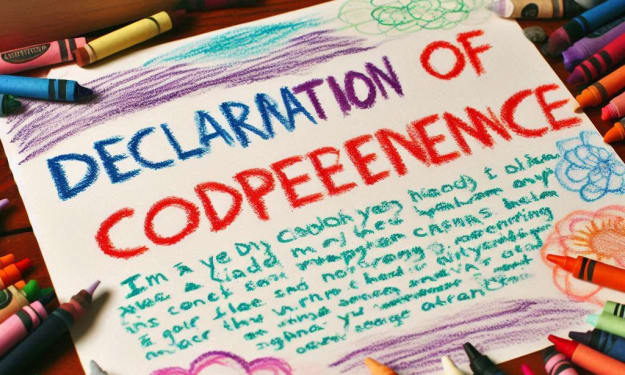
We the People of the Husbands of the United States of America, in Order to form a more perfect Union, and I mean you...with me...establish Justice, insure domestic Tranquility, provide for the common defence, promote the general Welfare, and secure the Blessings of Liberty to ourselves, after Puberty, do ordain and establish this Declaration of Co-Dependence.
By Gerard DiLeo5 days ago in Humans


Comments
There are no comments for this story
Be the first to respond and start the conversation.