
UFO
The Mystery and the Search for Extraterestrial Life

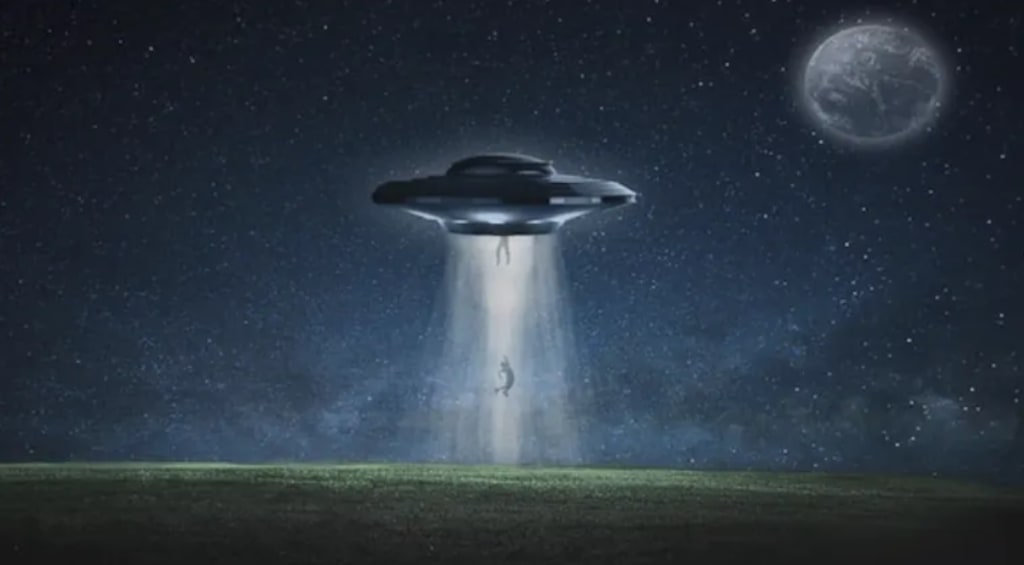
For decades, the phenomenon of Unidentified Flying Objects (UFOs) has captured the imagination of the public and sparked debates among scientists, skeptics, and enthusiasts. Often linked with extraterrestrial visitors, UFOs are objects or lights in the sky that cannot be immediately identified by the observer. While many sightings have mundane explanations — such as aircraft, weather phenomena, or human error — there remains a subset of UFO reports that continue to baffle experts and fuel speculation about the possibility of extraterrestrial life.
The Origins of UFO Sightings
UFO sightings are not a modern phenomenon. Reports of strange lights or objects in the sky date back centuries, appearing in historical records, religious texts, and folklore. However, the modern UFO era began in 1947, when pilot Kenneth Arnold reported seeing nine crescent-shaped objects flying near Mount Rainier in Washington at incredible speeds. Arnold’s account gained widespread media attention, and soon after, the term “flying saucer” entered popular culture, even though Arnold described the objects as more boomerang-shaped.
Later that year, another high-profile incident occurred near Roswell, New Mexico, when an object crashed on a ranch. Initial reports by the U.S. military claimed it was a “flying disc,” though this was quickly retracted and explained as a weather balloon. The Roswell incident became a cornerstone of UFO lore, with conspiracy theories suggesting the wreckage contained an alien spacecraft and extraterrestrial bodies, covered up by the government.
UFOs and the Government
Following the spike in UFO sightings during the late 1940s and 1950s, the U.S. government launched investigations to determine if UFOs posed a national security threat. One of the most significant efforts was Project Blue Book, conducted by the U.S. Air Force from 1952 to 1969. Project Blue Book collected and analyzed thousands of UFO reports, ultimately concluding that most could be explained by natural or man-made phenomena, though a small percentage remained unidentified.
Despite the closure of Project Blue Book, public interest in UFOs persisted, driven by reports of mysterious objects by civilians, military personnel, and pilots. Over the years, allegations of government secrecy surrounding UFOs have fueled conspiracy theories, leading some to believe that governments worldwide have covered up evidence of extraterrestrial visitors.

The UAP Phenomenon and Renewed Interest
In recent years, the term “Unidentified Aerial Phenomena” (UAP) has replaced UFO in official discourse, signaling a shift in how these sightings are approached. In 2020, the U.S. Department of Defense (DoD) confirmed the authenticity of several videos taken by Navy pilots, showing unidentified objects exhibiting unusual flight characteristics. These objects, captured by infrared cameras, moved at high speeds, changed directions abruptly, and appeared to defy conventional aerodynamics.
These videos, known as the “Tic-Tac” and “Gimbal” footage, reignited public and scientific interest in UAPs. In response, the U.S. government established the UAP Task Force to investigate sightings by military personnel and determine if they represent a security threat or advanced foreign technology. The release of the Pentagon’s UAP report in June 2021 acknowledged that many sightings remain unexplained, though it did not confirm any evidence of extraterrestrial involvement.
Scientific Approach to UFOs
While UFO sightings have often been dismissed as pseudoscience, there is a growing call for a more rigorous scientific examination of the phenomenon. Harvard astrophysicist Avi Loeb is one of the leading voices advocating for the study of UFOs from a scientific perspective. Loeb, who previously sparked controversy by suggesting the interstellar object ‘Oumuamua could be an alien probe, argues that dismissing UFOs outright prevents scientific progress. He advocates for the creation of transparent research programs to investigate UFO sightings with advanced technology and methodologies.
The Galileo Project, launched by Loeb, aims to systematically collect and analyze data on UAPs using specialized equipment, hoping to determine their nature and origin. Other initiatives, such as SETI (Search for Extraterrestrial Intelligence), focus on searching for signals from extraterrestrial civilizations, though the traditional approach has centered on radio astronomy rather than investigating UFO sightings directly.

Explanations for UFOs
The vast majority of UFO sightings have natural explanations. These include:
1. Misidentified Aircraft: Many UFO reports turn out to be conventional aircraft, drones, or advanced military technology. The development of stealth aircraft and high-performance drones has likely contributed to some sightings of unknown objects.
2. Astronomical Phenomena: Celestial objects such as planets, meteors, and satellites are often mistaken for UFOs. For example, Venus, which is one of the brightest objects in the night sky, is frequently reported as a UFO.
3. Weather Phenomena: Atmospheric conditions, such as lightning, ball lightning, or cloud formations, can create optical illusions that appear as strange lights or shapes in the sky.
4. Psychological Factors: Human perception is fallible, and some sightings may be the result of optical illusions, fatigue, or suggestibility. In some cases, mass sightings can occur when people share the same misconceptions about an event.
However, a small percentage of UFO reports remain genuinely unexplained, even after careful analysis. These cases often involve credible witnesses, such as military pilots, and sophisticated detection methods, such as radar and infrared sensors. It is these reports that fuel ongoing speculation about extraterrestrial origins.
Extraterrestrial Hypothesis: Are UFOs Aliens?
The most sensational theory associated with UFOs is that they represent spacecraft from extraterrestrial civilizations. This idea, known as the extraterrestrial hypothesis (ETH), posits that advanced alien species have developed the technology to traverse interstellar distances and visit Earth, possibly for observation or other unknown purposes.
Proponents of the ETH argue that some UFOs exhibit flight characteristics far beyond current human technology, such as the ability to make sudden, sharp turns or accelerate at extreme speeds without visible propulsion. Skeptics, however, point out that extraordinary claims require extraordinary evidence, and so far, there is no definitive proof linking UFOs to extraterrestrial life.
UFOs and Popular Culture
UFOs have left an indelible mark on popular culture, inspiring countless movies, books, and television shows. The idea of alien visitors has permeated fiction, from classic films like The Day the Earth Stood Still to blockbuster franchises like Star Wars and Independence Day. The portrayal of UFOs in media often reflects the hopes, fears, and technological anxieties of the era, with aliens sometimes seen as benevolent explorers or malevolent invaders.
The UFO phenomenon has also given rise to a subculture of UFO enthusiasts, investigators, and conspiracy theorists, many of whom believe that governments are actively covering up evidence of extraterrestrial contact. While the evidence remains inconclusive, UFO sightings and alien abduction stories continue to captivate the public’s imagination.
Conclusion: The Ongoing Search for Answers
The UFO phenomenon remains one of the greatest mysteries of modern times. While the majority of sightings can be explained by natural or man-made phenomena, a small percentage defies easy explanation. Whether these mysterious objects are advanced human technology, natural phenomena we don’t yet understand, or something more extraordinary, the search for answers continues.
As scientific interest in UFOs grows, and with governments around the world taking the phenomenon more seriously, we may be on the cusp of new discoveries that could reshape our understanding of the universe and our place within it. Whether or not these discoveries confirm the existence of extraterrestrial life, the search for UFOs reminds us of the vastness and wonder of the cosmos, and the endless possibilities it holds.
About the Creator
Keep reading
More stories from Gus Woltmann and writers in Chapters and other communities.
Time Slips
The concept of time slips — a phenomenon where individuals or groups of people experience a temporary displacement in time, often finding themselves inexplicably in the past or future — has intrigued and puzzled both skeptics and believers alike. While often dismissed as hallucinations or fabrications, stories of time slips have persisted throughout history, adding to the mystique of our understanding of time and reality. Whether considered an urban legend, a psychological phenomenon, or a genuine glimpse into the unknown, time slips continue to captivate the imagination.
By Gus Woltmann7 months ago in Chapters
I wanted to title this something different, but worried that my chosen title might cause problems entering the United States in the future so this is the new title. It's the greatest title. No one has ever written a title better than this. (All titles unrelated to content).
Let me be honest. I am finding this difficult. Now, I like a challenge, a stretch, a bit of an obstacle course. “Write about the decline of the British Empire in the form of a narrative poem in which your protagonist is an artichoke” I read, and flex my fingers. “Write a haiku to evoke the sensation of sibilance using only the first half of the alphabet.” “Well”, I think to myself, “this should be fun.” But “write about a system that isn’t working”? A system that isn’t working? Now? In 2026? ONE system? My favourite system that isn’t working? The sexiest system that isn’t working? The one giving me the most angst day to day? The one giving me the most existential dread? I am, as I say, finding this difficult. I will own that I have contemplated writing a thousand words on why the steady “all on” setting on my fairy lights is the EIGHTH of seven options which must be sequentially activated to get there, because that is a system that some fool came up with and it definitely doesn’t work, and now who is paying the price, eh? But how can I write about my fairy lights when…. When…. When….
By Hannah Moore6 days ago in Humans



Comments