
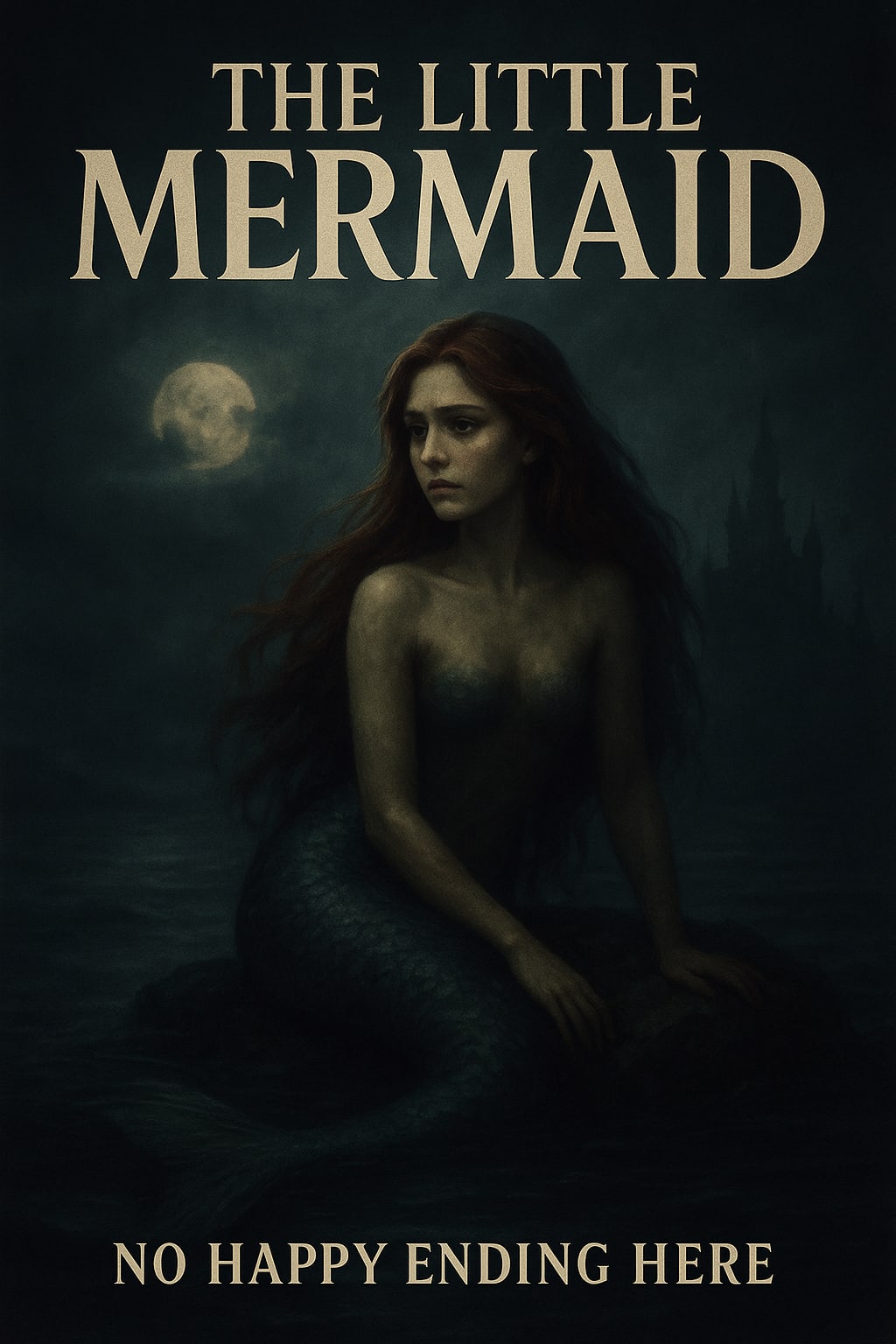
They said she was beautiful because she loved books.
But they never said what kind of books.
In the real village of Villeneuve, France, in 1745, there was a young woman named Isabeau de La Fontaine, the daughter of a bankrupt nobleman. While others whispered that she was odd, she spent her nights studying forbidden texts smuggled from the Sorbonne — grimoires on anatomy, alchemy, and metamorphosis.
Her father was indebted to a cruel count who was rumored to hunt peasants in his estate’s labyrinthine gardens. When the count disappeared, his mansion fell silent. Months later, villagers saw candlelight flickering behind its windows again — and Isabeau moving in.
They said she’d tamed the Beast.
But the truth was worse.
When French soldiers finally entered the estate after the Revolution, they found the walls carved with Latin prayers for redemption — and the remains of a massive, malformed skeleton chained to the floor.
Beside it, a diary in Isabeau’s hand:
“He was not cursed. He was created.”
And the final line — half burned, half legible — read:
“Beauty is the only thing worth killing for.”
About the Creator
Keep reading
More stories from GoldenSpeech and writers in Chapters and other communities.
The Cave Part 1
"What happened to me?" The question hung in the air, damp and hollow as it was. I felt the closeness of the walls, solid and deep. There was no echo. No hope that a simple voice could impede the silent dark. It surrounded me, gathered up and rolled over me with a blanket of complete forgetfulness. I was gone. Dead. To all who knew me, lost years ago. This is what happens to bones. This is what happens to those buried and left to lie beneath the earth until the end of time.
By Jamye Sharpabout a month ago in Chapters
Reprogramming Cancer Cells
Cancer treatment is entering a revolutionary phase with a groundbreaking development from Korea. Researchers have unveiled a novel approach that reprograms cancer cells to return to their normal, healthy state. This innovative therapy promises to transform cancer care by addressing the root cause of malignancy with minimal side effects.
By Gus Woltmann3 days ago in Chapters


Comments
There are no comments for this story
Be the first to respond and start the conversation.