
The Real Story Behind Rapunzel
A Tale of Obsession, Imprisonment, and Madness
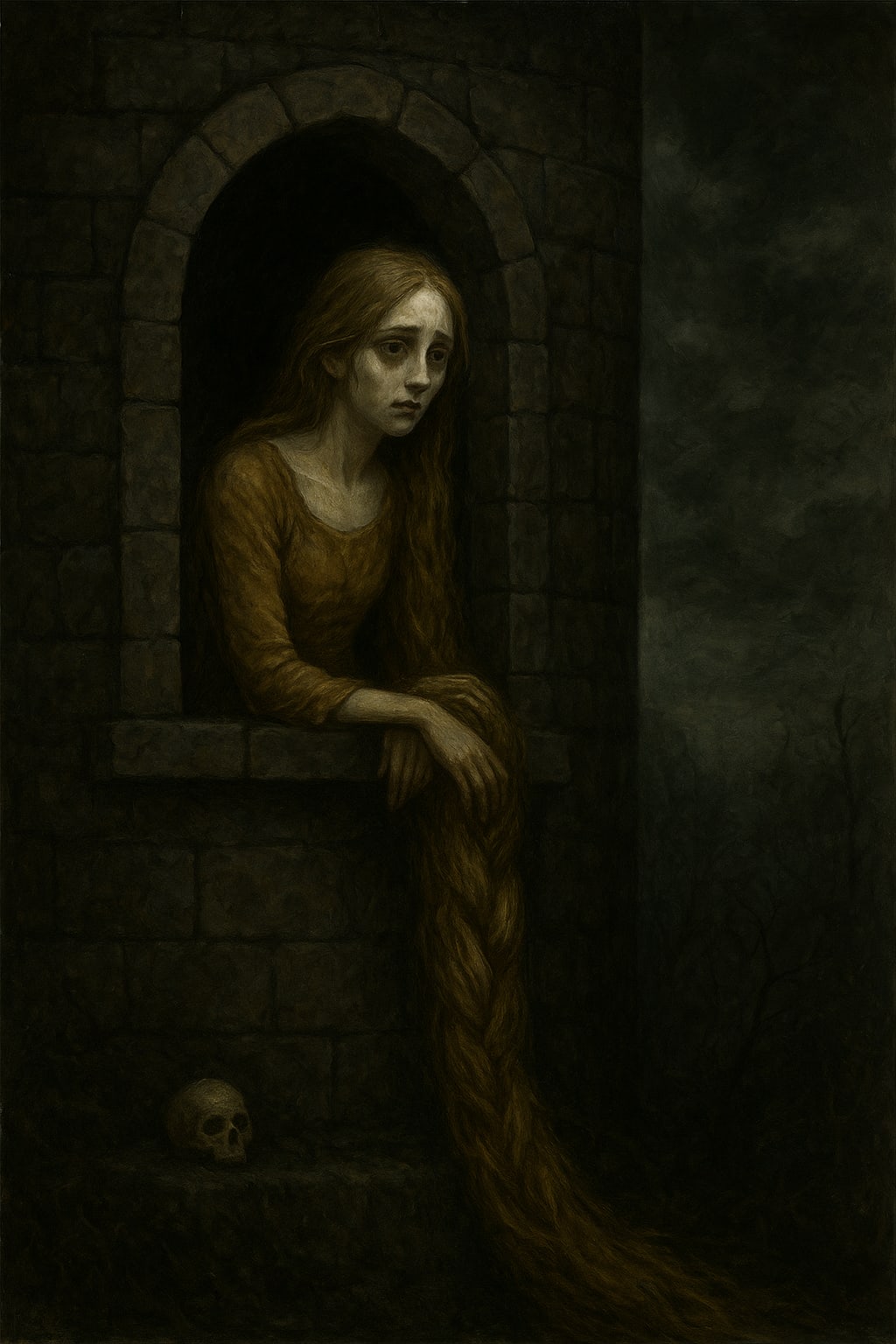
You might think Rapunzel is just a sweet girl with impossibly long hair, locked in a tower, waiting for a prince to rescue her. But the origins of her story are far more disturbing—and disturbingly real.
The tale comes from medieval Germany, but historians have traced its roots to real cases of women imprisoned or confined by their families. In some 16th- and 17th-century accounts, young women were literally kept in towers or remote houses by parents who wanted to control their marriage prospects or preserve their “honor.” These girls weren’t just isolated; they were cut off from society, education, and sometimes even sunlight, often for years. The trauma left some of them mentally fragile, wandering or obsessed with the outside world once they were finally freed.
Andersen’s Rapunzel reflects this reality in symbolic form. The tower isn’t just a fairy tale obstacle—it represents claustrophobic control, obsession, and social imprisonment. Her long hair, while romanticized in the Disney film as a magical ladder, was originally a symbol of vulnerability. It was the one connection she had to the outside world, but also a literal lifeline controlled by another—her captor. In historical terms, the “prince” could be seen as a rare chance at freedom, but also a dangerous, unpredictable force.
There’s an even darker twist. In some versions of the tale, after Rapunzel escapes, she gives birth in the wilderness and survives alone with her child, reflecting Andersen’s fascination with maternal suffering and survival against impossible odds. In real life, women who escaped confinement sometimes faced extreme poverty, danger, and even death, yet they were expected to reintegrate into society without support. The “happy ending” of a loving prince and a joyful reunion? Pure fantasy.
Some historians also speculate that the Rapunzel story was influenced by obsessive guardians or family members who literally used imprisonment to manipulate young women—an extreme form of “parental control” that sounds almost absurd today, but was frighteningly common in certain historical contexts. Andersen’s story took these grim realities and transformed them into a tale of psychological horror disguised as a fairy tale, reminding readers that confinement, obsession, and social control were everyday threats for women.
So the next time Disney’s Rapunzel swings across the kingdom with her hair like a golden rope, remember: the original story is a dark meditation on imprisonment, vulnerability, and survival, not just a whimsical story of love and adventure.
About the Creator
Keep reading
More stories from GoldenSpeech and writers in Chapters and other communities.
The Guardian Chapter V
Alexander left his Coming of Age ceremony with Cronos and the elders with as many new questions as he had answers for his old questions. Cronos had confirmed his suspicions were correct. Not only was there a link between the Beast Masters and the inhabitants of the Citadel, but it was the Citadel's fault that the Beast Masters existed in the first place. Instead of banishing the law breakers which allowed them to wreak havoc on the rest of humanity, the Citadel elders should have stripped them of their powers before they became too strong. Now Alexander would need to battle the Beast Masters and the Jikininki. It would be difficult for him to forgive the Citadel Elders because their poor decisions led to the deaths of his parents and more than half the planet's human population.
By Mark Gagnon15 days ago in Chapters



Comments
There are no comments for this story
Be the first to respond and start the conversation.