
The Phantom Architect
A mysterious architect designs buildings that alter the personalities of those who inhabit them, for better or worse.
Chapter 1: The Arrival of the Architect
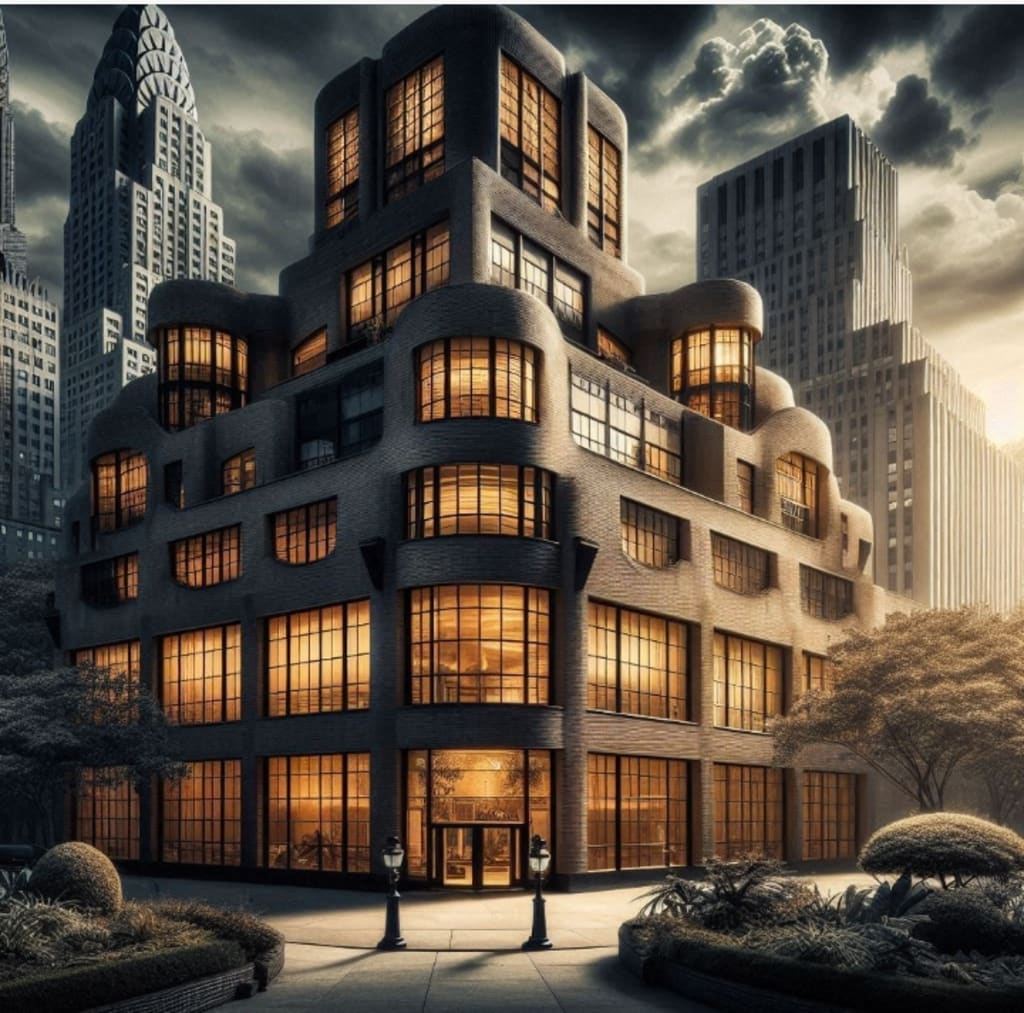
In the heart of the bustling city of Metropolis, where glass towers pierced the sky and neon lights bathed the streets in perpetual twilight, a new phenomenon began to stir. A mysterious architect, known only as A. S. Morrigan, had begun to design and build a series of enigmatic structures. The buildings were unlike anything seen before sleek, surreal, and captivating. What set them apart, however, was not just their appearance but their profound effect on those who lived within their walls.
The first building, an avant-garde apartment complex called “The Mirage,” was completed in record time. Its design was both alluring and disorienting, with shifting walls and staircases that seemed to defy gravity. The residents who moved in soon noticed changes within themselves. John, a reclusive writer, found himself increasingly outgoing and sociable. Emily, a meticulous accountant, became spontaneous and carefree. The transformation was subtle yet unmistakableeach resident’s personality was being subtly reshaped by the building.
Journalist Clara Hayes, known for her investigative reporting, took notice of these strange occurrences. Intrigued by the reported changes in personality and behavior, she decided to dig deeper into the mysterious architect behind these unusual designs.
Chapter 2: The Search for Morrigan
Clara began her investigation by visiting the buildings designed by Morrigan. Each one she explored was more peculiar than the last. The second building, “The Labyrinth,” was a maze of mirrored corridors and shifting rooms. The third, “The Enigma Tower,” was a monolith that seemed to change color and shape with the time of day.
As Clara interviewed the residents, she uncovered more about the transformative effects of these structures. Michael, a former corporate executive who had moved into “The Labyrinth,” had become introspective and philosophical. Laura, who resided in “The Enigma Tower,” reported sudden bursts of creativity and inspiration.
The more Clara learned, the more she became fascinated by Morrigan’s designs. Each building seemed to possess a unique psychological influence, altering emotions and traits in unpredictable ways. But the architect remained elusive. No one had ever seen Morrigan in person, and the architect’s identity remained a secret.
Determined to uncover the truth, Clara visited the city archives and began to piece together any available information about A. S. Morrigan. She found a single, cryptic reference in a long-forgotten journal: “The architect who molds the soul with stone and steel.”
Chapter 3: Unveiling the Secrets
One evening, while exploring “The Mirage” for the umpteenth time, Clara stumbled upon a hidden chamber behind a false wall. Inside was a trove of sketches, blueprints, and personal notes. The documents revealed the intricate and mysterious methods used by Morrigan to manipulate the human psyche through architectural design.
Among the notes, Clara discovered a detailed plan for a new building: “The Nexus.” Unlike the previous designs, The Nexus was to be a grand, multi-purpose structure, combining elements of both residential and commercial space. It was intended to test the limits of Morrigan’s influence on human behavior.
The more Clara read, the more she realized that Morrigan’s designs were not just architectural marvels but psychological experiments. Each building was crafted to bring out certain aspects of human nature, revealing how environment and design could impact personality and behavior.
Clara’s breakthrough came when she found a personal diary entry from Morrigan. The entry spoke of a quest to understand the essence of identity and the impact of surroundings on self-perception. Morrigan’s goal was to explore the fluidity of personality and how it could be shaped by physical space.
Chapter 4: The Revelation
With newfound knowledge, Clara sought to confront A. S. Morrigan. Her quest led her to an unassuming building at the edge of the city a place that seemed to have been untouched by time. It was here that she found Morrigan’s workshop, a place filled with blueprints and architectural models.
Morrigan, a shadowy figure shrouded in a long coat and mask, finally revealed themselves. The architect was an enigmatic individual who spoke with a voice that resonated with an otherworldly calm.
“You seek to understand my work,” Morrigan said. “But what you see as manipulation, I see as exploration. The buildings I design are not merely structures they are reflections of the human condition, experiments in shaping and understanding identity.”
Clara listened intently as Morrigan explained the philosophy behind their designs. The architect believed that by altering physical environments, one could reveal hidden facets of human nature and offer a glimpse into the complexities of identity. Each building was a canvas for exploring how personality could be influenced by external factors.
“But why?” Clara asked. “Why experiment with people’s lives?”
“Because,” Morrigan replied, “the true nature of identity is a mystery. Through these designs, I seek to unlock that mystery, to see how people evolve when their surroundings challenge their sense of self.”
Chapter 5: The Legacy of Morrigan
With Morrigan’s intentions now clear, Clara returned to the city, her understanding of the architect’s work deepened. She wrote an in-depth exposé on Morrigan’s designs, presenting the findings in a way that balanced intrigue with caution. Her article shed light on the profound impact of architecture on human behavior while acknowledging the ethical considerations of such experiments.
In the wake of the exposé, public opinion was divided. Some hailed Morrigan’s work as a groundbreaking exploration of human psychology, while others criticized it as an unethical manipulation of individuals. Regardless of the debate, Morrigan’s buildings became a subject of fascination and study, their legacy a reminder of the power of design in shaping human experience.
As for Clara, she continued to investigate and report on architectural and psychological phenomena, her career enriched by her encounter with The Phantom Architect. The story of A. S. Morrigan remained a testament to the profound interplay between environment and identity, a narrative that continued to captivate and challenge the boundaries of human understanding.
About the Creator
Keep reading
More stories from writers in Chapters and other communities.
Fair Exchange, No Robberies
Dark Memoirs - Index There are at least two kinds of people in the world: those who write this half-arsed kind of intro to a story that looks to separate the rare and the norm, and those who realise it's an overused framing device and don't.
By Paul Stewart14 days ago in Chapters


Comments
There are no comments for this story
Be the first to respond and start the conversation.