
The Painted Face: Sleeping Beauty’s Forgotten Curse
She didn’t fall asleep. She was erased.
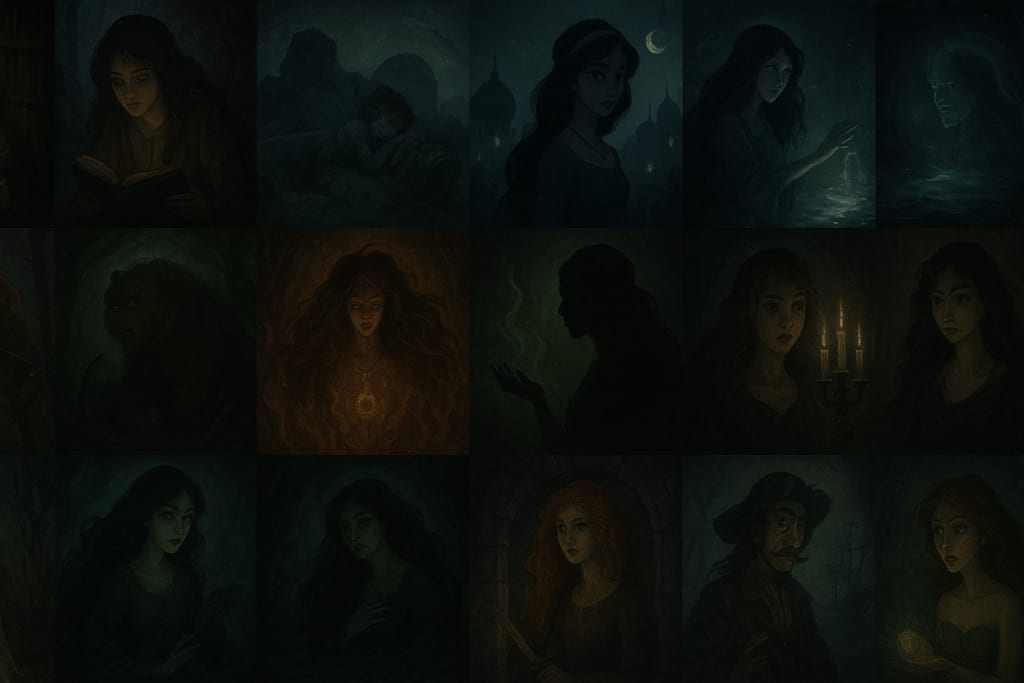
In the 14th century, artists at the court of King Philip IV were commissioned to paint a portrait of his daughter, Aurora. The painting was said to “glow in the dark,” her skin so lifelike that onlookers swore she was breathing.
Months after its unveiling, the princess vanished.
The court painter confessed under torture: he had used “a pigment born of dreams,” a formula derived from a rare mineral that absorbed human essence. “She sleeps now,” he said, “in the paint.”
The portrait was sealed in the royal vaults. But when the Louvre burned in 1871, witnesses reported seeing a woman walking through the smoke — her skin pale, her gown streaked with oil and soot.
Her face was featureless, like a canvas wiped clean.
When the ashes cooled, only one artifact survived unscathed: a wooden frame containing nothing but blank linen. It still hangs today, hidden in the museum’s archives, labeled simply:
La Dormeuse.
About the Creator
Keep reading
More stories from GoldenSpeech and writers in Chapters and other communities.
Ashes and Embers: The Real Story of Cinderella
The story of Cinderella isn’t about kindness. It’s about survival. In 1666, during the Great Fire of London, a servant girl named Ella Ashcombe was recorded in the parish ledger as “missing, presumed dead.” Her employers — the wealthy LeMaire family — perished in their locked townhouse.
By GoldenSpeech4 months ago in Chapters


Comments
There are no comments for this story
Be the first to respond and start the conversation.