
THE ONE WHO WAITS DOES NOT LOOK AT THE TIME
By Dr JEREMIE TCHINDEBE

Introduction
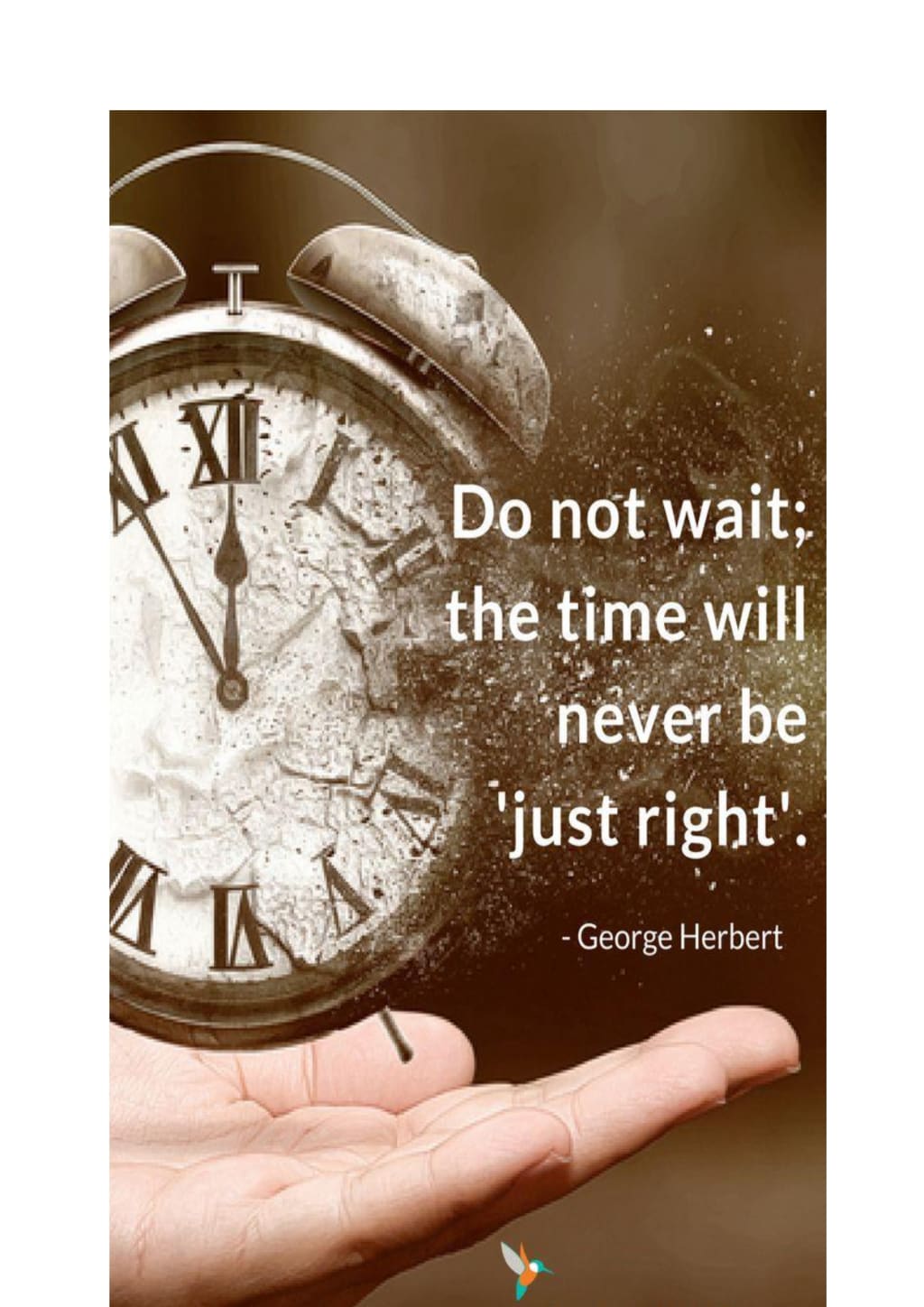
Waiting is a universal experience that crosses the course of human existence, from the ordinary moments of everyday life to the deep ambitions that determine our destinies. Usually considered as a weight, this waiting phase can become a powerful catalyst for faith and tenacity. The Bible, which is a source of wisdom, offers profound reflections on this very attitude. The subject: "He who waits does not look at time" pushes us to perceive waiting not as a period of inactivity, but as a dynamic manifestation of faith and unfailing trust in God.
1. Biblical perspectives on waiting
Biblical expectation transcends mere passive endurance ; it is an active posture characterized by faith and hope. Throughout the Scriptures, many characters embody this reality :
1.1 Abraham : A model of confident expectation
God's promise to Abraham of innumerable descendants (Genesis 15 :5, New International Version [NVI]) has experienced a significant delay in its fulfillment. Despite moments of doubt and human fragility, Abraham stands as a testimony of confident expectation. The Epistle to the Hebrews emphasizes his enduring patience, stating that "after patiently waiting, Abraham obtained what was promised to him" (Hebrews 6 :15, NVI). This story highlights the importance of an unshakable belief in the face of time delays. (Fee, G.D., & Stuart, D. K. (2017). How to Read the Bible for All Its Worth : Fourth Edition. Zondervan Academic.)
1.2 The Messianic expectation of Israel
For centuries, the people of Israel have longed for the coming of the Messiah, an anticipation punctuated by trials, prophetic declarations and renewed hopes. This often arduous expectation has profoundly shaped their faith. It serves as a powerful reminder that God's plan unfolds according to His divine calendar, which often differs from ours (Isaiah 55 :8-9, NVI). This concept of divine timing is a recurring theme in theological discourse. (Goldingay, J.E. (2009). Old Testament Theology: Israel's Faith. InterVarsity Press.)
2. Waiting as a test of faith
Waiting without fixing on time means turning our gaze away from the constraints of human calendars towards the constancy of God.
2.1 The temptation of time fixation
Human nature often gravitates towards the measurement and control of time. This concern can lead to discouragement when events deviate from our anticipated timelines. Even the disciples questioned Jesus: "Lord, are you now going to restore the kingdom of Israel?" (Acts 1 :6, NVI). Jesus refocused their attention on the importance of their mission rather than on the divine calendar. (Wright, N.T. (2011). Simply Jesus: A New Vision of Who He Was, What He Did, and Why He Matters. HarperOne.)
2.2 Faith as an anchor in expectation
Faith allows us to transcend the limits of time. Hebrews 11 :1 (NVI) defines faith as "a firm assurance of the things that we hope for, a demonstration of those that we do not see". He who waits in God understands the certainty of His promises, even when their fulfillment seems to be delayed (Habakkuk 2 :3, NVI). This aligns with the theological concept of faith as an assured trust in the character and word of God. (Plantinga, A. (2000). Guaranteed Christian Belief. Oxford University Press.)
3. The transformative benefits of waiting in God
Waiting in God is never a futile exercise. It refines us, instructs us and brings us closer to the Divine.
3.1 Spiritual maturation
The act of waiting cultivates virtues such as patience, humility and perseverance. Like a potter shaping clay, God uses the waiting process to mold us according to His will (Jeremiah 18 :6, NVI). This transformative aspect of expectation is often addressed in the context of spiritual formation. (Nouwen, H. J. M. (1997). The Way of the Heart: Connecting with God Through Prayer, Wisdom, and Silence. Ballantine Books.)
3.2 Getting closer to God
The expectation pushes us to seek God more ardently. Psalm 27:14 (NVI) encourages: "Hope in the LORD! Strengthen yourself and let your heart be strengthened! Hope in the LORD!"In our anticipation, we learn to depend on Him rather than on our own abilities. This promotes a deeper relationship with the Divine. (Peterson, E. H. (2006). Answering God: The Psalms as Tools for Prayer. InterVarsity Press.)
3.3 The joy of fulfillment
When the waiting period ends and the promise is fulfilled, the joy is amplified. Isaiah 40 :31 (NVI) proclaims: "But those who trust in the LORD renew their strength. They take flight like eagles ; they run and do not get tired, they walk and do not get tired."This increased joy emphasizes the value of patient endurance. (Lewis, C. S. (2001). The Problem of Pain. HarperOne.)
4. Cultivating a timeless expectation
Waiting without time fixation presents a challenge, but this is achievable thanks to specific spiritual disciplines.
4.1 Fix our eyes on Jesus
Hebrews 12 :2 (NVI) urges us to "keep our eyes fixed on Jesus, who is the author of faith and who leads it to perfection". By diverting our attention from the ticking of the clock, we learn to walk by faith, not by sight (2 Corinthians 5:7, NVI). This emphasis on a Christ-centered life is central to Christian theology. (Bonhoeffer, D. (1995). The Cost of Discipleship. Touchstone.)
4.2 Embrace the present
Jesus advises against worrying anxiously about the next day (Matthew 6:34, NVI). The waiting becomes more manageable when we fully commit to each day, recognizing the blessings of the present moment. This aligns with the principles of mindfulness and living in the present moment. (Hanh, T. N. (1991). Peace Is Every Step: The Path of Mindfulness in Everyday Life. Bantam Books.)
4.3 Active engagement in the waiting
Waiting is not synonymous with passivity. Like the servants in the parable of the talents (Matthew 25 :14-30, NVI), we are called to faithful action while waiting for the return of our Master. This underlines the importance of stewardship and a purposeful life during periods of anticipation. (Keller, T. (2008). The Prodigal God: Recovering the Heart of the Christian Faith. Dutton Adult.)
5. Divine promises for those who are waiting
The Bible is full of promises for those who place their hope in God.
5.1 Renewed strength
Isaiah 40 :31 (NVI) assures that those who hope in the LORD will have their strength renewed. This promise encourages perseverance even when the road seems long. (Swindoll, Q.C. (2007). Great Lives : Abraham : Father of Faith. Thomas Nelson.)
5.2 Fulfillment of righteous desires
Psalm 37 :4-5 (NVI) exhorts us to "make the LORD [our] delights", with the promise that "he [will give] whatever your heart desires". This suggests that aligning our desires with God's will leads to their fulfillment. (Piper, J. (2011). Desiring God: Meditations of a Christian Hedonist. Multnomah Books.)
5.3 Inner peace
Philippians 4 :6-7 (NVI) encourages us to present our anxieties to God through prayer, with the assurance that "the peace of God, which surpasses all understanding, will guard your hearts and your thoughts in Christ Jesus". This promise of inner peace brings comfort during times of waiting. (Stanley, C. F. (1992). Peace of Mind. Thomas Nelson.)
Conclusion
He who waits without counting the days testifies to a deep faith in the sovereignty of God. He prefers to be based on divine promises rather than on human deadlines. This attitude, although uncommon, exalts God and demonstrates a deep faith in His love and loyalty. In our waiting periods — whether we are talking about prayers, opportunities or transformations - let us remember that this time is never wasted. It is a sacred institution where faith is strengthened, character is refined and the heart prepares to welcome graces. So let's not be afraid to wait, because God never disappoints those who put their hope in Him. "The LORD is good to those who place their hope in him... " (Lamentations 3 :25, New Life version). Amen !
About the Creator
JEREMIE TCHINDEBE
Doctor of theology, I write on apologetics, Christian life, social justice, family, and biblical spirituality. I share reflections, teachings, poems, and analyses to inspire, edify, and transform hearts and minds on diverse topics.
Keep reading
More stories from JEREMIE TCHINDEBE and writers in Chapters and other communities.
LIVING ONE DAY AT A TIME
Introduction In our fast-paced world, where every day seems full of responsibilities, notifications and worries, many people feel overwhelmed. Between the fear of the future and the regrets of the past, it becomes difficult to find a moment of peace. The requirements for success, economic uncertainties and permanent social changes further add to this pressure.
By JEREMIE TCHINDEBE11 months ago in Chapters
If the Strait of Hormuz is closed for a long time, it will benefit Russia.
A war involving the United States and Israel with Iran carries the risk that the Strait of Hormuz could remain closed for a prolonged period. This is a crucial route in the global economy through which 20% of the world’s oil and liquefied natural gas is supplied from the countries of the Persian Gulf.
By Real content8 days ago in Chapters



Comments
There are no comments for this story
Be the first to respond and start the conversation.