
The Mysterious THIRD EYE You Didn’t Know You Had
The third eye
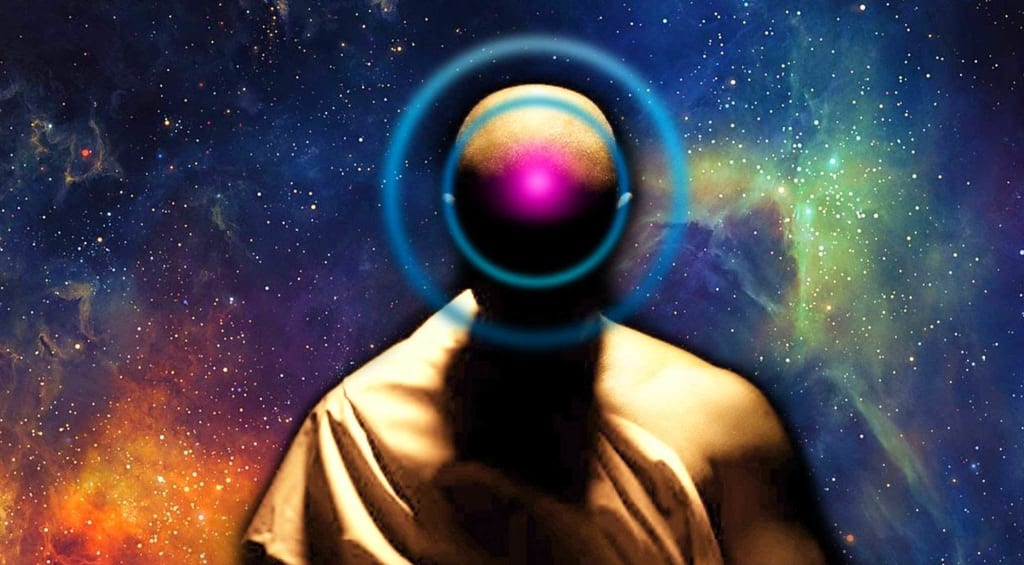
For millennia, humanity has always been fascinated
with what lies beyond the physical realm. A large part of our population have been interested
in and preoccupied themselves with the supernatural - those which are beyond or above nature or
reality, and those which are not observable or a part of a tangible or measurable universe. We have the natural inclination to be curious
of the unknown, which is why many of us have clung on to the transcendent and the divine. And among those who believe that something
lies beyond our material world, there are those who claim that there is a way to break
the barrier that separates the physical and the spiritual; a way that human beings could
see what should be unseeable, hear what should be unhearable, and sense what should be unsenseable. This is what they call the “third eye.” And this mystical, extra “eye” believed
to be innate in all humans is referred to in the field of science and modern biology
as the pineal gland. As biological science would explain it, the
pineal gland - also known as the conarium or the epiphysis cerebri - is a tiny endocrine
gland located in the brain. Its size is no bigger than a pea and is situated
deep into the core of the brain, between its left and right hemispheres. This endocrine gland gets its name from the
Latin word ‘pinea’ - which translates to ‘pine cone’ - and is named as such
because its shape resembles one. The pineal gland is a very small, reddish-gray
organ, which measures only about one centimeter in length, and is attached to the posterior
end of the roof of the human brain’s third ventricle. It is mainly comprised of pineal cells as
well as neuroglial cells, and its known main purpose so far is the synthesis and secretion
of a hormone called melatonin. Melatonin is a simple hormone but is also
considered to be very special because its secretion is dictated by light. As a hormone, it communicates information
about environmental lighting to various parts of the human body. According to researchers, melatonin has two
primary functions in human beings: first is to help entrain our circadian or biological
rhythm, while its second purpose is to regulate certain reproductive hormones. Humans’ circadian rhythm is a 24-hour biological
cycle which is characterized by sleep-wake patterns. Daylight and darkness help dictate a person’s
circadian rhythm. Exposure to light stops the secretion of melatonin,
which in turn helps in controlling circadian rhythms. Because melatonin secretion is low during
the daylight hours and high during dark periods, it influences our body’s reaction to photoperiod,
which is defined as the length of day versus night. Since photoperiod affects sleep patterns,
melatonin plays a role in controlling our sleep habits, though the extent of its impact
is still disputed. Melatonin also blocks the secretion pituitary
hormones that aid in the development and functioning of reproductive organs such as the ovaries
and testes. For such a tiny structure, the pineal gland’s
full purpose remains shrouded with a bit of mystery. Since its function was the last one to be
discovered among the endocrine glands, research is still ongoing in an attempt for humans
to get closer to understanding this mysterious organ. In the past and until now, various spiritual
traditions and their devout believers consider the pineal gland as the “third eye,” and
activating it is associated with accessing a higher, mystical level of inner vision,
insight and wisdom. In fact, Rene Descartes, the Father of Modern
Philosophy, once described the pineal gland as the “seat of the soul.” For millennia, the pineal gland has been connected
with the concept of spirituality in many ancient traditions and is subtly represented in modern
establishments as well. Its pine cone shape, for instance, is found
in many art and artifacts of various traditions, where it serves as a symbol of enlightenment
and immortality. For example, the ancient Egyptians held the
pineal gland in such high regard that it is even preserved separately during the process
of mummification. There are also claims that the Egyptians associated
the pineal gland with the symbol of an eye, which is very prevalent in their discovered
art and artifacts. In Greek mythology, the greek god Dionysus
carries a pine cone staff, while the Babylonian god Tammuz is also pictured carrying a pine
cone. The Hindu religion, on the other hand, depicts
all of its gods with a third eye located on their forehead, between the two eyes of the
face. Even the Roman Catholic faith utilizes the
pine cone as a symbol. And not only does the Church have a huge sculpture
of a pine cone in the Vatican Square called the “Court of the Pine Cone,” their religion
also uses ornaments as well as candle holders decorated with pine cone designs. A reference to the pineal gland can also be
seen in the back of the U.S. one-dollar bill called the “all-seeing eye.” Some argue that this may just be a subtle
depiction of the nation’s close relationship to Free Masonry - which, by the way, also
uses a lot of pine cone or pineal gland symbolism. However, there are also those who claim this
to be a reference to the mystical abilities of people which are hiding inside an unlocked
endocrine gland. In modern times, many believe that every human
being’s pineal gland or “third eye” can be activated to frequencies of the spiritual
world, giving us the power to sense the all-knowing, godlike euphoria and oneness that surround
us. They believe that the pineal gland can be
tuned into the proper frequencies with the help of meditation, yoga and other esoteric
or occult methods. And once a person has achieved this state,
he or she has the ability to travel into other dimensions - which is popularly known as astral
travel or astral projection. Through more advanced and ancient methods,
they also believe it possible for people to control the thoughts and actions of other
people in the physical world. Some of those who believe in the spiritual
power hidden in the pineal gland are also of the opinion that there are strong forces
in our society which have taken great lengths to ensure that we never access and unleash
this innate potential within ourselves. This elaborate conspiracy involves the suppression
of the pineal gland through people’s unwitting consumption of sodium fluoride. In the late 90s, the first study on the effects
of sodium fluoride on the pineal gland was carried out. It was determined that this tiny gland is
actually a prime target for fluoride since it absorbs more of this chemical than any
other physical matter in the body, including the bones. Because sodium fluoride is attracted to the
pineal gland like a magnet, this leads the gland to calcify, rendering it ineffective
in fulfilling its biological as well as spiritual functions. Nowadays, fluoride is prevalent in the food
we eat and the beverages that we drink. Even the majority of the water supply in the
United States are infused with sodium fluoride. Water fluoridation has always been a controversial
issue not just for those with spiritual beliefs but for everyone. Though it is widely accepted that fluoride
is toxic in high doses, a trend in the twentieth century emerged which added this chemical
to people’s drinking water at dosages deemed as “safe.” Where did this trend begin? Well, fluoride was introduced by the Nazis
as well as the Russians into the water supply of their concentration camps so that their
prisoners remain docile and don’t question authority. As to how water fluoridation was introduced
in America, there are theories claiming that a large corporation was behind the practice,
stemming from an elaborate orchestration that allowed an industry to dump toxic waste into
the public water supply while also getting paid in the process. However, there are also those who are of the
opinion that water fluoridation is actually a sinister plan by powerful, shadowy forces
to reduce an individual’s power to resist domination, and to suppress a person’s ability
to awaken the powers of their consciousness, thereby preventing them from reaching their
full potential. Regardless of whether the pineal gland is
indeed the divine link to a realm beyond our observable plane of existence, it cannot be
denied that this tiny, pea-sized and pine cone-shaped organ is a valuable part of the
human anatomy. However, though we are aware of some of its
biological functions, the full purpose of the pineal gland remains to be an exciting
scientific question which invites further research and investigation. And since science and modern biology are still
working to unlock its remaining mysteries and secrets, there might be a future somewhere
in the horizon in which the pineal gland could truly be heralded as humankind’s “third eye.”
About the Creator
Keep reading
More stories from TBH Agencia Exclusiva Colsanitas and writers in Chapters and other communities.
Doctor SWEARS He Traveled to Edge of HELL & Saw Angels During Own Surgery
What happens after we die is a question really no one can ever truly answer I mean we all have our beliefs some of us like myself believe in reincarnation some believe in heaven and hell and some don't believe anything at all I just read this article that was sent to me and it was pretty interesting it talks about a doctor named rajie party who was the chief anesthetist at Bakersfield Heart Hospital in California and how he would always dismiss his own patients when they tell him about their out-of- body experience until he had his own Dr party described himself as a very materialistic person he has made a lot of money which he spends on nice cars a huge house and he puts a lot of pressure on his kids to make a lot of money as well this was until one day he was diagnosed with prostate cancer and after a series of surgeries nothing got better one day at home Dr party suddenly felt weak and was rushed to the hospital with a bad infection and immediately went in for surgery he said that after he was was put under he had an outof Body Experience where he could see himself being operated on he said everything was so clear to him he could see everything and hear everything going on in the room in fact he even heard and remembered an off-color joke made by one of the doctors then from the operating room he was transported back to when he was a child with his mother and sister in India he was able to see his mother and sister so perfectly he could even remember the exact clothes they were wearing right after that though everything turned terrifying Dr party said he heard screams of pain and anguish and he was drawn in to the edge of a flaming Canyon where he smelled smoke and burning flesh and he knew that he was on the Edge of Hell there he heard a voice that said you have led a materialistic and selfish life at the same time he kept seeing visions of his life where he put material things above actually helping other people Dodger party then said he was helped away from the Edge of Hell by two angels who told him to reevaluate his life and that he would eventually become a he heer of souls when Dr party woke up he was in the hospital and he tried telling the doctors what he saw even repeating the exact joke that he heard during his surgery although the doctors were surprised that he was able to recall the joke they did not believe him and just thought that he may have just woken up a bit during that part of the surgery but Dr party was convinced of his experience so much so that he quit his job sold his house and cars and established a new practice to help people through meditation and other alternative methods now near-death experiences for ndes are more common than you think in fact ndes are reported by an estimated 200,000 Americans a year and studies around the world suggest ndes are a common Human Experience since 1992 13 million Americans were 5% of the nation's population had experienced a near-death experience so personally I I do believe that Dr party did have an actual outof body experience and I believe he saw what he saw but let me know what you guys think next up in a bit too quick L make computers into our human overlords Google's AI company Deep Mind has now partnered up with Blizzard Entertainment so that his computers can play the Starcraft games and by doing so develop more advanced AI algorithms capable of learning reasoning remembering and adapting complex strategies to win now if you didn't know Google's AI has already mastered a number of games including the classic atori breakout which it mastered in 2 hours and it was so good at the the Chinese board game go that had beat the human gold Champion earlier this year but now the AI will be dealing with multiple human opponents it's got to manage resources and work out the best way to win on a map where nothing is revealed until Scouts are sent out and it's got to deal with the fields between Jim and carrian so basically we are teaching computers on how to beat us in space combat and to not pity us at all when we try to beg it for Mercy by telling it a mushy soft story finally 35-year-old renit Singh from Northern India is trying to set a new world record for lifting super heavy objects with his beard Mr Sing who works as a factory worker first started lifting objects with his beard in 2010 after being inspired by stunts he seen on television so he decided that same day that he will prepare himself for a Guinness Book of World Records and get his country a record in beard lifting he started facial hair workouts from videos he found online and became more confident after lifting his first 10 lb object object from then on he lifted a boy and now he can lift a person who weighs around 120 lbs currently the beard lifting record is 138 lbs belonging to antanas krias from Lithuania but sing is looking to break that record by lifting 141 lbs he does say that most of his family finds what he's doing pretty embarrassing but his 10-year-old son sees him as a hero because he can do something that no other dads can do and if you look at that picture yeah his wife doesn't seem all that thrilled but hey who knows maybe beard man would make an appearance in the next Avengers movie but seriously as kind of weird as this story is I really do respect people who set out to achieve something and actually does it and I hope Mr Sing does end up breaking the record in this video we talked about a doctor who saw how Google is training the next Skynet and the man who has a beard who could lift more than most of us.
By TBH Agencia Exclusiva Colsanitas2 years ago in Chapters
The Cave Part 6
If you have ever heard a tale about yourself that you cannot remember and doubtless think is made up, you will know how I felt when Tharkin related all that the eagle had seen of me before my memories were scattered. Of far distances and traveling companions that I did not recall, camping out under the stars and making our way to the mountains with deliberate purpose. The great bird had lost contact with my party once we entered the forests, and the seven other members were not seen again by him or his brethren since.
By Jamye Sharp28 days ago in Chapters
🌿 5+ Powerful Dragon Plant Benefits for Calm, Balance & Style
Indoor plants do more than decorate a room—they transform how a space feels. One plant that stands out for both beauty and wellness benefits is the dragon plant, commonly known as Dracaena. With its elegant leaves and easy-care nature, this tropical houseplant has become a favorite among homeowners and interior designers alike.
By Leafy Heaven4 days ago in Chapters


Comments (2)
Nice article
Thanks for sharing