
The Longevity Paradox: Why Living Longer Isn't Just About What You Eat
Redefining Health in the Age of Extended Lifespans

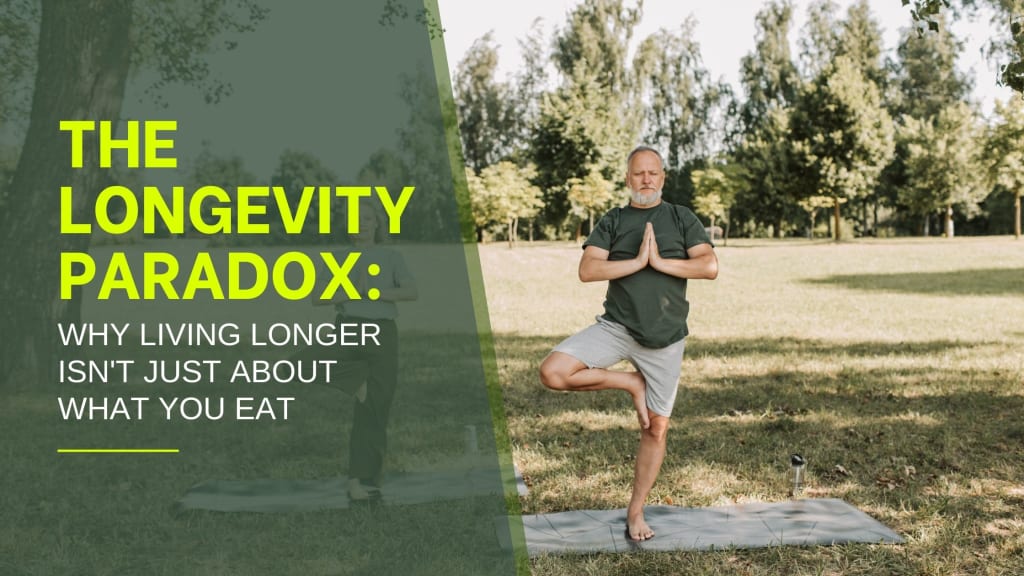
Living longer has become something of an obsession in our culture. From supplements promising eternal youth to diets claiming to add decades to your life, the longevity market has exploded. But beneath the marketing and miracle claims lies a more nuanced truth: true healthspan, the period of life spent in good health, requires more than just the right foods or pills.
The conversation around longevity has been largely dominated by nutrition and supplementation. While these are undoubtedly important, they represent just one piece of a complex puzzle. The latest research reveals that meaningful longevity hinges on an integrated approach that extends far beyond what's on your plate.
At its core, longevity science isn't actually about living forever, it's about living better for longer. This distinction matters. When we focus exclusively on extending life without considering its quality, we miss the point entirely. The goal isn't just to add years to life, but life to years.
Recent studies from the Blue Zones, regions where people commonly live well into their 90s and 100s, show that diet, while significant, is just one factor in a matrix of behaviors. What these communities share beyond nutrition are strong social connections, daily movement integrated into everyday life, clear purpose, and stress management practices.
The research is compelling: loneliness has been shown to be as harmful to health as smoking 15 cigarettes a day. Meanwhile, having strong social connections can reduce the risk of premature death by up to 50%. This suggests that maintaining meaningful relationships might be as important for longevity as what you eat or how much you exercise.
Equally significant is the role of purpose. A 2019 study published in JAMA Network Open found that adults who scored highest on purpose in life evaluations were 2.4 times more likely to remain free from disability as they aged, regardless of their education, race, or current health status. Having a reason to get up each morning appears to be a powerful driver of physical resilience.
Sleep quality, too, has emerged as a critical factor. During deep sleep, the brain's glymphatic system, a recently discovered cleanup mechanism, removes cellular waste that can contribute to neurodegenerative diseases. Poor sleep doesn't just make us tired; it compromises our body's fundamental maintenance systems.
Stress management represents another vital piece of the longevity puzzle. Chronic stress triggers inflammation and cellular damage that accelerate aging at the genetic level, specifically through telomere shortening. Practices like meditation, time in nature, and breath work have been shown to mitigate these effects, potentially extending both lifespan and healthspan.
The mind-body connection, once dismissed as pseudoscience, has gained legitimacy in longevity research. Our thoughts and emotions influence our physiology in measurable ways. Studies show that optimistic people live 11-15% longer than pessimists and demonstrate stronger immune function. The emerging field of psychoneuroimmunology continues to reveal how our mental states affect our physical well-being.
While nutrition remains important, even here the picture is more complex than simply following a particular diet. Research increasingly points to personalized nutrition, the idea that optimal eating patterns vary between individuals based on genetics, microbiome composition, lifestyle, and environment. The most effective diet for longevity may be one tailored to your unique biology.
Exercise, too, requires a personalized approach. While movement is universally beneficial, the optimal type and amount vary widely between individuals. Recent research suggests that different exercise modalities, from high-intensity interval training to gentler movement practices like tai chi, trigger distinct longevity pathways in the body.
What does this mean for those of us seeking to maximize our healthspan? It suggests taking a more holistic view. Rather than chasing the latest supplement trend or restrictive diet, we might be better served by cultivating meaningful relationships, finding purpose, managing stress, prioritizing sleep quality, and developing an individualized approach to nutrition and movement.
The most promising longevity strategies don't require expensive products or extreme regimens. They involve reconnecting with fundamental aspects of human experience that modern life often neglects: community, purpose, presence, and joy. The centenarians of the Blue Zones don't count calories or obsess over macronutrients, they share meals with loved ones, move naturally through their days, and maintain a sense of purpose into old age.
In our quest for extended healthspan, we would do well to remember that longevity isn't a product to be purchased but a life to be lived, fully, mindfully, and in connection with others. The path to living longer may be less about what's on our plate and more about what's in our hearts and minds.
About the Creator
Naushad Parpia
Naushad Parpia is the Founder and CEO of Earthside Farms, creating healthy snacks focused on wellness. Visit naushadparpia.org to learn more about his vision.
Keep reading
More stories from Naushad Parpia and writers in Chapters and other communities.
WFH = DEI
Remote work has fundamentally transformed the modern workplace, and one of its most profound impacts has been on diversity and inclusion. As companies continue to embrace flexible work arrangements, they are finding that remote work can significantly broaden access to talent from a variety of backgrounds, locations, and perspectives. By breaking down geographic barriers and offering greater flexibility, remote work environments enrich workplaces with diversity and foster a more inclusive culture.
By Naushad Parpiaabout a year ago in Journal
Fair Exchange, No Robberies
Dark Memoirs - Index There are at least two kinds of people in the world: those who write this half-arsed kind of intro to a story that looks to separate the rare and the norm, and those who realise it's an overused framing device and don't.
By Paul Stewart16 days ago in Chapters
Rachel Reviews: The Spiral Archive by Pieter Hendrik
It's difficult for me to know where to start with a review of this book as it was, for me, an entirely unique experience and one that I'll probably never have again. I don't want that to be interpreted as unenjoyable but it has left me scratching my head a little and ruminating on its content, its themes and its characters.
By Rachel Deeming4 days ago in BookClub


Comments
There are no comments for this story
Be the first to respond and start the conversation.