

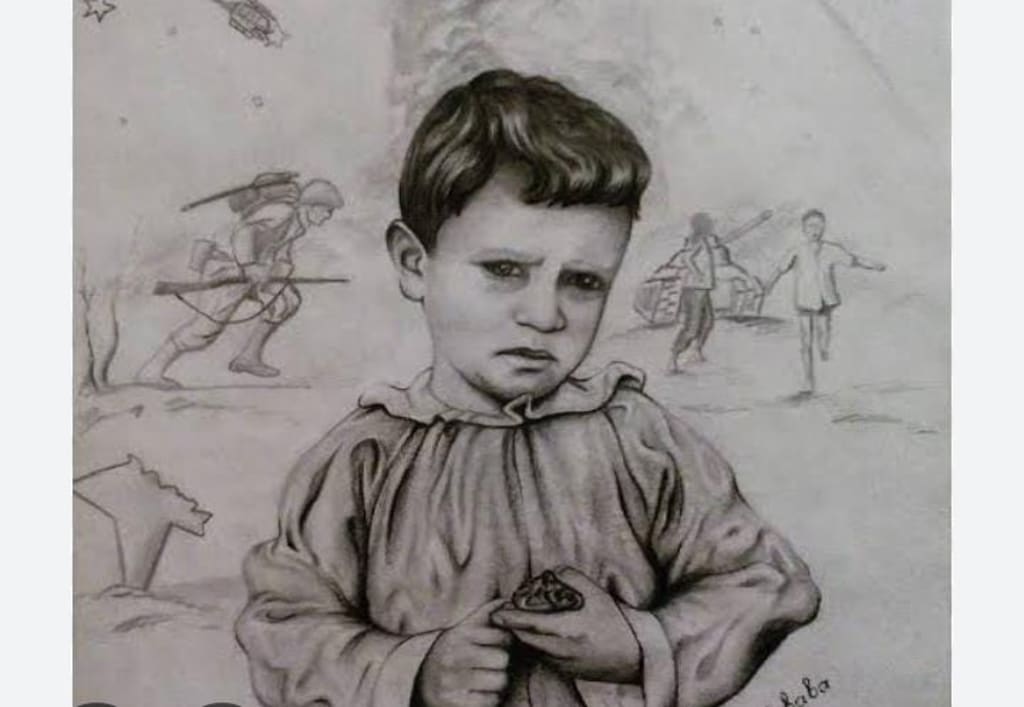
The air in Germany was thick with smoke and silence in the spring of 1945. The war was ending, but no one dared to say it out loud. Cities were rubble. Roads were graves. What was once pride had rotted into exhaustion, fear, and the bitter taste of defeat.
In the outskirts of Dresden, where broken chimneys poked the sky like crooked fingers, a young German soldier named Erik Weiss waited in the ruins of a house that had no roof. He was 20 years old and had known more about rifles than books, more about orders than truth.
He had one bullet left.
Not just in his rifle. In the world, it seemed.
His unit had been scattered the week before. Russian forces had come from the east like a flood. The Americans were pushing in from the west. His superior officer had shot himself two days ago. The others had run or died.
And now there was Erik. Alone, dirty, hungry. Clutching his Kar98 rifle like it was the last anchor holding him to the earth.
He sat against the cold stone wall, listening to the distant rumbles of artillery and the rare, ghostlike song of a bird who didn’t know this wasn’t a place for music anymore.
Then he saw her.
A woman—mid-30s, perhaps—leading a child through the rubble, her coat too thin for spring, her eyes scanning every window. Erik raised his rifle.
His breath caught. His finger hovered over the trigger.
Enemy? Civilian? Did it matter?
The child stumbled. The woman knelt to help. Not soldiers. Just survivors.
Erik’s hands trembled. He lowered the rifle. Not out of mercy—but out of something deeper. Something that felt like remembering who he had once been.
He had grown up in Leipzig, read Goethe and sketched landscapes. He had kissed a girl once in a churchyard and promised her he would return with stories.
That promise now tasted like a lie.
As the sun began to set in streaks of gold and ash, Erik crept down from the ruins. He followed the woman and child at a distance. Not to harm—but to protect, though he didn’t fully know why.
They found shelter in what remained of a chapel. Erik stood outside the crumbling wall, rifle in hand, heart pounding like drums from some funeral march. The child coughed. The woman lit a candle. The flame flickered—defiant.
Then came voices. Foreign. Sharp. Close.
Soldiers. American.
Erik froze. If they found him with a rifle, they’d shoot first. He could run. He could hide. Or...
He touched the cold metal of the final bullet.
Was this what it was for? Not for killing—but for escaping shame?
He looked up at the broken cross atop the chapel. Then at the candlelight inside. And finally, at the rifle in his hand.
He slowly set it down.
Walked forward, hands raised.
They found him like that.
An American sergeant shouted. Another aimed. But Erik did not flinch.
“I’m done,” he said in German. “No more.”
A younger American—barely older than Erik—approached and kicked the rifle away. He saw the single bullet still in the chamber. He looked at Erik, then at the chapel behind him, where the woman and child hid, silent and wide-eyed.
“What’s your name?” the American asked.
“Erik,” he replied. “Just Erik.”
The sergeant gave a nod.
“You’re lucky,” the soldier muttered. “War’s almost over.”
Erik exhaled for the first time in days. Maybe in years.
Epilogue:
Months later, Erik sat in a camp, now a prisoner but alive. He was given food. Blank paper. A pencil.
He wrote letters—apologies, memories, truths. And in one envelope, he placed the bullet he had kept from that day.
About the Creator
Top tipple tricks
Been thinking a lot about drinking, lately. Not least because of a recent episode of over-indulgence and the inevitable after effects. Some readers may recall the earlier articles I wrote about beating the booze. Here I set out an experiment in techniques for cutting down on my alcohol intake. The experiment was successful, the techniques worked, and I have armed myself with an arsenal of weapons in the war against the demon drink. I have yet to fire the first round however. It's all a question of timing (perhaps procrastination).
By Raymond G. Taylor6 days ago in Psyche



Comments
There are no comments for this story
Be the first to respond and start the conversation.