
The Impact of Phones on the Brain
A Double-Edged Sword

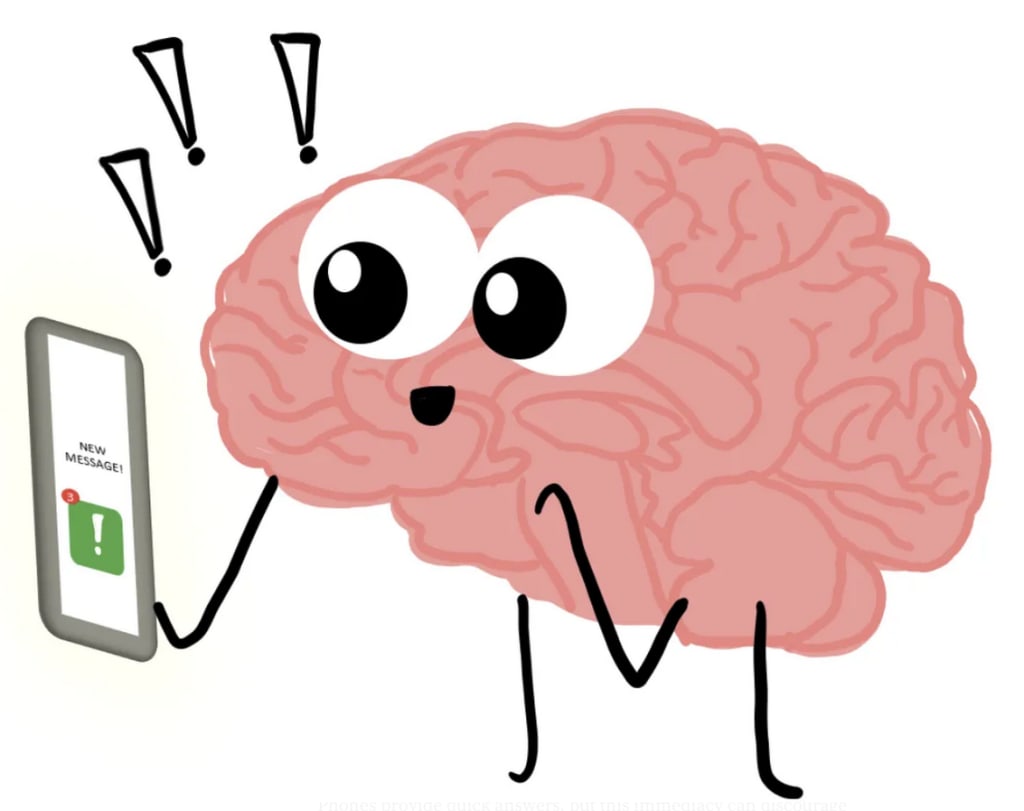
In today’s digital age, smartphones have become an inseparable part of our lives. These pocket-sized devices provide instant access to information, social connections, and entertainment. While their benefits are undeniable, the heavy reliance on phones is raising concerns about their impact on the human brain. Research suggests that smartphones can influence cognitive function, mental health, and neural activity in both positive and negative ways.
The Cognitive Impact of Phones
Memory and Information Retention
Smartphones have transformed how we store and access information. With the internet at our fingertips, many of us rely on devices instead of memory for facts and details, a phenomenon called “digital amnesia.” While this can enhance efficiency, it may reduce our brain’s ability to retain information over time.
Attention Span
Constant notifications and easy access to endless content can fragment our focus. Studies indicate that frequent phone use can reduce attention spans, making it harder to concentrate on tasks for extended periods. Multitasking, often encouraged by smartphone use, has been shown to impair cognitive performance rather than improve it.
Problem-Solving and Critical Thinking
Phones provide quick answers, but this immediacy can discourage deeper problem-solving and critical thinking. Over-reliance on technology may lead to a decline in our ability to analyze complex problems without external aids.
Mental Health Implications
Stress and Anxiety
The constant influx of notifications, emails, and messages can create a sense of urgency, leading to stress and anxiety. Social media use, facilitated by smartphones, has been linked to feelings of inadequacy and fear of missing out (FOMO), particularly among younger users.
Sleep Disruption
The blue light emitted by phone screens can suppress melatonin production, a hormone critical for sleep regulation. Late-night phone use has been associated with poor sleep quality and disrupted circadian rhythms, affecting overall mental and physical health.
Addiction and Dependence
Smartphones are designed to be engaging, leveraging features like push notifications, infinite scrolling, and gamification. These elements can lead to compulsive use, akin to behavioral addiction, impacting mental well-being and productivity.
Neural Changes and Brain Activity
Brain Plasticity
The brain is highly adaptable, and prolonged phone use can reshape neural pathways. While this adaptability helps us master new skills, like navigating apps, it may come at the expense of other cognitive abilities.
Emotional Regulation
Frequent exposure to emotionally charged content, such as social media posts or sensational news, can heighten emotional responses. This overexposure may alter the brain’s capacity to regulate emotions effectively.
Reward System Activation
Smartphones stimulate the brain’s reward system through likes, shares, and notifications, releasing dopamine. While this can reinforce positive habits, it can also foster addictive behaviors.
Positive Impacts of Smartphones on the Brain
Enhanced Learning Opportunities
Smartphones enable access to a wealth of educational content, from online courses to real-time language translation. These tools can stimulate intellectual growth and expand knowledge horizons.
Improved Connectivity
Maintaining social connections has been shown to support mental health. Smartphones allow users to stay connected with friends and family, reducing feelings of isolation.
Cognitive Training
Many apps focus on brain training, mindfulness, and cognitive enhancement. When used appropriately, these apps can help improve memory, focus, and mental resilience.
Finding a Balance
The key to mitigating the negative impacts of phones on the brain lies in mindful use:
1. Set Boundaries: Establish phone-free zones or hours, especially before bedtime.
2. Prioritize Focus: Use apps or features that minimize distractions, like Do Not Disturb mode.
3. Engage Mindfully: Balance passive scrolling with meaningful interactions or educational activities.
4. Practice Digital Detox: Periodically disconnect from phones to reset focus and reduce dependency.
Smartphones are powerful tools that can enrich our lives but also pose challenges to our brain health. Striking a balance between utility and overuse is essential to harness their benefits while minimizing potential downsides. By using phones mindfully, we can protect our cognitive and mental well-being in an increasingly digital world.
About the Creator
Keep reading
More stories from Gus Woltmann and writers in Chapters and other communities.
The Expanding Universe
The universe’s expansion is one of the most astonishing and foundational concepts in modern astrophysics. Ever since the groundbreaking discovery in the 20th century, the idea that the universe is expanding has captivated scientists, sparking questions about the nature of the cosmos, its origins, and its ultimate fate. This article explores the history, mechanics, and implications of cosmic expansion.
By Gus Woltmann5 months ago in Chapters
How Iran Attacks Are Affecting Pakistani Workers in Dubai and the Gulf
Until a few days ago my work was going very well, but now several days pass without getting any work. Over the past five years I manageid to pay off the debts that were on me and my family. Now my goal was to build my own house. But if the situation continues like this, it may even become difficult to earn a living in Dubai.”
By Real content6 days ago in Chapters
Top tipple tricks
Been thinking a lot about drinking, lately. Not least because of a recent episode of over-indulgence and the inevitable after effects. Some readers may recall the earlier articles I wrote about beating the booze. Here I set out an experiment in techniques for cutting down on my alcohol intake. The experiment was successful, the techniques worked, and I have armed myself with an arsenal of weapons in the war against the demon drink. I have yet to fire the first round however. It's all a question of timing (perhaps procrastination).
By Raymond G. Taylor6 days ago in Psyche



Comments