
The Harmful Effects of a Two-Country Operation
Bilateral Actions with Destructive Outcomes"

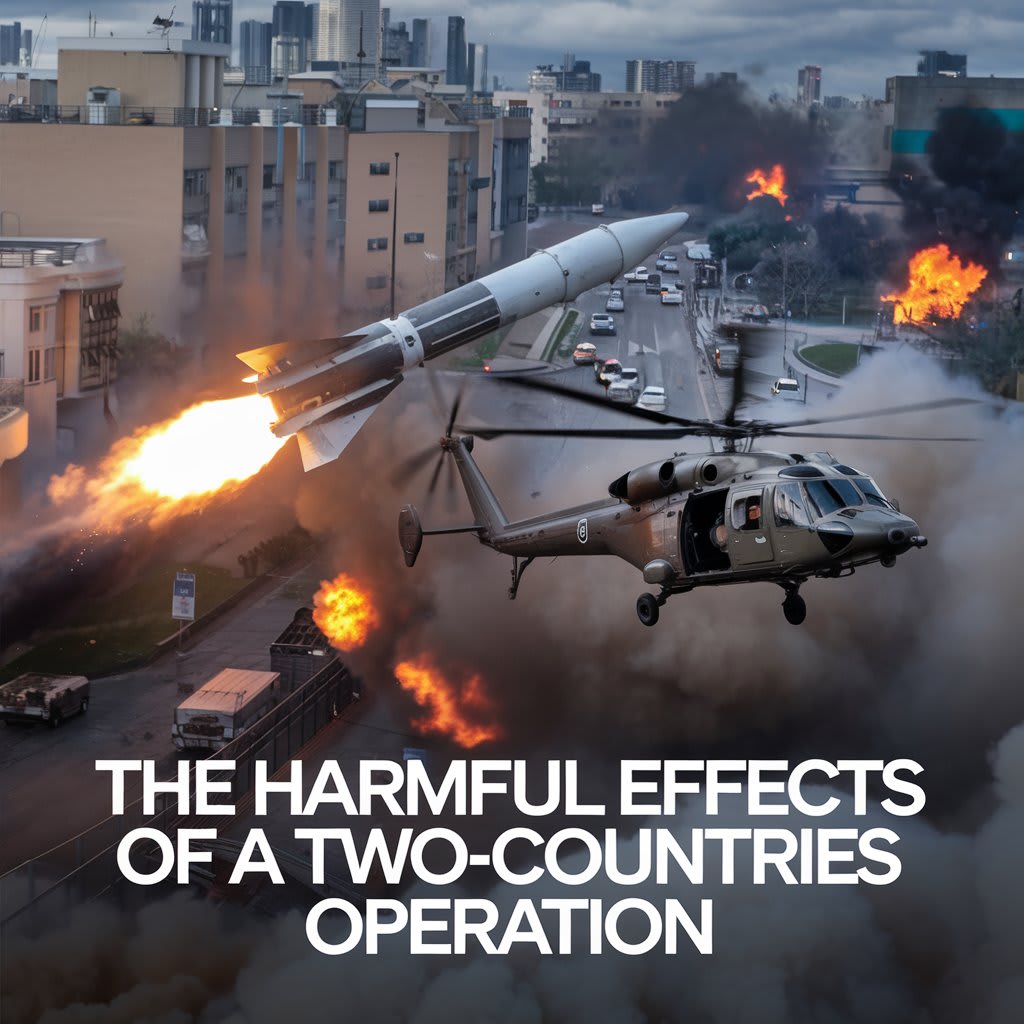
In the global landscape of geopolitics, alliances between countries can lead to significant cooperative efforts, including military operations, intelligence sharing, and economic interventions. While collaboration can sometimes yield beneficial outcomes, two-country operations—especially those conducted with military or covert intent—often result in unintended and harmful consequences. These operations can destabilize regions, inflict humanitarian crises, undermine international law, and damage diplomatic relations.
### Historical Context and Examples
One of the most notorious examples of a two-country operation with devastating consequences was the 2003 invasion of Iraq by the United States and the United Kingdom. Marketed as a mission to dismantle weapons of mass destruction (WMDs) and combat terrorism, the invasion ultimately proved to be based on faulty intelligence and misleading claims. The aftermath of the operation resulted in the collapse of Iraqi institutions, a power vacuum that led to the rise of ISIS, widespread civilian casualties, and the displacement of millions. This operation not only destabilized the Middle East but also severely damaged the credibility of the participating nations on the international stage.
Similarly, joint operations in Afghanistan by NATO forces, led primarily by the U.S. with British support, initially aimed to dismantle terrorist networks. However, the prolonged military presence and controversial tactics such as drone strikes, civilian raids, and targeted assassinations led to deep resentment among local populations. The social and psychological toll on both civilians and military personnel has been immense, highlighting how such operations often perpetuate cycles of violence rather than resolving underlying issues.
### Regional Destabilization
One of the primary harmful effects of a joint operation between two countries is the destabilization of the targeted or neighboring regions. When foreign powers intervene militarily or politically, local governance structures are often disrupted. This was evident in Libya after the 2011 NATO-led intervention, heavily supported by France and the UK. Although the operation succeeded in toppling Muammar Gaddafi, it left behind a fragmented and lawless state prone to civil war and extremist activity.
Foreign-led interventions often disregard the complexities of local politics, culture, and ethnic tensions, resulting in long-term instability. The vacuum left by toppled governments is frequently filled by insurgent groups or warlords, plunging the affected regions into chaos. The cost of restoring peace and rebuilding institutions becomes exponentially higher, both in economic and human terms.
### Humanitarian Consequences
Two-country operations often result in severe humanitarian crises. Civilian populations bear the brunt of military invasions or covert interventions. Displacement, food insecurity, loss of healthcare, and psychological trauma are common outcomes. In Syria, the joint efforts of Russia and the Assad regime, backed by Iran, led to widespread destruction of civilian infrastructure, including hospitals and schools. Although not a classic two-country operation in Western terms, it illustrates how bi-national efforts—even if aligned in motive—can exacerbate humanitarian disasters.
Moreover, economic sanctions imposed jointly by two powerful nations, such as the U.S. and the EU or the UK, can cripple a country’s economy. While intended to force regime change or policy reform, sanctions often hurt the most vulnerable segments of the population, including children, the elderly, and the sick, while failing to affect the ruling elites significantly.
### Erosion of International Norms and Laws
Another harmful impact of two-country operations is the erosion of international law. Unilateral or bilateral military interventions often sidestep the United Nations and disregard international consensus. This sets dangerous precedents that other countries may follow, justifying future interventions without broad support or legal legitimacy.
Such actions weaken multilateral institutions and undermine the rules-based global order. When powerful nations flout international norms, it encourages smaller states or authoritarian regimes to do the same, potentially leading to a more fragmented and conflict-prone world.
### Diplomatic Fallout and Global Divides
Two-country operations can also sour international relations and widen global divides. Countries not involved in the operation may view it as a breach of sovereignty or an act of aggression, straining diplomatic ties. For instance, China and Russia strongly opposed NATO operations in the Middle East, perceiving them as over
About the Creator
Keep reading
More stories from Shams Urahman and writers in Chapters and other communities.
The Old Man and the Snake
In a quiet village nestled between two great hills, there lived an old man named Arun. He was a solitary figure, with a long white beard and eyes that had seen too much of the world. His cottage, made of stone and wood, stood at the edge of the forest, where the trees whispered ancient secrets and the wind carried stories lost to time.
By Shams Urahman9 months ago in 01
What Gives Life Variety For Living The Way People Do
When we look at our lives and how we live them, what is the first thing that comes to mind? Is it what we do for work or how we spend time with family or how we relax at the end of a long day? Life is not all about work, sure we need to make money but relaxing is part of living too. So sure we might work throughout the week, but weekends are meant for relaxing and doing the hobbies we enjoy and spending time with friends and family. When we put the way we live our lives into the hobbies we enjoy, that is where the variety comes into play. The variety that comes into play, can be either, watching television, or making friendship bracelets while watching television or gardening while listening to music or working out while listening to music. Or cleaning up your house, and re-arranging things to give it a different look or re-folding your clothes to make them neater, or cleaning up your bookshelf to make it neater. Do the different hobbies you enjoy. When we do the hobbies you enjoy and change them up with the seasons how does that make you feel?
By Louise Barraco5 days ago in Chapters



Comments
There are no comments for this story
Be the first to respond and start the conversation.