
The Golden Age of the Roman Empire
Pax Romana and the Height of Imperial Power

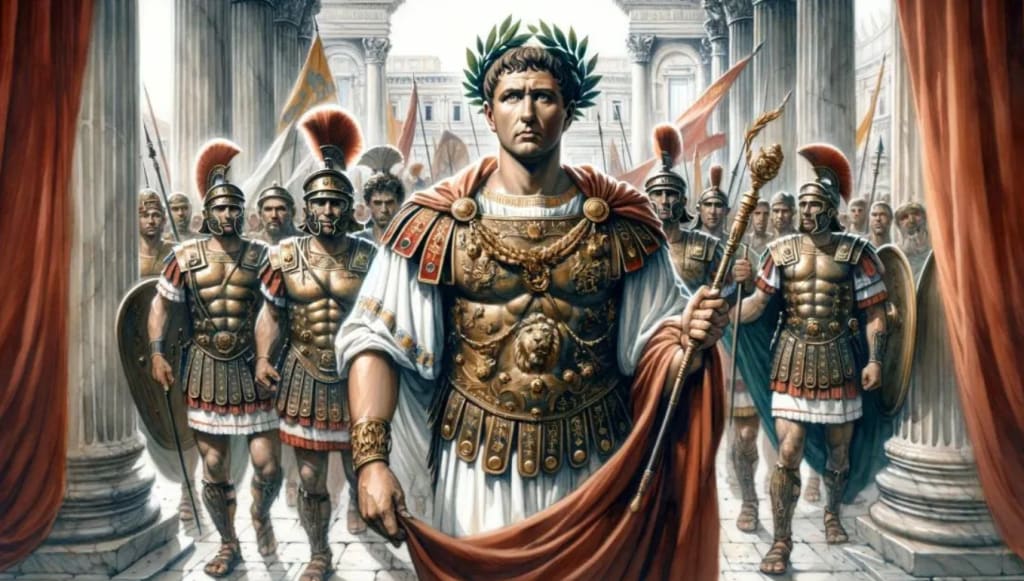
The “Golden Age” of the Roman Empire, commonly referred to as the Pax Romana (Roman Peace), represents a period of unparalleled stability, prosperity, and cultural flourishing in Roman history. Spanning from 27 BCE to 180 CE, this era saw the empire reach its zenith in terms of territorial expansion, economic strength, and influence over the ancient world. This article explores the key elements that defined this golden age, from the reign of Augustus to the end of the Five Good Emperors, highlighting the achievements and challenges that shaped the Roman Empire’s most celebrated period.
The Beginnings of Pax Romana
The Pax Romana began with the rise of Augustus, Rome’s first emperor, following the tumultuous period of civil wars that had marked the end of the Roman Republic.
Augustus and the Foundation of the Empire
Establishing the Principate: In 27 BCE, Octavian, later known as Augustus, emerged as the unchallenged leader of Rome after defeating Mark Antony and Cleopatra. He cleverly consolidated power while maintaining the outward appearance of republican governance, a system known as the Principate. Augustus was granted extraordinary powers by the Senate, including control over the provinces and the military, which allowed him to effectively rule as an emperor.
Reforms and Stability: Augustus implemented numerous reforms that stabilized the empire. He reorganized the military, established a standing army with a clear chain of command, and created the Praetorian Guard to protect the emperor. His administrative reforms included standardizing tax collection, improving infrastructure, and encouraging trade across the empire.
Cultural Renaissance: The Augustan Age also witnessed a cultural revival, with significant contributions to literature, architecture, and the arts. Poets like Virgil, Horace, and Ovid flourished under Augustus’ patronage, producing works that celebrated Roman ideals and the emperor’s achievements. Monumental architecture, such as the Ara Pacis and the Forum of Augustus, symbolized the prosperity and peace of the new era.
Territorial Expansion and Military Prowess
Under Augustus and his successors, the Roman Empire expanded to its greatest territorial extent, covering vast regions from Britain to the Near East and from North Africa to Central Europe.
Key Conquests and Borders
Expansion Under Augustus: Augustus’ reign saw significant territorial gains, including the annexation of Egypt after the defeat of Cleopatra, the expansion into the Balkans, and the consolidation of power in Gaul and Hispania. These regions became integral parts of the empire, contributing to its wealth and stability.
Romanization and Integration: The empire’s expansion was not just about military conquest but also about cultural integration. Roman law, language, and culture spread throughout the provinces, a process known as Romanization. This created a sense of unity and shared identity across the diverse populations of the empire, facilitated by the construction of roads, cities, and public works.
Frontier Defense and the Limes: The empire’s borders, known as limes, were fortified with a network of military camps, walls, and watchtowers. The most famous of these is Hadrian’s Wall in Britain, built during the reign of Emperor Hadrian (117–138 CE) to protect the northern frontier from tribal incursions. The empire’s military prowess and strategic defense systems ensured relative peace along its vast borders.
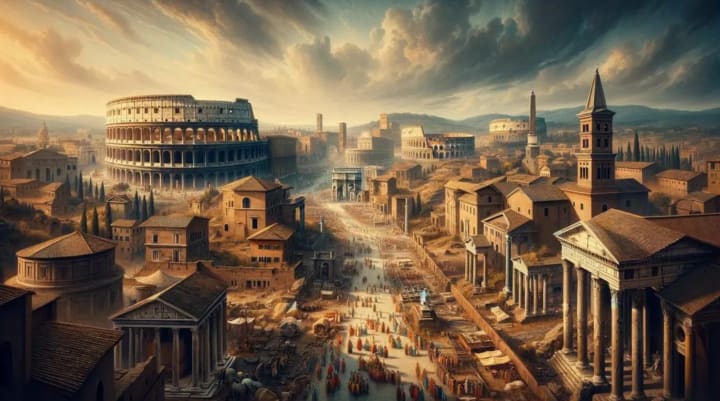
The Five Good Emperors and the Height of the Empire
The period of the Five Good Emperors (96–180 CE) is often seen as the pinnacle of the Roman Empire, characterized by wise and effective leadership, economic prosperity, and relative peace.
Nerva (96–98 CE)
Succession and Stability: Nerva was chosen by the Senate after the assassination of the tyrannical Emperor Domitian. His brief reign marked a return to stability and the adoption of the principle of choosing a competent successor, rather than relying on hereditary succession. Nerva adopted Trajan, ensuring a smooth transition of power.
Trajan (98–117 CE)
Expansion to the Greatest Extent: Trajan is renowned for his military conquests, particularly the Dacian Wars, which added vast territories in modern-day Romania to the empire. His campaigns in the East also extended Roman control into Mesopotamia. Under Trajan, the empire reached its maximum territorial extent.
Public Works and Welfare: Trajan was also a great builder, responsible for extensive public works, including the famous Trajan’s Column, which commemorates his Dacian victories. He initiated welfare programs such as the alimenta, which provided state-sponsored assistance to poor children across the empire.
Hadrian (117–138 CE)
Consolidation and Defense: Unlike Trajan, Hadrian focused on consolidating and defending the empire’s borders rather than expanding them. His reign is marked by the construction of Hadrian’s Wall and other defensive structures across the empire. Hadrian also traveled extensively throughout the provinces, inspecting and strengthening the empire’s infrastructure.
Cultural Patronage: Hadrian was a patron of the arts and architecture, commissioning projects like the Pantheon in Rome and the expansion of the city of Athens. His reign was a period of cultural flourishing, blending Greek and Roman influences.
Antoninus Pius (138–161 CE)
Peace and Prosperity: Antoninus Pius presided over one of the most peaceful periods in Roman history, with no major wars or internal conflicts. His reign saw the continued prosperity of the empire, with improvements in legal administration, infrastructure, and social welfare. Antoninus Pius is often remembered for his piety and dedication to the well-being of the empire’s citizens.
Marcus Aurelius (161–180 CE)
Philosopher Emperor and Stoicism: Marcus Aurelius, known as the Philosopher Emperor, was deeply influenced by Stoic philosophy. His Meditations are a testament to his introspective and thoughtful approach to governance. Despite his philosophical inclinations, Marcus Aurelius faced significant military challenges, including the Marcomannic Wars along the Danube frontier.
End of the Golden Age: The death of Marcus Aurelius in 180 CE is often seen as the end of the Pax Romana. His son Commodus, who succeeded him, lacked the competence and restraint of his predecessors, leading to a period of instability and decline.
Social and Economic Prosperity
The Golden Age was marked by a thriving economy, driven by agriculture, trade, and urbanization. Socially, the empire was a melting pot of cultures, languages, and religions, fostering a diverse and vibrant society.
Economic Strength
Agriculture and Trade: The Roman economy was primarily agrarian, with vast estates (latifundia) producing grains, olives, and wine for domestic consumption and export. Trade flourished across the empire, facilitated by the extensive network of Roman roads and sea routes. The Mediterranean, known as Mare Nostrum (Our Sea), was central to trade, connecting Rome with North Africa, the Middle East, and beyond.
Currency and Commerce: The Roman currency, the denarius, became a stable and widely accepted medium of exchange, promoting commerce across the empire. Markets and fairs in cities and towns were bustling with activity, reflecting the economic vitality of the period.
Urbanization and Public Works
Cities and Infrastructure: The empire’s prosperity was reflected in its cities, which were centers of administration, culture, and commerce. Rome, with its impressive population of over a million, was the heart of the empire, boasting grand public buildings, temples, and baths. Other cities like Alexandria, Carthage, and Antioch also flourished as regional hubs.
Public Amenities: Roman cities were known for their public amenities, including aqueducts, public baths, amphitheaters, and forums. These facilities not only provided essential services but also reinforced the Roman ideal of civitas, or civic life, where citizens engaged in public affairs and enjoyed the benefits of urban living.
Cultural and Religious Diversity
Cultural Synthesis: The empire was a melting pot, where Roman, Greek, Egyptian, and Near Eastern cultures mingled and influenced one another. This cultural synthesis was evident in art, architecture, and religion, where Roman deities coexisted with gods from other cultures, and religious practices were often blended.
Religious Tolerance: While the state religion was centered on the worship of the Roman gods and the emperor, the empire was largely tolerant of other religions, allowing for the coexistence of various belief systems. This period also saw the early spread of Christianity, which would later become a dominant force in the empire.
Challenges and the Decline
Despite the achievements of the Golden Age, the period was not without challenges. Internal and external pressures began to mount, setting the stage for the eventual decline of the empire.
Military Strain and Barbarian Threats
Defense Costs: The maintenance of the empire’s vast borders and the constant threat of barbarian invasions placed a significant strain on the Roman military and economy. The Germanic tribes, Parthians, and other groups posed ongoing challenges, requiring continuous military vigilance.
Economic Burden: The cost of defending the empire, combined with the need for public works and welfare programs, began to weigh heavily on the state finances. Inflation and currency devaluation became increasingly problematic in the later years of the empire.
Succession Issues
Commodus and the Severan Dynasty: The death of Marcus Aurelius and the rise of his son Commodus marked the beginning of political instability. Commodus’ erratic rule and subsequent assassination in 192 CE led to a power struggle, culminating in the Year of the Five Emperors (193 CE) and the eventual rise of the Severan dynasty. This period saw a decline in the effectiveness of the imperial administration and an increase in military influence over political affairs.
Social Unrest and Plague
Social Inequality: Despite the general prosperity of the Golden Age, social inequality persisted, with a growing divide between the wealthy elite and the lower classes. This disparity sometimes led to social unrest and revolts in the provinces.
Antonine Plague: The Antonine Plague, which struck during the reign of Marcus Aurelius, had devastating effects on the population and economy. The epidemic, possibly a form of smallpox or measles, decimated the Roman army and contributed to the empire’s weakening.
The Legacy of the Golden Age
The Golden Age of the Roman Empire left an indelible mark on history, influencing the development of Western civilization and beyond.
Cultural and Intellectual Legacy
Roman Law and Governance: The legal and administrative systems developed during the Pax Romana became foundational for many modern legal systems. Roman law, with its emphasis on rights, property, and contractual obligations, continues to influence contemporary legal thought.
Art and Architecture: Roman art and architecture, characterized by grandeur and innovation, set standards that would be emulated for centuries. Structures like the Colosseum, the Pantheon, and Roman aqueducts stand as enduring symbols of Roman engineering prowess and aesthetic achievement.
Enduring Influence
Western Civilization: The ideas and institutions of the Roman Golden Age, including concepts of citizenship, governance, and law, played a crucial role in shaping Western civilization. The Renaissance, in particular, saw a revival of Roman ideals, further cementing the empire’s influence on European culture.
Global Impact: The legacy of Rome’s Golden Age extends beyond Europe, influencing political and legal systems around the world. The Roman Empire’s ability to govern diverse peoples and maintain order over vast territories remains a subject of study and admiration.
The Golden Age of the Roman Empire, marked by the Pax Romana, was a time of extraordinary achievement in governance, culture, and military power. It was an era when the Roman Empire stood at the pinnacle of its might, influencing the ancient world and leaving a legacy that would shape the course of history for millennia. While the period eventually gave way to decline, its impact remains deeply embedded in the fabric of Western civilization, continuing to inspire and inform our understanding of empire, power, and human achievement.
About the Creator
Keep reading
More stories from Gustavo Woltmann and writers in Chapters and other communities.
John Gotti
John Gotti, also known as the “Dapper Don” and the “Teflon Don,” was one of the most notorious and charismatic figures in the history of organized crime. As the boss of the Gambino crime family, Gotti became a symbol of Mafia power and influence in the 1980s. His flamboyant style, high-profile persona, and repeated escapes from prosecution made him both a media sensation and a feared crime lord. However, his rise to power was matched by a dramatic fall, culminating in his conviction and life imprisonment. This article delves into the life, rise, reign, and eventual downfall of John Gotti.
By Gustavo Woltmann8 months ago in Chapters
Awakening in the Soil
My Awakening Did Not Happen in Meditation For many years, I believed that spiritual awakening was something that had to be found somewhere outside myself. Like many seekers, I imagined it as a destination a place reached through long hours of meditation, silent retreats, and the guidance of spiritual masters.
By Sivakumar Micheal6 days ago in Chapters


Comments