
The Crown Within: How a King Trained His Daughter to Rule
A Tale of Wisdom, Strength, and the Making of a Queen
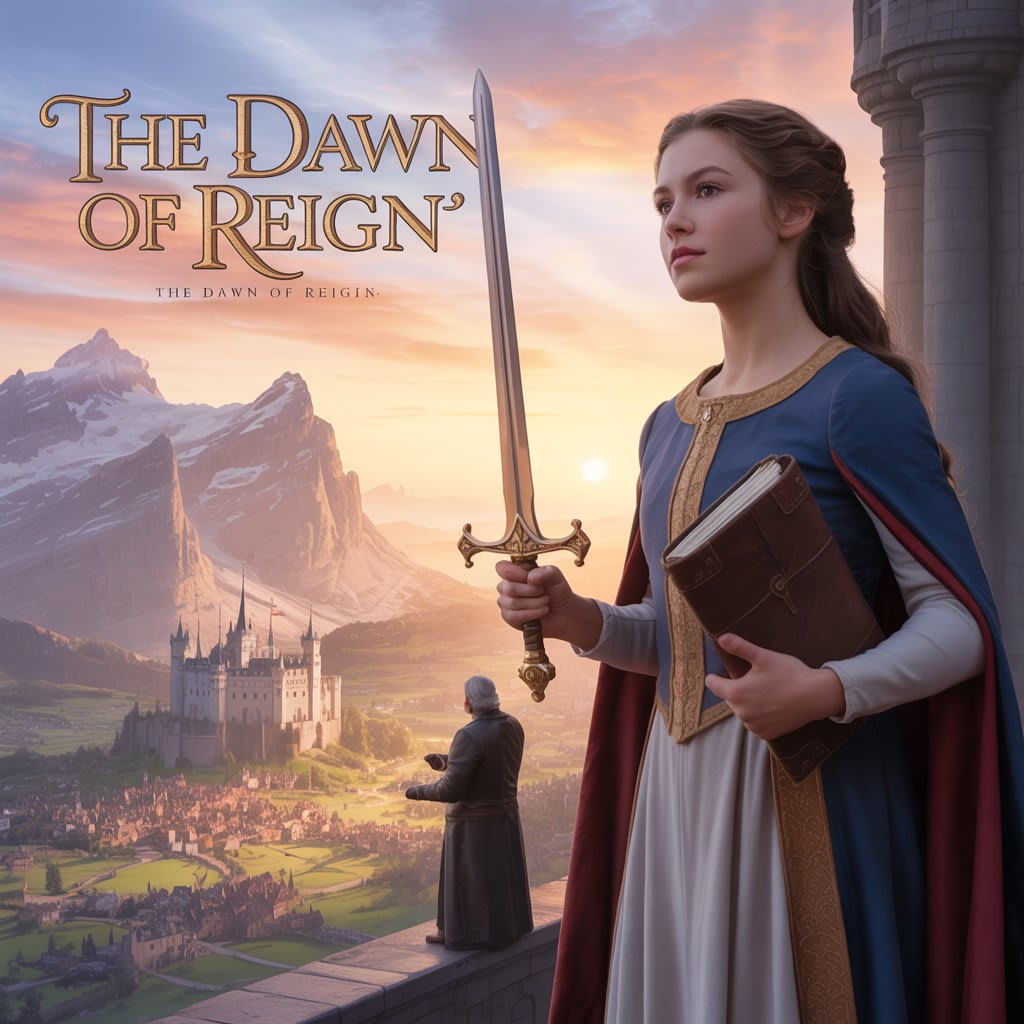
In the kingdom of Elowen, where mist curled around ancient towers and oak leaves whispered secrets of old, King Theron ruled with a mind sharpened by war and a heart softened by loss. His beloved queen had died giving birth to their only child, a daughter named Alina. From her earliest breath, Alina was the light in the king’s grief-darkened world.
But Theron, though a man of compassion, had not always ruled wisely. His youth had been marked by fiery pride, impulsive decisions, and wars that cost the kingdom dearly. Now older and tempered, he vowed his daughter would inherit more than a throne — she would inherit understanding, patience, and the ability to rule not just with a sword, but with a soul.
As soon as Alina could walk, her education began — not in silk-draped halls, but in the real world her people lived in.
By age seven, she sat among farmers in the marketplace, watching how they haggled for grain and listening to the murmur of their concerns.
By age ten, she spent time in the healer’s hut, learning the roots that cured fever and watching wounds being cleaned without flinching.
By twelve, she rode with the king’s guards, not as a princess in a litter, but on horseback with a wooden practice sword at her side.
“Power,” her father often said, “isn't about how loud your voice is. It’s how closely you listen before speaking.”
Alina grew under this tutelage, and with every passing season, the courtiers whispered of her unusual training. Some scoffed. Others feared. A few, quietly, hoped.
On her sixteenth birthday, King Theron presented her with a gift unlike any royal jewel. It was an old, worn-out book — its spine frayed, its pages stained with age. On the front, scrawled in hand-written ink, were the words: "The Mistakes of My Reign."
“I’ve written every poor decision I ever made,” he told her. “Read it. Then rise above it.”
And she did.
When war threatened the borders, it was Alina who rode to parley with the neighboring kingdom’s emissary, not with threats, but with maps, compromise, and the promise of trade.
When a famine spread through the western province, it was she who diverted surplus from the royal stores and decreed grain allotments be distributed under the eyes of both priest and citizen.
But her greatest test came not from politics, but from betrayal.
At nineteen, Alina uncovered a conspiracy within the palace — a ring of nobles, loyal not to the kingdom but to their purses, had been draining treasury funds and plotting to place a male heir of "royal blood" on the throne. Her father had grown ill, and many assumed the time to strike had come.
Rather than lash out in fury, Alina called a council. There, she laid out the evidence. She didn’t demand heads roll. Instead, she offered the traitors a single chance:
“Repent. Restore what you stole. Or stand trial before the people whose coin you pocketed.”
Most bent the knee, shamed into silence. The few who resisted were exiled — not executed — under her father’s reluctant approval.
Later that night, as King Theron sat on his bed, worn by illness, he looked upon his daughter and said:
“You are not the ruler I was. You are the ruler I wished to be.”
When he passed, the crown was placed on Alina’s head. The people wept — for their beloved king was gone — but they did not fear the future. They had watched her grow. They had seen her listen. She had knelt in mud beside them, shared their griefs, and made justice feel like sunlight.
Queen Alina never ruled from behind walls. She walked her kingdom as one of them — the crown upon her head not a weight, but a reminder.
A reminder that leadership is earned not by blood, but by burden. Not by power, but by purpose.
And so the tale of the king who raised a queen lived on — not in statues, but in the kindness, strength, and unbreakable will of Alina, the queen with the crown within.
About the Creator
Keep reading
More stories from ibrahimkhan and writers in Chapters and other communities.
Whiskers and Whisk: A Tale of Chase and Chance
The old farmhouse had long settled into its quiet rhythm. Dust motes drifted lazily through beams of light. Floorboards creaked in memory of footsteps now gone. And in the silence, a soft tapping echoed from the pantry.
By ibrahimkhan8 months ago in Chapters
Fair Exchange, No Robberies
Dark Memoirs - Index There are at least two kinds of people in the world: those who write this half-arsed kind of intro to a story that looks to separate the rare and the norm, and those who realise it's an overused framing device and don't.
By Paul Stewart10 days ago in Chapters
How Can Hobbies Make Life What It Is And Why Can This Be
When hobbies come to be in our lives how can hobbies make life what it is? That is the question that everyone is probably asking themselves. When they ask themselves this question so many things come to light. Hobbies can make life what it is because without hobbies life wouldn’t be lived, the way that it is. So yes we need hobbies in our lives to make it what it is, if we didn’t have hobbies in our lives we would only be working and that isn’t good for anyone, let alone our mental health, and as everyone knows mental health is something we should always be thinking about so putting your hobbies into the way you live your life and to make life what it is fun is to be had and what better way to do that then to put hobbies into it to make us happier and that is so good for our mental health, to be happy that is and doing the hobbies that we enjoy. Hobbies can make life what it is because they are how life is formed in the first place. We start living life by doing things that we enjoy, not working kids do things that they enjoy, and find what their favourite way to relax is.
By Louise Barraco4 days ago in Chapters


Comments (1)
This story of Alina's upbringing is really interesting. It shows that true power comes from understanding the people. I like how her dad taught her that listening is key. It makes me think about how leaders today could learn from this. Do you think Alina's approach to ruling will face challenges in the future? And how do you think her experiences in the marketplace and with the healers will shape her decisions as a ruler?