
Stephen Hawking
How Stephen Hawking Redefined Disability

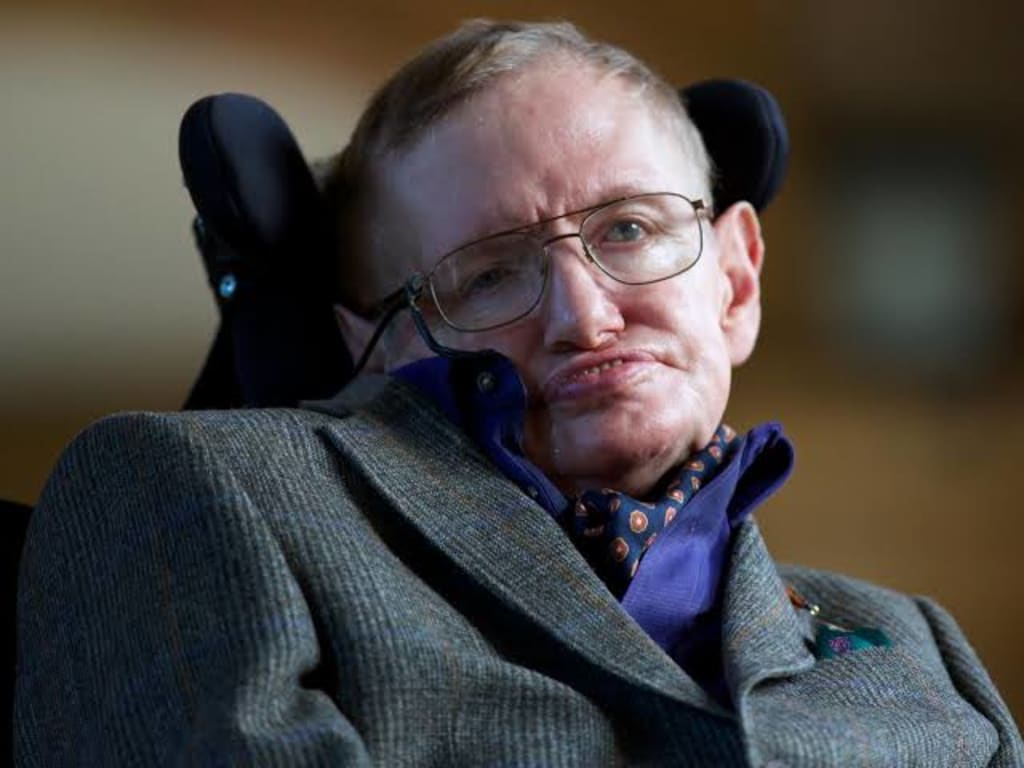
Stephen Hawking, one of the most renowned physicists of our time, was born on January 8, 1942, exactly 300 years after the death of astronomer Galileo Galilei. Despite his remarkable life and achievements, many aspects of Hawking's journey remain lesser-known.
Born in Oxford, England, Stephen came from an academically distinguished family. His mother, Isobel Eileen Hawking, was among the few women to earn a degree from the University of Oxford, studying economics, philosophy, and politics. She later worked as a medical research secretary. His father, Frank Hawking, specialized in tropical diseases after studying medicine at Oxford. With London still reeling from the Blitz, Isobel moved to Oxford for a safer environment when she was pregnant with Stephen. Following Stephen's birth, his siblings Philippa, Mary, and adopted brother Edward joined the family.
Stephen's early education began in Highgate, London, at the progressive Byron House School. The school's unconventional methods were blamed for his late reading skills, which didn't develop until he was eight. The family moved to St Albans, Hertfordshire, where Frank became the head of the Department of Parasitology at the National Institute for Medical Research. Frank hoped Stephen would pursue a career in medicine, but Stephen was already captivated by the stars.
The Hawking family was eccentric and intellectually driven. Dinner conversations were often silent as each family member read a book. They lived in a large, messy house, kept bees in the basement, and traveled in an old London taxi. Stephen's father aspired for him to attend the prestigious Westminster School, but a bout of illness prevented Stephen from sitting for the scholarship exam, leading him to continue at St Albans School.
At St Albans, an inspirational teacher named Dikran Tahta introduced Stephen to the wonders of mathematics. Together, they built Stephen's first computer from old clock parts and a telephone switchboard. Hawking often credited his achievements to exceptional teachers like Tahta.
Hawking won a scholarship to study physics at Oxford. Initially, he found the coursework easy and didn't invest much effort into his studies, preferring instead to join the university's boat club as a coxswain. His loud voice and lightweight made him ideal for the role. Despite his lack of academic diligence, he graduated with a first-class degree in physics, securing his place at the University of Cambridge for postgraduate studies.
At Cambridge, Hawking's supervisor was Dennis Sciama, not the more famous Fred Hoyle. This turned out to be beneficial, as Sciama was more available and supportive. Around this time, Hawking was diagnosed with amyotrophic lateral sclerosis (ALS), a motor neuron disease that gradually paralyzes the body. Given only two years to live, Hawking fell into depression but was encouraged by Sciama to continue his research.
Hawking's most significant work involved black holes. He discovered that black holes emit radiation (now known as Hawking radiation), which would cause them to evaporate over time. His research provided insights into the origins of the universe and supported the Big Bang theory, although he maintained that a divine creator was unnecessary for the universe's creation.
Stephen married Jane Wilde in 1965. Their marriage, which lasted 30 years and produced three children, was strained by Hawking's worsening health and his consuming dedication to physics. Jane's faith provided her strength as she cared for him. Stephen's intellectual brilliance remained undiminished despite his physical decline. He was elected to the Royal Society at 32 and became the Lucasian Professor of Mathematics at Cambridge, a position once held by Isaac Newton.
Hawking's fame grew with the publication of "A Brief History of Time" in 1988. The book's success made him a cultural icon, leading to appearances on shows like "The Simpsons" and "Star Trek." His personal life, however, faced turbulence. He divorced Jane and married one of his nurses, Elaine Mason, but that marriage also ended in divorce.
Despite his physical limitations, Hawking continued to work and inspire. He advocated for space exploration and warned about potential threats to humanity, such as climate change and artificial intelligence. His life and work have left an indelible mark on science and popular culture.
Stephen Hawking passed away peacefully at his home on March 14, 2018, at the age of 76. His ashes were interred in Westminster Abbey, near the graves of Isaac Newton and Charles Darwin. His legacy continues to inspire those fascinated by the mysteries of the universe and the resilience of the human spirit.
About the Creator
Horace Wasland
Research analyst, writer & mystical healer. Exploring the edge where science meets mystery. From mystery/the mystical, to facts, news & psychology. Follow for weekly insights on all four and please leave a tip if you like what you read :)
Reader insights
Nice work
Very well written. Keep up the good work!
Top insight
Excellent storytelling
Original narrative & well developed characters
Keep reading
More stories from Horace Wasland and writers in Chapters and other communities.
Story of the Greatest Chess Player to Ever Live
Bobby Fischer, born on March 9, 1943, in Chicago, was a chess prodigy whose extraordinary talent and troubled life captivated the world. Raised in Brooklyn by his single mother, Regina Fischer, Fischer’s early years were marked by financial hardship. Regina, a Swiss émigré of Jewish descent, struggled to make ends meet after her divorce from German biophysicist Hans Gerhardt Fischer. Fischer's early experiences were colored by poverty, a factor that would shape his future in profound ways.
By Horace Wasland2 years ago in Chapters
Inside Rebels
I presented him with a list of his harsh remarks, each entry dated and quoted verbatim, hoping that the undeniable record would force him to acknowledge his misconduct. He laughed, a harsh, guttural sound, and replied, “You think you can challenge my authority with petty grievances? I have been teaching for twenty‑three years; you are merely students with no right to question me.” The tension snapped, and the room seemed to close in, as if the very walls were listening, poised to judge, while I felt the crushing weight of his disdain settle upon my shoulders like an oppressive blanket.
By Forest Green3 days ago in Chapters
"Scream 7" (2026): Running out of Fresh Screams
This is the seventh time we’ve had a Ghostface crisis. Scream 7 is the latest edition of the Scream franchise. Sydney Prescott and her family are under attack by another anonymous killer dressed in a Ghostface costume. While having issues with her daughter, Tatum, they run from the bloody murders, trying to determine who is behind it all.
By Marielle Sabbag4 days ago in Horror



Comments (2)
same for this one. Great article
Excellent piece