
Starbucks was founded in 1971 by three partners: Jerry Baldwin, Zev Siegl, and Gordon Bowker. The trio opened the first Starbucks store in Seattle, Washington. Initially, the company focused on selling high-quality coffee beans and equipment for brewing at home. The brand's name was inspired by the first mate in Herman Melville's "Moby-Dick," and its iconic logo features a twin-tailed mermaid, or siren. Over the years, Starbucks evolved into a global coffeehouse chain known for its specialty coffee beverages, including the popularization of espresso drinks, and it has become a significant player in the international coffee and retail industry.
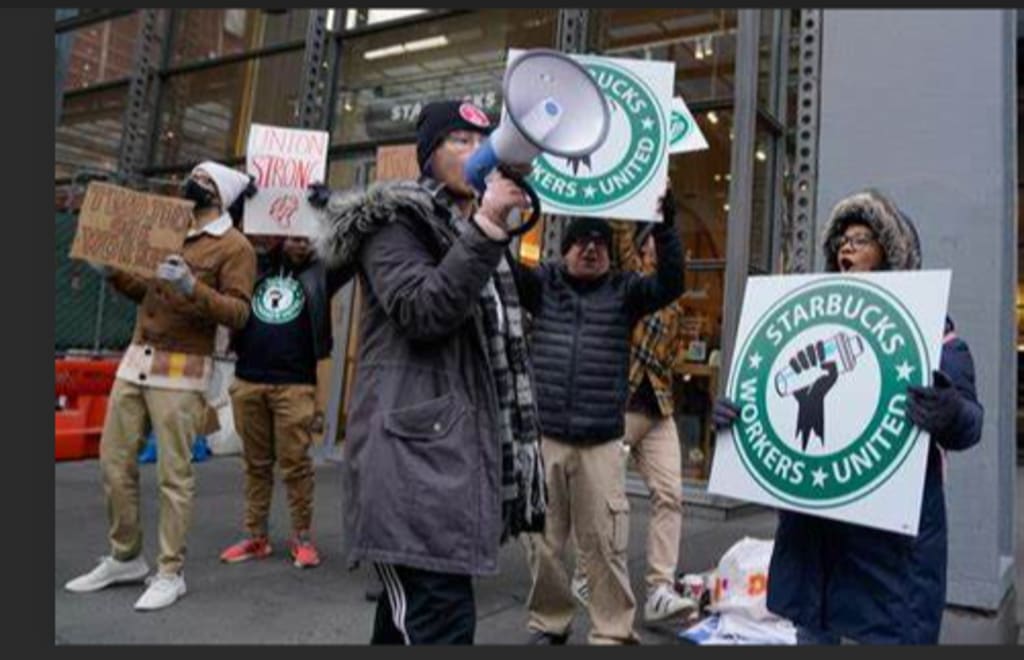
Starbucks Workers United has declared that over 150 stores are going on strike to protest Starbucks' decision to ban Pride decor. Recent revelations by Starbucks workers, asserting the removal of Pride decor, were initially denied by Starbucks. However, communications from a store manager in Oklahoma, published by More Perfect Union, provided evidence that Starbucks executives had indeed decided to ban Pride decor in the region known as Area 120, covering stores in Oklahoma, Arkansas, and Missouri.
The controversy surrounding Starbucks gained momentum as workers in 19 additional states echoed similar complaints, challenging Starbucks' assertion that these incidents were isolated and not indicative of a broader corporate policy. The Washington Post extensively covered the issue, emphasizing that while the union did not explicitly allege a national policy, the widespread occurrence of similar actions across various states cast doubt on Starbucks' claim of corporate unawareness. The collective voice of employees in multiple locations added weight to the argument that the reported incidents might reflect systemic challenges within the company, prompting a closer examination of Starbucks' workplace practices and fostering a broader public discourse on labor issues in the corporate sphere.
The strike's impact reaches beyond the confines of the directly affected stores, garnering support and solidarity from various locations, including the roastery where strikes are set to begin. The protest goes beyond the immediate concern of Pride decor removal, as workers express discontent with Starbucks' persistent reluctance to engage in contract negotiations. Despite labor proposals being on the table for over eight months, Starbucks has yet to reach any agreement, leaving more than 300 company-owned stores that have voted to unionize in a state of contractual limbo. This protracted deadlock underscores the deep-seated tensions between Starbucks and its workforce, contributing to a broader narrative of labor disputes within the company.
The context of the strike is significant, given the broader corporate trend of capitulating to far-right groups during Pride month. Corporations, including Target, have faced backlash for removing Pride decorations. In contrast, Starbucks workers are taking a stand not just against the lack of negotiations but also resisting capitulation to far-right pressure.
The employees are demonstrating remarkable solidarity by putting their livelihoods on the line to fight for the rights of others. The strike is rooted in a commitment to inclusivity and equality, echoing the values Starbucks claims to embrace. The situation highlights the internal struggle within Starbucks, where workers are challenging corporate decisions that contradict the company's purported commitment to being a welcoming third place for all.
The controversy also draws attention to the broader issue of corporations navigating politics, particularly in response to pressure from vocal minorities. While some corporations cave to such pressures, Starbucks workers are choosing to resist, emphasizing the importance of love, equality, and inclusivity.
This strike serves as a notable instance of workers taking collective action not only for their own benefit but also for a cause that promotes justice and equality. It reflects a positive sign of resistance against corporate decisions that compromise principles of inclusivity and succumb to external pressures.
About the Creator
Jon Mays
I love sharing stories that have meaning and value.
The Cave Part 6
If you have ever heard a tale about yourself that you cannot remember and doubtless think is made up, you will know how I felt when Tharkin related all that the eagle had seen of me before my memories were scattered. Of far distances and traveling companions that I did not recall, camping out under the stars and making our way to the mountains with deliberate purpose. The great bird had lost contact with my party once we entered the forests, and the seven other members were not seen again by him or his brethren since.
By Jamye Sharp14 days ago in Chapters



Comments
There are no comments for this story
Be the first to respond and start the conversation.