
Senator Thom Tillis Declines Reelection Bid Following Trump-Aligned Pressure
North Carolina Senator Thom Tillis steps down amid mounting pressure from pro-Trump Republicans, signaling a deeper rift within the GOP and reshaping the 2026 Senate race.

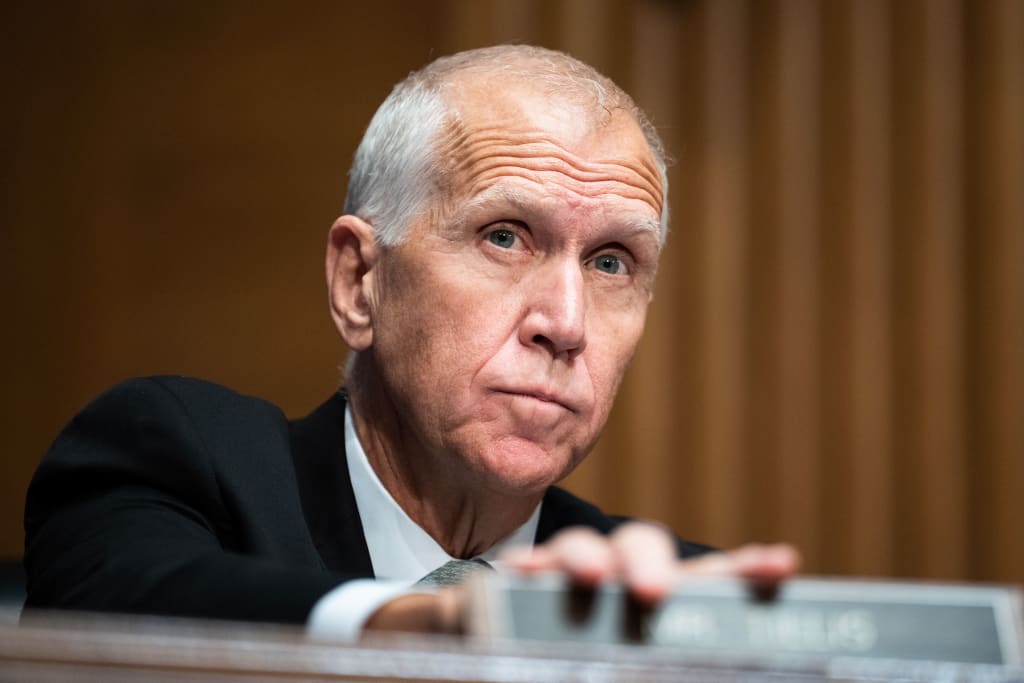
In a surprising yet increasingly common shift within the Republican Party, North Carolina Senator Thom Tillis announced he will not seek reelection in 2026, citing a rapidly changing political landscape and mounting pressure from pro-Trump factions within the GOP. Tillis, a two-term senator known for his willingness to work across the aisle, becomes one of the most high-profile moderate Republicans to step aside as the party continues to evolve under the enduring influence of former President Donald Trump.
A Career Defined by Balance
Thom Tillis, who began his Senate tenure in 2015 after serving as Speaker of the North Carolina House of Representatives, built a political identity around pragmatic conservatism. He supported lower taxes and limited government, but often strayed from party orthodoxy when he believed national interest or constitutional principles were at stake.
During his tenure, Tillis supported bipartisan initiatives on immigration, infrastructure, and gun safety. Notably, he worked with Democrats to pass legislation strengthening background checks and providing red flag laws—a move that earned him criticism from the Republican base but praise from moderates and independents.
In many ways, Tillis represented an increasingly rare breed: a Republican who tried to serve as a bridge between establishment conservatives and a more populist, Trump-aligned base.
The Trump Factor
However, the Republican Party of 2025 is not the same one that Tillis entered a decade ago. With Donald Trump continuing to assert control over the GOP’s ideological direction and its endorsement machinery, figures like Tillis have found themselves increasingly isolated.
Tillis drew ire from Trump and his supporters for his stance on several key issues. He supported the certification of the 2020 election results, criticized Trump’s handling of the January 6 Capitol riot, and voted in favor of a bipartisan infrastructure bill championed by the Biden administration. These decisions led to repeated threats of a primary challenge backed by Trump-aligned candidates.
In early 2025, speculation intensified after reports emerged that Trump’s team was actively recruiting a primary opponent for Tillis. The senator’s moderate record, once seen as a strength in purple states like North Carolina, was now a liability in a party leaning hard right.
Faced with the likelihood of a bruising primary and the possibility of being unseated by a Trump-endorsed challenger, Tillis made the decision to step aside.
Tillis’s Statement
In a statement released from his Raleigh office, Tillis said:
> “Serving the people of North Carolina has been the honor of my life. But public service must be about the work, not about the political survival of the individual. I believe I can do more for my state and country by stepping aside and helping foster the next generation of leadership.”
He also alluded to the internal tensions within the party:
> “The Republican Party is at a crossroads. I’ve always believed in principles rooted in limited government, personal responsibility, and constitutional integrity. I hope we can one day rediscover the unity that comes from shared purpose rather than personal loyalty.”
Though he did not directly mention Donald Trump, the subtext was clear: Tillis sees the party moving in a direction that leaves little room for ideological dissent or independent thinking.
Republican Reaction: Division on Display
The response from the GOP was mixed. Establishment Republicans, such as Senate Minority Leader Mitch McConnell, praised Tillis’s record and his “commitment to thoughtful governance.” McConnell called Tillis “a man of courage and reason during an increasingly polarizing era.”
Trump and his allies, however, celebrated the decision as a victory for the “America First” movement. Trump posted on Truth Social:
> “Thom Tillis was NEVER MAGA. He voted for gun control, refused to stand strong on the border, and betrayed us on January 6. The people of North Carolina deserve better—and now they’ll get it!”
Several pro-Trump Republicans echoed the sentiment, describing Tillis’s departure as “the start of a party realignment.” North Carolina Lieutenant Governor Mark Robinson, a likely frontrunner for the GOP nomination, said the state needed “warriors, not compromisers.”
Democratic Response: A Window of Opportunity
Democrats, meanwhile, view Tillis’s retirement as a significant opportunity in their quest to retake the Senate. North Carolina has been trending purple for several years, with increasingly competitive races at both state and federal levels. While Tillis managed to win reelection in 2020 by a narrow margin, the next GOP nominee may not have the same appeal among moderates and independents.
State Attorney General Josh Stein and former Chief Justice Cheri Beasley are among the Democrats considered potential contenders. If the GOP nominates a far-right candidate, Democrats could see an opening similar to Georgia’s Senate races in recent cycles.
“The exit of someone like Thom Tillis underscores the civil war happening inside the Republican Party,” said Sen. Chris Murphy (D-CT). “It also gives us a shot to win a seat that’s been tough in recent years.”
Broader Implications: A Party in Flux
Tillis’s decision to leave reflects a broader trend within the Republican Party—one where moderate and traditional conservatives are increasingly marginalized. Over the past two years, other lawmakers like Sen. Lisa Murkowski (R-AK), Sen. Susan Collins (R-ME), and even former House Speaker Kevin McCarthy have either faced primary threats, stepped down, or struggled to maintain influence.
The GOP appears to be solidifying around a set of principles—namely loyalty to Trump, hardline immigration policies, election skepticism, and culture war rhetoric—that leaves little space for centrists or dealmakers. This consolidation may help unify the party’s base, but risks alienating independent voters in key swing states.
Tillis’s departure also raises questions about how many other Republicans may choose to exit rather than fight costly intraparty battles. If the party continues down its current path, the Senate GOP of the future may look very different—more ideologically rigid, more confrontational, and far more aligned with Trump.
What’s Next for Tillis?
Though retiring from the Senate, Tillis is unlikely to fade completely from public life. He has deep ties to the legal and policy communities and is considered a possible candidate for a future think tank role, board position, or even a moderate conservative media platform.
Some insiders suggest he may help launch a centrist political advocacy group aimed at restoring traditional conservatism or promoting electoral reform. His retirement statement hinted at such ambitions, noting he would “remain engaged in the work of good governance from outside the walls of Congress.”
A Closing Chapter in a Changing Era
Thom Tillis’s decision not to seek reelection marks more than the end of a Senate career—it signals the waning influence of the center-right in today’s GOP. His exit underscores a party still grappling with the long-term implications of Donald Trump’s dominance, and a political culture increasingly defined by loyalty tests rather than legislative results.
As North Carolina prepares for a pivotal 2026 Senate race, the eyes of the nation will be watching—not just to see who wins, but to understand what kind of Republican Party will emerge from the battle.
About the Creator
Keep reading
More stories from Dipayan Biswas and writers in Chapters and other communities.
Mentally Incompetent and Alone: Detainees Now Fight Without Help
In an immigration detention center in Georgia, 32-year-old Luis sits silently in his cell, staring blankly at the wall. Diagnosed with schizophrenia before his arrest, Luis hasn’t seen a mental health specialist in over a month. He doesn’t understand why he's being detained, doesn’t know the next step in his legal process, and most crucially—he doesn’t have a lawyer. Like thousands of others in U.S. immigration custody, he is mentally incompetent and utterly alone.
By Dipayan Biswas9 months ago in Chapters
The Cave Part 6
If you have ever heard a tale about yourself that you cannot remember and doubtless think is made up, you will know how I felt when Tharkin related all that the eagle had seen of me before my memories were scattered. Of far distances and traveling companions that I did not recall, camping out under the stars and making our way to the mountains with deliberate purpose. The great bird had lost contact with my party once we entered the forests, and the seven other members were not seen again by him or his brethren since.
By Jamye Sharp27 days ago in Chapters
The Conduit: Chapter 18
Chapter 18 The fast attack sub was preparing to detach when Jensen, Han, Max, and the rest of them brought Jane Doe back on board the submarine. As the sub shook, echoes of impacts against the station’s undersea levels reverberating through everything attached, Jensen yelled at his men to detach the vessel. One of his men asked for a heading and he replied in his loudest command voice, “Anywhere but here!”
By Jason Ray Morton 6 days ago in Chapters



Comments
There are no comments for this story
Be the first to respond and start the conversation.