
Sarah Boone
The Formerly Enslaved Inventor Who Revolutionized the Modern Ironing Board
By Staff Reporter
March 6, 2026 —Leavie Scott
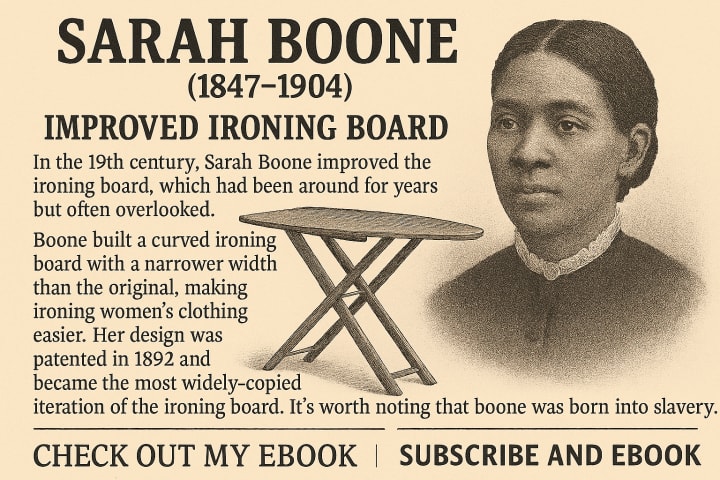
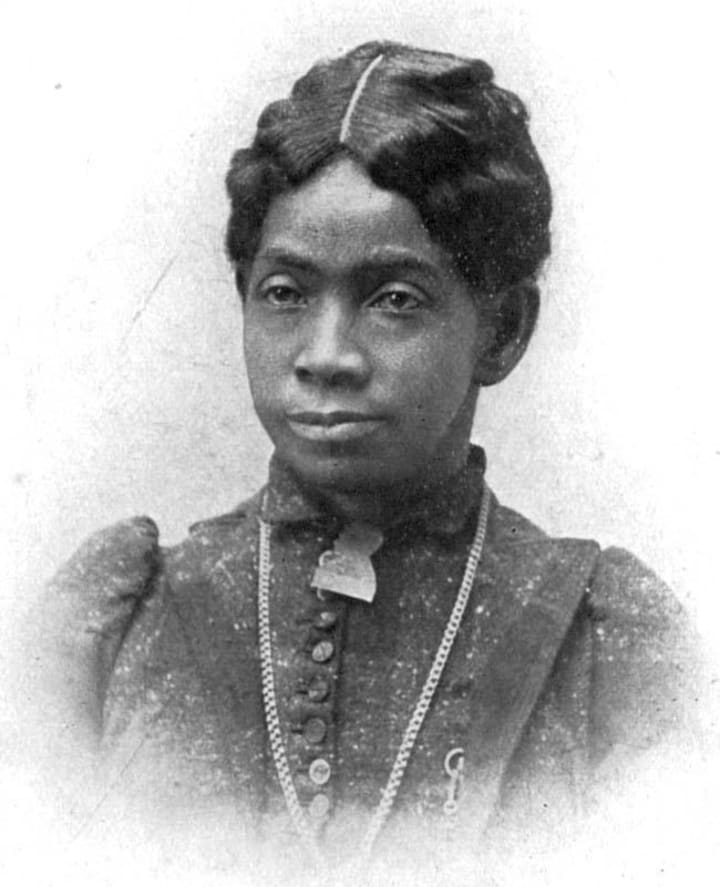
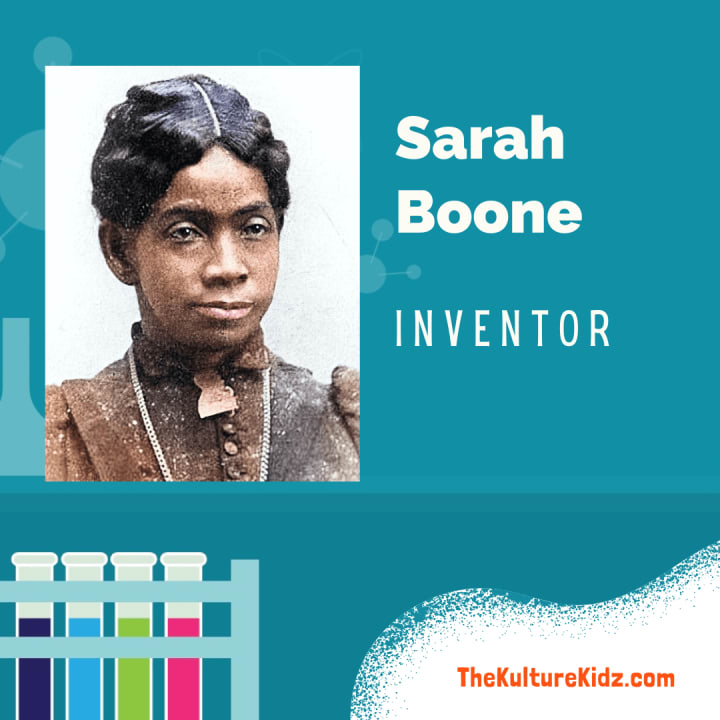
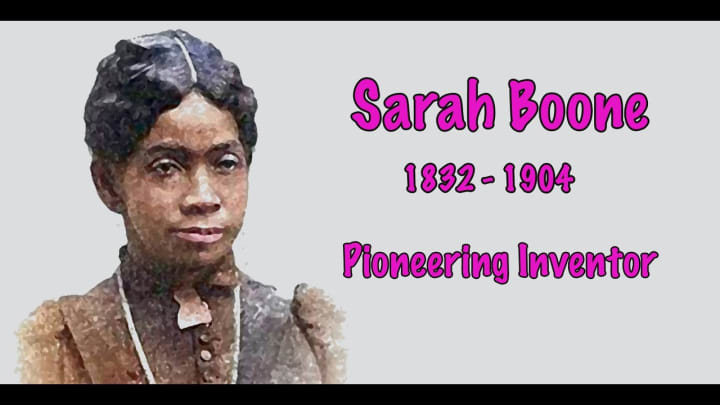
In the late 19th century, when American households were rapidly transforming under the weight of industrial growth and changing fashion, an inventor from Connecticut quietly reshaped one of the most common domestic tools in history: the ironing board. Her name was Sarah Boone (1847–1904), and her innovative design would become the blueprint for the ironing boards still used around the world today.
Born into slavery in North Carolina, Boone’s path from bondage to becoming a U.S. patent holder is one of remarkable ingenuity, resilience, and historic impact.
Improving an Everyday Tool—and Redefining Domestic Work
Before Boone’s work, ironing boards were little more than flat wooden planks supported by chairs or tables. They were cumbersome, poorly shaped, and ill-suited for the fitted garments that had become popular among women in the late 1800s.
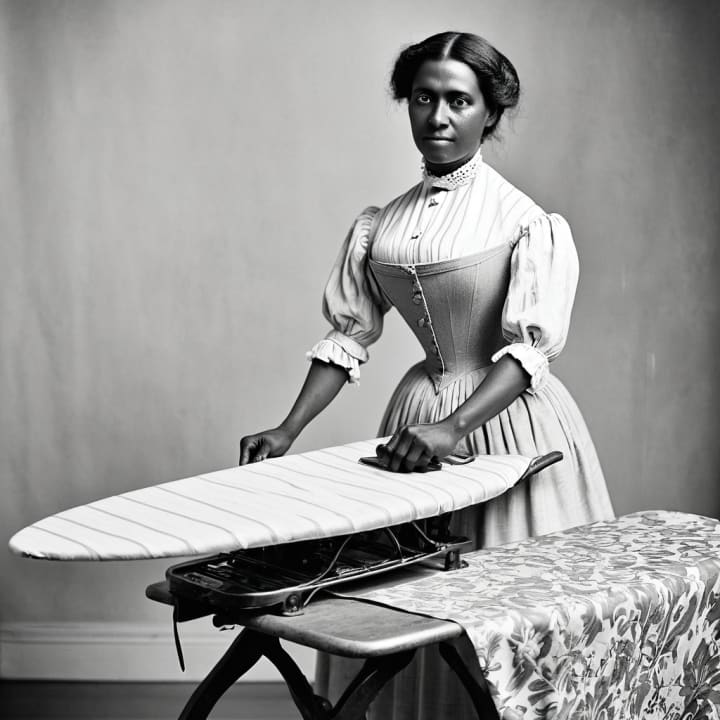
Boone recognized a problem felt in homes across the country: it was difficult to iron the sleeves, curves, and tight seams of women’s clothing on a flat, wide surface. So she engineered a solution.
Her invention introduced:
A narrow, curved board ideal for sliding inside sleeves
A shape that followed natural garment contours
Better stability and usability for pressing complex pieces of clothing
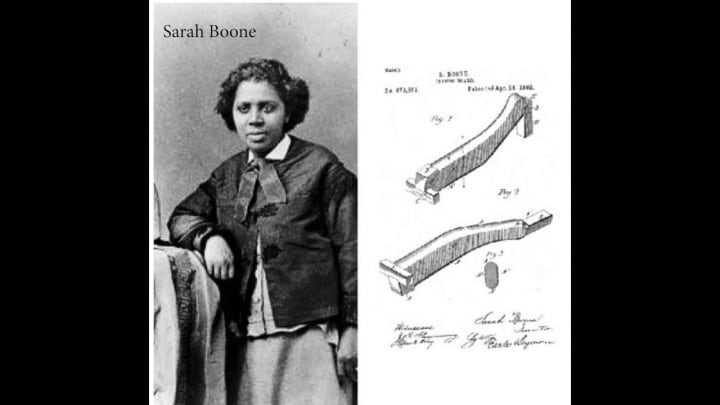
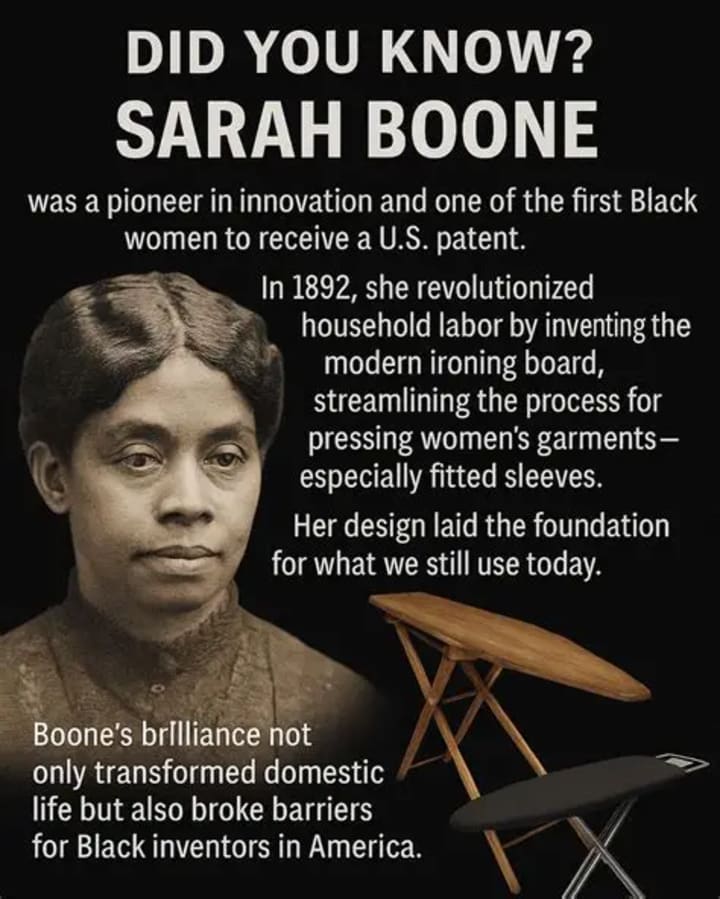
In 1892, she was granted U.S. Patent No. 473,653, officially cementing her improvement as the most significant design advancement of its time.
This simple but elegant redesign would become the most widely copied and mass-produced iteration of the ironing board, long before the concept of “ergonomic design” existed.
A Life Shaped by Determination and Innovation
Boone’s journey reflects a broader story of American transformation. After gaining freedom, she moved north, worked as a dressmaker, and used her firsthand experience to solve real-world problems.
Her patent made Boone one of the earliest Black American women to earn legal recognition for an invention—an extraordinary feat at a time when racial and gender barriers blocked most from accessing such opportunities.
Yet Boone did not leave behind extensive autobiographical records, and much of her life must be pieced together through census data, patent archives, and regional histories. What remains undeniable is that her creativity improved daily life for millions.
An Unsung Pioneer of American Innovation
Despite the universal presence of her invention in homes around the world, Boone’s name is seldom mentioned in mainstream historical narratives about inventors.
However, recognition is growing. Historians, educators, and women’s leadership organizations are increasingly highlighting Boone’s work as a landmark achievement—not just in domestic engineering, but in Black history, women’s history, and the broader story of American invention.
Her contribution stands as a testament to how overlooked tools, when reimagined with precision and purpose, can change everyday life for generations.

Want more powerful stories about hidden innovators and trailblazers who shaped America?
Explore my ebook for deeper profiles, historical insights, and exclusive research.
📬 Subscribe for More Stories
Stay informed with new historical features, spotlight articles, and inspiring profiles.
Subscribe today and never miss a story worth remembering.
About the Creator
TREYTON SCOTT
Top 101 Black Inventors & African American’s Best Invention Ideas that Changed The World. This post lists the top 101 black inventors and African Americans’ best invention ideas that changed the world. Despite racial prejudice.
Keep reading
More stories from TREYTON SCOTT and writers in Chapters and other communities.
Story of Earl Shaw
Earl Shaw and his groundbreaking contributions to laser science. Earl Shaw was born in 1937, during a time when the world was teetering on the edge of tremendous technological transformation. From a young age, Shaw displayed an unusual fascination with the unseen forces of nature—light, magnetism, and the mysterious waves that seemed to govern the behavior of the physical world. He did not see science as a cold, rigid discipline. Instead, he viewed it as a living tapestry woven with curiosity, imagination, and endless possibility. This mindset would one day position him at the forefront of laser technology, leading to the invention of the spin-flip Raman tunable laser, a breakthrough that would quietly shape modern photonics.
By TREYTON SCOTTa day ago in Chapters
Review of 'Man on the Run'
My wife and I saw Man on the Run, a nearly 2-hour documentary on Amazon Prime, about Wings, Paul McCartney's group that flew around the world from shortly after The Beatles broke up in early 1970 to shortly after John Lennon was murdered at the end of 1980, making a Beatles reunion forever impossible.
By Paul Levinson5 days ago in Beat




Comments
There are no comments for this story
Be the first to respond and start the conversation.