
Redefining Lipid Biology: From Droplets to Ferroptosis
How lipid droplets and iron-driven cell death are reshaping cancer research, metabolism, and future medical treatments
For decades, lipids were viewed mainly as passive molecules—simple building blocks of cell membranes or long-term energy reserves stored away for times of need. This narrow perspective is rapidly changing. Modern research is redefining lipid biology, revealing lipids as dynamic regulators of cellular behavior, signaling pathways, and even cell fate. From the discovery of lipid droplets as active organelles to the emerging role of lipids in ferroptosis, a unique form of programmed cell death, lipids are now recognized as central players in health and disease.
Lipids Beyond Fat Storage
Traditionally, lipids were classified into neat categories: structural lipids like phospholipids, storage lipids such as triglycerides, and signaling molecules like steroids. This classification implied relatively static roles. However, advances in imaging, lipidomics, and molecular biology have overturned this assumption. Lipids are now understood to be highly dynamic, constantly synthesized, modified, transported, and degraded in response to cellular needs.
Cells tightly regulate lipid composition because even small changes can dramatically alter membrane fluidity, protein localization, and signaling cascades. In this sense, lipids act not just as structural components, but as information-rich molecules that help cells sense and adapt to their environment.
Lipid Droplets: From Cellular Warehouses to Command Centers
One of the most striking paradigm shifts in lipid biology involves lipid droplets. Once dismissed as inert fat blobs floating in the cytoplasm, lipid droplets are now recognized as bona fide organelles with complex structures and functions.
Lipid droplets consist of a neutral lipid core surrounded by a phospholipid monolayer embedded with specialized proteins. These proteins regulate droplet growth, breakdown, and interaction with other organelles such as mitochondria, the endoplasmic reticulum, and lysosomes. Rather than serving only as energy reserves, lipid droplets actively participate in cellular metabolism, stress responses, and immune regulation.
For example, during nutrient scarcity, lipid droplets supply fatty acids to mitochondria for energy production. Under conditions of oxidative stress, they can sequester toxic lipids, protecting cells from damage. In immune cells, lipid droplets even serve as platforms for inflammatory signaling molecules. This multifunctionality has placed lipid droplets at the center of research into metabolic disorders, neurodegeneration, and cancer.
Lipids as Signaling Powerhouses
Beyond droplets, many lipid species function as potent signaling molecules. Phosphoinositides regulate membrane trafficking and cell growth. Sphingolipids influence apoptosis, inflammation, and cell differentiation. Eicosanoids, derived from fatty acids, act as local hormones controlling pain, fever, and immune responses.
These signaling lipids are produced and degraded rapidly, allowing cells to respond almost instantly to external stimuli. Dysregulation of lipid signaling pathways has been implicated in conditions ranging from cardiovascular disease to autoimmune disorders, highlighting the importance of precise lipid control.
Enter Ferroptosis: A Lipid-Driven Cell Death
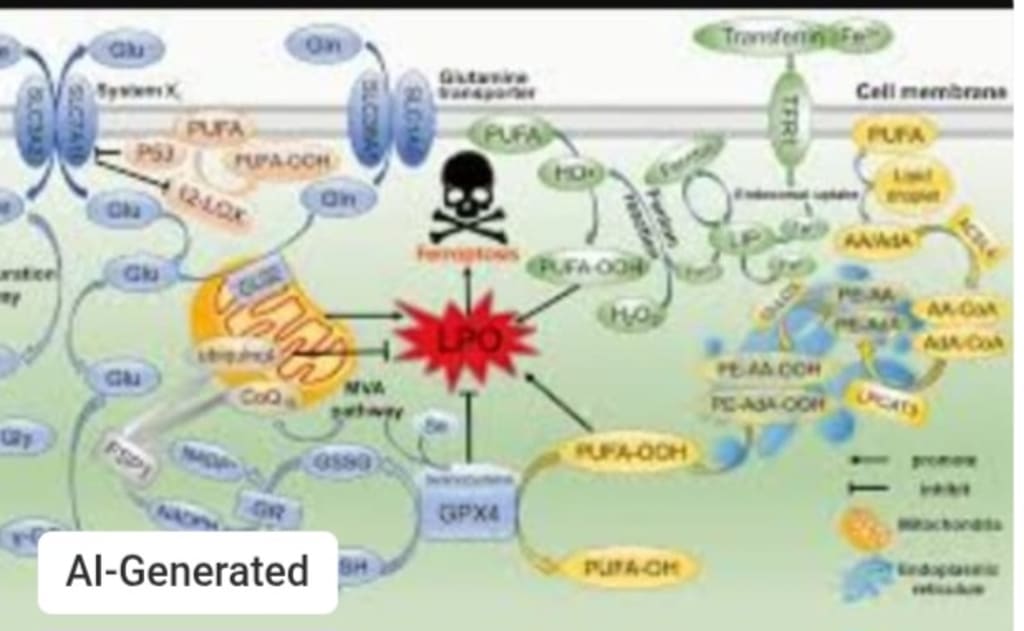
Perhaps the most dramatic example of lipids shaping cell fate is ferroptosis, a recently characterized form of regulated cell death. Unlike apoptosis, which involves DNA fragmentation and cell shrinkage, ferroptosis is driven by iron-dependent lipid peroxidation. In simple terms, it occurs when specific lipids in cellular membranes undergo uncontrolled oxidative damage.
At the heart of ferroptosis are polyunsaturated fatty acids (PUFAs) within membrane phospholipids. These fatty acids are particularly vulnerable to oxidation. Under normal conditions, cells use antioxidant systems—most notably the enzyme GPX4 and the molecule glutathione—to neutralize lipid peroxides. When these defenses fail, lipid peroxides accumulate, membrane integrity collapses, and the cell dies.
This discovery reframed lipids not just as passive victims of oxidative stress, but as active determinants of whether a cell survives or perishes.
Why Ferroptosis Matters
Ferroptosis has profound implications for medicine and biology. It has been linked to neurodegenerative diseases such as Alzheimer’s and Parkinson’s, where oxidative stress and iron accumulation are common features. In these contexts, preventing lipid peroxidation could protect vulnerable neurons.
Conversely, ferroptosis offers a promising strategy in cancer therapy. Many cancer cells exhibit altered lipid metabolism and elevated iron levels, making them especially sensitive to ferroptotic death. Researchers are now exploring drugs that deliberately trigger ferroptosis to eliminate tumors that resist traditional treatments like chemotherapy and radiation.
This dual role—harmful in some diseases, beneficial in others—highlights the delicate balance of lipid regulation in living systems.
Connecting Lipid Droplets and Ferroptosis
Interestingly, lipid droplets may play a protective role against ferroptosis. By storing excess fatty acids in a neutral, non-reactive form, lipid droplets can reduce the availability of oxidizable lipids in membranes. Some studies suggest that cells rich in lipid droplets are more resistant to ferroptosis, as they can buffer lipid stress more effectively.
This connection underscores a broader theme in modern lipid biology: compartmentalization matters. Where lipids are stored, how they are modified, and when they are released can determine cellular outcomes as drastic as survival or death.
The Future of Lipid Biology
The field of lipid biology is entering an exciting era. High-resolution mass spectrometry now allows scientists to measure thousands of lipid species simultaneously. Advanced microscopy reveals lipid behavior in living cells with unprecedented detail. Computational models are helping decode how lipid networks interact with genes and proteins.
As our understanding deepens, lipids are no longer seen as background players but as central regulators of life. From the dynamic behavior of lipid droplets to the lethal precision of ferroptosis, lipids shape cellular identity, resilience, and vulnerability.
Conclusion
Redefining lipid biology means recognizing lipids as active, versatile, and powerful molecules. They organize cellular architecture, transmit signals, manage stress, and even decide when a cell must die. The journey from viewing lipid droplets as inert storage sites to understanding lipid-driven ferroptosis reflects a broader transformation in biology—one that acknowledges complexity, integration, and nuance. As research continues, lipids may hold the key to novel therapies and a deeper understanding of what keeps cells, and ultimately organisms, alive.
About the Creator
Keep reading
More stories from Ayesha Lashari and writers in Chapters and other communities.
Jetty McJetface: Star-Shredding Black Hole May Keep Ramping Up Its Radio Jet Until a 2027 Peak
Jetty McJetface: A Star-Shredding Black Hole and the Growing Power of Its Radio Jet How an extraordinary cosmic engine may continue to intensify until a predicted peak around 2027
By Ayesha Lashariabout 15 hours ago in Chapters
Bruce Lee and The God of War: Kuan Ti
It starts with love.. The Power to the God Of War and Wealth Walk into a Chinese restaurant (even in Oklahoma, USA), a Chinese police station, a kung fu martial arts studio or even a Chinese temple and you often see a red faced warrior holding a heavy quan-do (spear like weapon).
By SAMURAI SAM AND WILD DRAGONS29 days ago in Chapters
Businesswoman Chapter 360
“Yes! She actually sent the scanned sheet with pencil and paper. Only Businesswoman!” The head engineer Kepler Bins looked at the computers around the room. All around him engineers made adjustments according to the new correspondence. Houston engineers smiled and whooped.
By Skyler Saunders2 days ago in Chapters



Comments
There are no comments for this story
Be the first to respond and start the conversation.