
Offshoring vs. Outsourcing: Benefits and Helpful Tips
We compare outsourcing versus offshoring, share the benefits and potential risks of each, offer tips for choosing between the two.
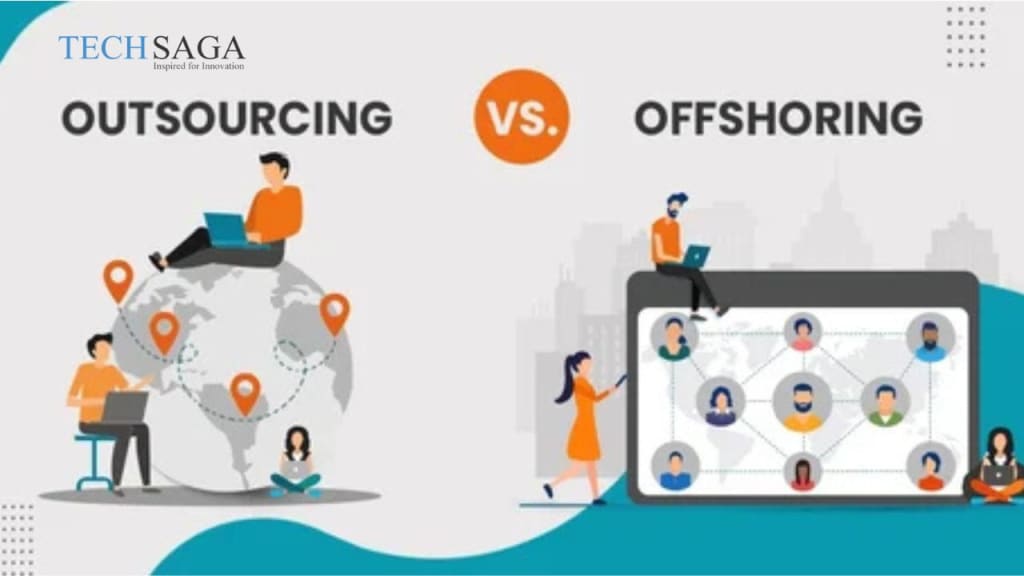
In the dynamic business environment, maintaining a competitive edge frequently involves utilizing global resources. This is where offshore outsourcing emerges as a valuable strategy for organizations. By taking advantage of talent, infrastructure, and cost benefits from different countries, companies can improve their efficiency and concentrate on their main strengths. However, the terms offshoring and outsourcing are often confused with one another. While they have some commonalities, these strategies have distinct objectives and provide unique advantages.
This blog delves into the key differences, advantages, and actionable tips for making the most of offshoring and outsourcing.
What Is Offshoring?
Offshoring is the practice of moving certain business functions or processes to another country. This typically includes establishing dedicated teams or facilities abroad to manage tasks like production, customer support, or IT services. The primary aim is to take advantage of cost savings, tap into specialized skills, or grow operations in a new market.
What Is Outsourcing?
Outsourcing refers to the practice of assigning certain tasks or functions to external service providers. Unlike offshoring, outsourcing doesn't always involve relocating operations to another country. Businesses might choose to outsource services such as payroll processing, customer support, or IT management to specialized vendors, regardless of whether they are based domestically or internationally.
For instance, a small business might outsource its digital marketing to an external agency rather than hiring an in-house team.
Offshoring vs. Outsourcing: Key Differences
- Location: Offshoring specifically involves relocating tasks to a foreign country, while outsourcing can occur locally or globally.
- Control: Offshoring often requires companies to manage operations directly, whereas outsourcing places responsibility in the hands of the third-party vendor.
- Purpose: Offshoring is typically used to tap into international talent and cost advantages, while outsourcing is about delegating tasks to experts for efficiency.
- Long-Term vs. Short-Term: Offshoring is generally a long-term commitment, while outsourcing may be used for short-term or project-based needs.
Benefits of Offshoring and Outsourcing
Advantages include:-
Benefits of Offshoring
- Cost Savings
Offshoring allows companies to access skilled labor at a lower cost in countries with favorable economic conditions.
- Access to Global Talent
Businesses can tap into a broader pool of talent, gaining access to expertise not readily available locally.
- Round-the-Clock Operations
Different time zones enable 24/7 operations, ensuring faster project turnaround and enhanced productivity.
- Focus on Core Business Activities
By offshoring non-core tasks, companies can focus on their core competencies and strategic initiatives.
- Scalability and Flexibility
Offshoring allows businesses to quickly scale operations up or down, depending on market demands.
- Market Expansion Opportunities
Establishing offshore operations often leads to better market insights and opportunities for expanding business in new regions.
Benefits of Outsourcing
- Cost Efficiency
Outsourcing reduces operational and labor costs by delegating tasks to external vendors or specialists.
It provides access to specialized skills and technologies that may not be available in-house.
Professional outsourcing partners often bring streamlined processes, improving overall efficiency.
Outsourcing can help share and mitigate risks related to compliance, technology, or operational disruptions.
Delegating time-consuming tasks allows companies to concentrate on growth and innovation.
Experienced outsourcing partners are often dedicated to delivering high-quality results, and enhancing customer satisfaction.
When to Choose Offshoring
Offshoring is ideal when:
- You want to establish a global footprint.
- Long-term cost savings are a priority.
- The project requires a dedicated team with specific skills.
- You aim to run operations across multiple time zones.
Example:
Workday offshore outsourcing is a popular trend among companies implementing Workday solutions. Offshore teams provide end-to-end support for configuring and managing Workday systems while offering significant cost advantages.
When to Choose Outsourcing
Outsourcing works best when:
- The task is short-term or project-based.
- Specialized skills are required but don’t justify hiring a full-time team.
- You want to focus entirely on strategic goals and delegate routine tasks.
- Cost reduction is critical without compromising quality.
What is Offshore Outsourcing
Offshore outsourcing is a business strategy in which a company engages an external organization or service provider located in another country to manage certain tasks, operations, or services. This method merges the benefits of outsourcing—assigning work to an outside party—with the advantages of offshoring—leveraging resources from abroad.
Key Features of Offshore Outsourcing:
- Cost-Effective Labor: Tasks are often outsourced to countries with lower labor costs, reducing operational expenses.
- Specialized Skills: Access to skilled professionals in the outsourcing location, often in areas like IT, customer service, or manufacturing.
- Time Zone Benefits: Enables round-the-clock operations by leveraging different time zones.
- Cross-Border Collaboration: Involves working with teams or service providers located in a different country.
Challenges to Consider
While both offshoring and outsourcing offer immense benefits, they also come with challenges:
- Communication Barriers: Language and cultural differences may impact collaboration.
- Data Security Risks: Handling sensitive information across borders requires stringent measures.
- Quality Control: Maintaining quality standards can be difficult when relying on external teams.
- Hidden Costs: Unexpected expenses in offshoring or outsourcing contracts can arise.
Tips for Successful Offshore Outsourcing
- Define Goals Clearly: Clearly outline the objectives and expectations from your offshore or outsourcing partner.
- Choose the Right Partner: Conduct thorough research to find reliable vendors or locations with a proven track record.
- Emphasize Communication: Establish regular communication channels to bridge any gaps in understanding.
- Invest in Training: Provide onboarding and ongoing training to ensure alignment with your business goals.
- Monitor Performance: Set key performance indicators (KPIs) to track progress and maintain quality.
- Leverage Technology: To make project management and communication more efficient, use collaborative technologies.
Offshore Outsourcing Benefits
Combining offshoring with outsourcing offers a multitude of advantages for businesses:
- Cost Efficiency: By offloading tasks to lower-cost regions or experts, companies save significantly on labor and infrastructure.
- Improved Scalability: Businesses can scale up or down based on their needs without overcommitting resources.
- Access to Expertise: Offshore vendors provide specialized services that may not be readily available locally.
- Operational Efficiency: Companies can focus on their core competencies while leveraging external support for routine tasks.
To Sum Up
Offshoring and outsourcing go beyond merely cutting costs; they serve as avenues for business expansion and innovation. By thoroughly evaluating your organization’s requirements, you can determine which method—or a blend of both—suits you best. Whether you aim to tap into global talent via offshoring or acquire specialized skills through outsourcing, the essential factors are strategic planning, open communication, and selecting the right partners.
Ultimately, the offshore outsourcing benefits extend beyond financial savings, empowering businesses to achieve greater flexibility, efficiency, and competitive advantage in today’s interconnected world.
About the Creator
Techsaga
Techsaga is a leading technology solutions provider, offering innovative IT consulting, digital transformation, and software development services.
Search for a Sister, Chapter Two
4-H-N heard not a word about her secret mission around Headquarters over the following days, so had to conclude either Mini-Flash Phytolith hadn’t been listening in after all, or she’d misjudged him. She hoped it was the latter, as she wanted the pair of them to get on, even if he wasn’t going out of his way to make it easy for her.
By Doc Sherwood19 days ago in Chapters
Wild Card Weekend Recap: What Happens Now?
I think I figured out why I love Wild Card Weekend so much. It's because it's the first playoff anything of the calendar year. The NFL season starts in the fall, and once upon a time, the champion was crowned either on or slightly before New Year's. The evolution of the NFL schedule has resulted in the playoffs starting just into the New Year, and currently, the final week of the season falls on the first weekend of the New Year, with Wild Card Weekend coming a week after that. So yes, chronologically, the NFL's Wild Card Weekend serves as the first playoff anything of the calendar year.
By Clyde E. Dawkins7 days ago in Unbalanced




Comments
There are no comments for this story
Be the first to respond and start the conversation.