
Modern Business Growth Strategies in a Competitive Market
Competitive Market

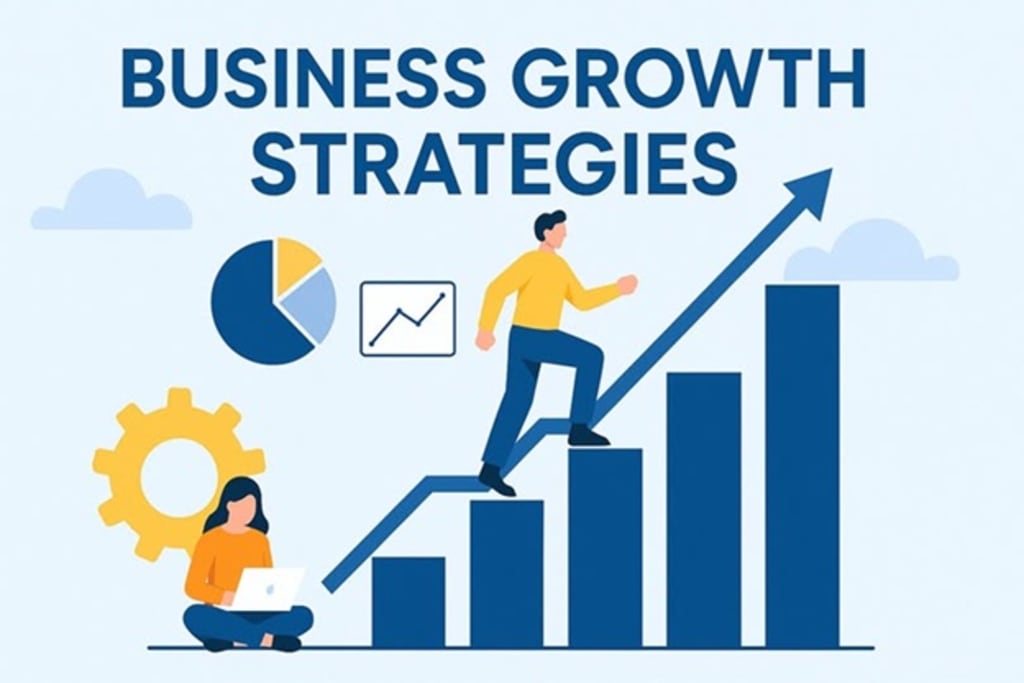
In today’s fast-paced and interconnected business environment, growth is no longer simply a matter of increasing revenue or market share. The landscape is crowded, customer expectations are evolving rapidly, and technological advancements are reshaping entire industries. Companies that wish to thrive must adopt strategies that go beyond conventional practices. Modern business growth strategies are multidimensional, combining customer focus, digital innovation, operational efficiency, and organizational culture into a cohesive framework for sustainable success.
At the heart of any modern growth strategy is the customer. Businesses that truly understand the needs, desires, and pain points of their audience are better equipped to deliver value. Customer-centric approaches go beyond traditional marketing campaigns; they involve creating experiences tailored to individual preferences. Personalization, engagement, and responsiveness are key.
For instance, businesses increasingly leverage customer data to provide targeted offers, recommend relevant products, and anticipate future needs. By mapping customer journeys, companies can identify friction points and optimize touchpoints, ensuring that interactions are seamless and enjoyable. Loyalty programs, community-building efforts, and proactive customer support are all part of cultivating long-term relationships. In a competitive market, businesses that prioritize customers often outperform rivals in retention, brand reputation, and overall growth.
Embracing Digital Transformation
Technological innovation is central to modern business growth. Digital transformation involves integrating digital tools into every facet of operations, from supply chain management and sales processes to customer service and marketing. Cloud computing, automation, artificial intelligence, and analytics are not just tools, they are enablers of agility, efficiency, and scalability.
A digital-first approach allows businesses to operate more efficiently and respond to market changes quickly. For example, cloud-based platforms facilitate remote collaboration, enabling teams to work seamlessly across locations. AI and machine learning help analyze customer behavior, forecast demand, and optimize resource allocation. Companies that adopt digital solutions can reduce operational costs, improve decision-making, and scale faster, giving them a competitive edge in saturated markets.
Fostering Innovation and Agility
Modern growth is also driven by innovation and adaptability. Competitive markets reward businesses that can respond rapidly to new trends, technologies, and customer demands. This requires creating an organizational culture that encourages experimentation, embraces calculated risks, and views failures as learning opportunities.
Agile methodologies, cross-functional teams, and rapid prototyping are commonly employed to accelerate product development. Businesses that integrate these practices can test ideas quickly, gather feedback, and refine offerings without significant delays. Agility is especially critical when industries are disrupted by new entrants or shifting consumer preferences. Companies that continuously innovate and adapt are better positioned to maintain relevance and sustain growth.
Leveraging Strategic Partnerships
Growth is rarely achieved in isolation. Strategic partnerships, alliances, and joint ventures enable businesses to expand their reach, access new markets, and enhance capabilities. Collaborating with other companies allows businesses to pool resources, share expertise, and create mutually beneficial opportunities.
For instance, partnerships can help smaller companies leverage the distribution networks of larger firms, while larger companies can benefit from the niche expertise or innovation of smaller partners. Such collaborations often result in faster market penetration, improved customer offerings, and reduced operational risks. In today’s competitive landscape, forming the right partnerships can serve as a catalyst for growth, providing advantages that internal efforts alone might not achieve.
Data-Driven Decision Making
Data has become a critical driver of growth strategies. Businesses that use data effectively can identify trends, optimize operations, and make informed strategic decisions. From analyzing sales patterns and customer behavior to tracking supply chain efficiency, insights derived from data help businesses act proactively rather than reactively.
Advanced analytics, business intelligence platforms, and predictive modeling enable companies to anticipate market shifts and refine strategies accordingly. By relying on data-driven insights, organizations can target the right opportunities, allocate resources efficiently, and minimize risks. In a competitive market, informed decision-making allows companies to make calculated moves that can significantly accelerate growth.
Investing in Talent and Organizational Culture
The foundation of any successful growth strategy is people. Skilled, motivated, and adaptable employees are essential for sustaining competitive advantage. Organizations that invest in professional development, training, and leadership programs often see better innovation, higher productivity, and stronger customer engagement.
A positive organizational culture that encourages collaboration, creativity, and accountability aligns teams toward shared business goals. Empowering employees to take initiative, propose ideas, and experiment within safe boundaries fosters a sense of ownership and engagement. Moreover, businesses with strong cultures are more likely to attract and retain top talent, reducing turnover and creating a workforce capable of driving long-term growth.
Sustainability and Social Responsibility
Modern businesses also recognize the importance of sustainability and social responsibility as part of growth strategies. Consumers increasingly prefer brands that demonstrate environmental stewardship, ethical practices, and a commitment to social causes. Incorporating these values into business operations can enhance reputation, build trust, and attract loyal customers.
Sustainable practices can also yield financial benefits, such as reducing energy costs, minimizing waste, and streamlining supply chains. Companies that integrate social responsibility initiatives into their strategies position themselves as forward-thinking and purpose-driven, which can differentiate them in competitive markets. Long-term growth is often closely linked to a company’s ability to balance profitability with positive social and environmental impact.
Diversification and Market Expansion
Another key aspect of modern growth is diversification. Expanding product lines, entering new geographic markets, or exploring adjacent industries can provide additional revenue streams and reduce dependence on a single source of income. Diversification must be strategic, grounded in market research, and aligned with the company’s core competencies.
By exploring untapped opportunities, businesses can mitigate risks associated with market fluctuations and create avenues for sustainable growth. Successful companies often blend diversification with innovation, introducing complementary products or services that address evolving consumer needs while maintaining brand integrity.
In a competitive business landscape, growth is no longer a matter of chance, it is a result of deliberate, multifaceted strategies. Companies that focus on customers, embrace digital transformation, foster innovation, form strategic partnerships, leverage data, invest in talent, uphold sustainability, diversify intelligently, and continuously improve are best positioned for long-term success.
Modern business growth strategies are not one-time initiatives but ongoing efforts that integrate multiple dimensions of the organization. By adopting these approaches, companies can not only survive in competitive markets but thrive, turning challenges into opportunities and creating sustainable advantages that endure over time. Growth today is about adaptability, resilience, and strategic foresight, qualities that define the modern business leader and the organizations they steer.
About the Creator
Ellen Sammy
Writer and Blogger
Keep reading
More stories from Ellen Sammy and writers in Chapters and other communities.
The Mental Health in Atlanta Movement: Challenges and Progress
The conversation around mental health has become a powerful city-wide dialogue, particularly in Atlanta, a diverse and culturally diverse city. The COVID-19 pandemic and racial and social justice movements have heightened the need for mental health awareness and services in the city. With 1 in 5 adults affected by mental illness annually, Atlanta faces increasing rates of anxiety, depression, and substance abuse, particularly among youth and marginalized populations. Despite the progress made by grassroots organizations, community leaders, and healthcare professionals, inequitable access to care, workforce shortages, and systemic disparities remain barriers. This article explores the Mental Health in Atlanta challenges journey, as well as the innovative programs, passionate advocates, and policy shifts driving the movement forward. As the city continues to grow, the hope for a future where mental health support is a right is growing.
By Ellen Sammy11 months ago in Chapters
Designing for the Future: How Billionaires Create Luxury Homes to Preserve Wealth for Generations
Billionaires often view luxury homes as more than impressive residences. Instead, they treat these properties as strategic assets that help preserve wealth across generations. While financial investments can fluctuate with markets, carefully designed real estate tends to maintain long-term value. Because of this stability, luxury homes often become central to wealth preservation strategies.
By Inspirata Group7 days ago in Chapters
The Forsyth House Fire
Since 1851, Forsyth House has stood on the corner of Union Street and Gordon Street in the heart of Glasgow. Its iconic, or was... because on Sunday 8th of March, 2026, a fire broke out in a small, seemingly un-named shop in the building and tore all that history down. As I write, the rubble is still unsettled and the street is still blocked off. Central Station is quiet on the upper level, and around 30 small businesses have quite literally gone up in smoke.
By S. A. Crawford2 days ago in The Swamp




Comments
There are no comments for this story
Be the first to respond and start the conversation.