
Memoir | The Housing Projects | Part I of VI
Foundations | Where Strength Was Built

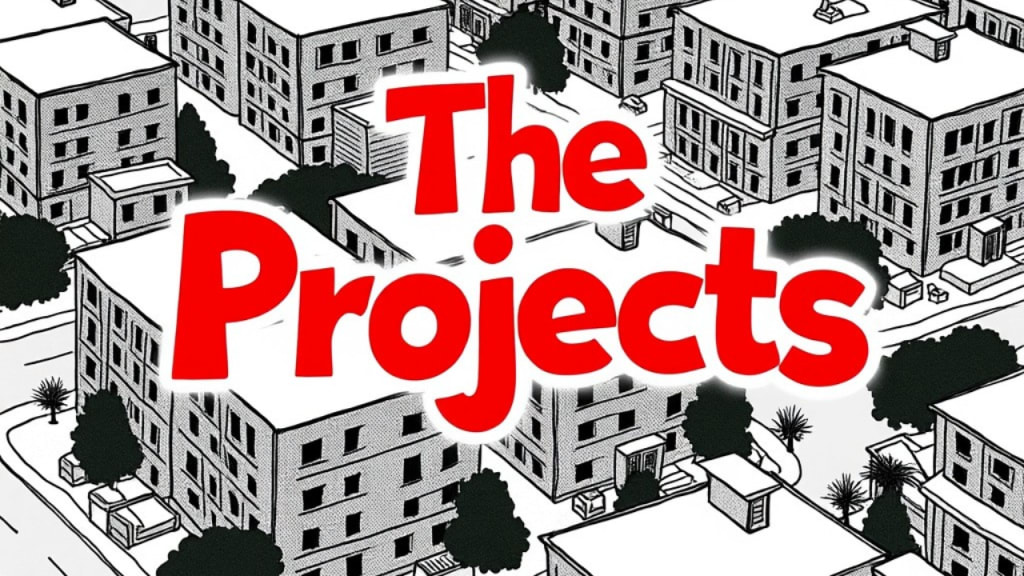
The Whispers
Whispers of doubt echo through the streets of Washington, District of Columbia (D.C.), casting skepticism on whether anything positive can emerge from the section of the city Southeast (S.E.), the urban housing projects predominantly populated by low-income African Americans, which is often underestimated and overlooked. These speculations, though harsh, persisted. Like the biblical scripture that questions the possibility of anything good coming out of the City of Nazareth, the response to these doubts is an invitation to witness the truth for oneself. Just as Nazareth was deemed a place from which nothing good could emerge, the Southeast section of the city in Washington, DC faced similar misconceptions.
Nazareth, Israel is associated with Jesus as his boyhood home. It is documented in history that Nazareth was one of the lowest places on earth, whereas people whispered that nothing good could come out of it.
And Nathanael said unto him, “Can there any good thing come out of Nazareth? Philip said unto him, “Come and see.” - Bible, King James Version, The New Testament, John 1:46
Living in the Southeast Today
Having spent my formative years in the Southeast, I can confidently assert that we are not so different from individuals residing in other low socioeconomic status projects. While I still call S.E. my home, I now reside in a cozy cooperative apartment where predominantly Caucasian individuals live. This transition is often seen as a step up in society for us, reminiscent of the popular African American sitcom, The Jeffersons, with its theme song, “Movin’ on Up.”
African American Women Working for the Federal Government
Washington, D.C., as the heart of the United States federal government and a significant global political hub, has historically offered opportunities primarily to unmarried African American women with children. These jobs have allowed them to break free from the limitations of their projects and provide for their families. Securing a federal government job paved the way for me to leave the projects.
During my mid-twenties, I read Angela Y. Davis’ enlightening book, Women Race & Class. Davis, a Distinguished Professor Emerita, shed light on the reasons behind the higher employment rates of African American women compared to African American men. Her insights deepened my understanding of this complex issue.
The Anacostia River
The Anacostia River serves as a visible divide between social classes in Washington, the District of Columbia, creating a stark contrast between the United States Capitol Building, the Supreme Court of the United States, and the homes of the upper-middle-class and upper-class individuals on one bank, and the working-class African American’s who lived in the projects on the other.
Narcotics
Regrettably, the presence of narcotics became a pervasive issue within the projects, as many African American individuals faced significant obstacles in securing and maintaining employment, akin to a modern-day form of subtle enslavement. Consequently, resorting to drug-related activities became a means for them to support their families by putting food on their tables and money in their pockets.
The Projects Streets Were Names of Notable Enslaved Individuals
In my project community, the streets bear the names of notable African American slaves. I used to reside near Frederick Douglass Place on Sojourner Truth Terrace in S.E. Memories of my old address at 1747 Sojourner Truth Terrace, SE, Washington, DC, 20020, still linger.
The Courtyard
On the heart of my street was a vast courtyard, affectionately known as “The Court,” surrounded by five small, red brick houses with concrete porches. My house stood proudly at the top of the Court.
Evenings brought life to the Court as the housing project matriarchs returned from their federal government jobs. They would gather, bringing out their kitchen chairs to sit, chat, drink, smoke cigarettes, and indulge in cannabis until late into the night. However, the other matriarchs labeled my mother as a pretentious snob because she never joined them.
My Mother, A Matriarch
My mother, a strong matriarch, greatly influenced my desire to work hard and dress well. She is a light-skinned African American woman with curly hair, an attractive figure, and a beautiful face. Mom adorned herself in dresses, large clip-on earrings, and high-quality bracelets, all from Casual Corner, a chic women’s clothing store considered high-end in our projects area. She even wore CHANEL perfume. Every evening, she would return home from her job as an office secretary at Georgetown University Hospital in her sturdy, blue 1966 Dodge Polara, affectionately named Betsy. Before entering our house, she would greet the project matriarchs and settle in to watch the evening news hosted by the late renowned African American journalist, Max Robinson. She sipped on Sherry from a fancy crystal wine glass she had found at the Thrift Store on Capitol Hill.
One evening, while watching the news with my mother, a conflict between the Israelites and Palestinian leaders was reported. A United States Delegation was dispatched to mediate the dispute. At that moment, I impulsively declared my desire to work for that federal government agency. Encouraged by my mother, I embarked on a journey to pursue employment there.
Conclusion
And so, here I stand, a testament that something “good” can indeed emerge from Southeast, in Washington, D.C., surpassing the expectations of living in the Housing Projects.
**********
(Copyright © 2025 by Mia Z. Edwards. All rights reserved.)
About the Creator
Mia Z. Edwards
From the chaos of humble roots to working for gov’t officials, who knew? One moment, I’m filing secret docs like a ninja. Next, I’m jet-setting the globe on covert missions and became Special Agent Mia. Niche: Memoir. Fiction. Love Musings.
Keep reading
More stories from Mia Z. Edwards and writers in Chapters and other communities.
What was said about Afghanistan at the UN Security Council meeting?
The United Nations Security Council held a mNew York, Uni, to discuss the situation in Afghanistan. Representatives froGeorg, the head of the United, exchanged views on the situation in Afghanistan.
By Real content3 days ago in Chapters




Comments
There are no comments for this story
Be the first to respond and start the conversation.