
Maintain Compliance by Following the FMCSA Safety Audit Procedures: An In-Depth Exploration of the Legal System
When it comes to ensuring the safety and compliance of commercial motor vehicles (CMVs), the FMCSA (Federal Motor Carrier Safety Administration) Safety Audit Checklist is a crucial tool for fleet operators and drivers
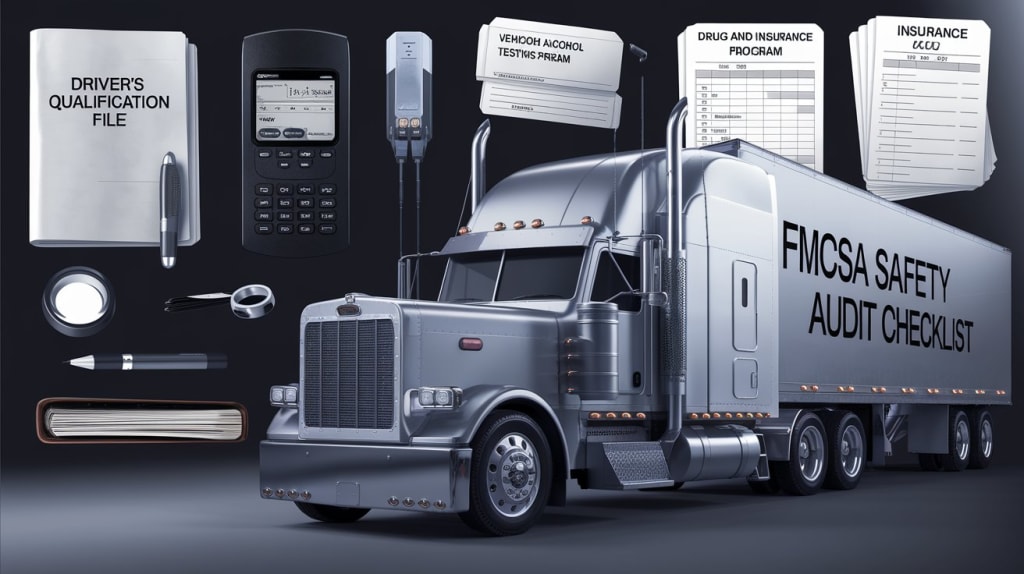
The FMCSA Safety Audit Checklist is the most important resource for fleet operators and drivers when it comes to ensuring the safety and compliance of commercial motor vehicles. The comprehensive checklist helps companies on their way to track regulations, mitigate risks, and operate safely. Since change within the transportation industry is imperative and nothing but new standards seem to be emerging day after day, one should always look forward to these advancements and be updated with the latest knowledge. Here is your comprehensive guide to the FMCSA Safety Audit Checklist, consolidating the latest trends and industrial standards into every step.
The FMCSA Safety Audit Checklist includes several key elements that ensure a fleet's compliance with regulations and its commitment to safety. One of the primary considerations is the qualifications of drivers. Drivers must possess a valid commercial driver’s license (CDL) in accordance with FMCSA requirements. Additionally, their qualification files should be completed with necessary documents such as medical certificates, driving records, and employment history. It is also essential to verify that drivers have undergone all required drug and alcohol testing, including pre-employment, random, post-accident, and reasonable suspicion tests.
Hours of Service (HOS) compliance is another critical aspect. The audit process involves examining logbooks or electronic logging devices (ELDs) to ensure drivers are complying with FMCSA’s HOS requirements. This includes checking for adherence to daily and weekly driving limits, rest periods, and break times. It is important that these logs are retained for at least six months and easily accessible during an audit.
Vehicle maintenance and inspections are also closely monitored in the FMCSA safety audit. The vehicles must be inspected and serviced in accordance with FMCSA regulations. Pre-trip, post-trip, and annual inspections must be performed and documented. Additionally, fleet operators must ensure that critical systems on the vehicle, such as brakes, lights, tires, and suspension, are properly serviced.
For the drug and alcohol testing program, the organization must have an established testing program for all safety-sensitive employees. Testing should be conducted in accordance with FMCSA regulations, including random, pre-employment, and post-accident tests. The records for drug and alcohol testing should also be up-to-date and available during audits.
Dive Deeper: https://axonator.com/artifact/fmcsa-safety-audit-checklist/
The checklist also covers vehicle leasing and owner-operator records. It is important to ensure that all leased vehicles comply with FMCSA requirements and are appropriately documented. If owner-operators are working with the company, they must meet the necessary standards and have the correct documentation. All equipment must be properly recorded, including any agreements related to leased vehicles.
An accident register and reporting system is essential as well. The company should maintain a detailed accident register, including the date, description, and outcome of each accident involving the company's vehicles. All accidents must be reported to the FMCSA within the stipulated time. Policies should be in place for investigating accidents, and the findings must be recorded, with improvement measures implemented as needed.
Safety policies and procedures are another critical component of the checklist. These policies must be written and accessible to all employees. It is important to review training courses that address topics like safe operating practices, accident prevention, and hazardous materials handling. Additionally, safety meetings and refresher training sessions should be conducted regularly to ensure that employees are kept informed of any changes in regulations.
Finally, insurance needs must be met. The fleet should be insured for liability, cargo, and property damage, with the necessary coverage as specified by FMCSA regulations. Insurance certificates must be valid and comply with FMCSA's minimum limits of coverage. All insurance documentation should be maintained and readily accessible during audits.
FMCSA Safety Audit: Insights into the Process
The FMCSA safety audit checklist is much more than a piece of red tape; it's proactive in keeping drivers and vehicle owners safe for themselves and the general public. Companies use this checklist to minimize the risk of compliance violations and become more efficient in their operations. Let's take a step closer to knowing the current trends and changes that are happening in this critical audit.
Get Deeper Insights: https://axonator.com/request-for-demo/
Electronic Logging Devices (ELDs) and Real-Time Monitoring
Mandating the use of Electronic Logging Devices (ELDs) is one of the significant changes occurring in the transportation industry. ELDs replace traditional paper logbooks; hence, they track a driver's hours of service in real time. ELDs prevent illegal violations like driving hours beyond regulated hours and help ensure that drivers take necessary breaks. With ELD technology continuing to gain ground, auditors can access accurate data remotely, thus making it more efficient in the audit process.
Nowadays, one of the factors that must be complied with when performing an FMCSA safety audit is ensuring that the company's drivers are equipped with the appropriate ELD. Many modern ELD systems have more comprehensive packages that include features such as driver behavior monitoring, real-time vehicle diagnostics, and route optimization. With these features, companies can further enhance their safety record.
Enhanced Driver Training and Safety Culture
Driver training and the promotion of a safety-first culture have been of increased prominence in recent years. In this regard, the FMCSA audit checklist places much emphasis on recurrent education in matters relating to road safety, defensive driving methods, hazardous materials handling, and controlling fatigue.
As more cases of accidents related to human factors are reported, agencies are urging companies to implement and invest in ongoing driver education. Simultaneously, with technologies like dash cams and telematics systems, it becomes easier for companies to track their driver's behavior and to identify improvement areas.
Being able to identify a robust safety training program that addresses everything from safe driving practices to emergency response procedures, or having all the necessary requirements that can easily be identified during the auditing process, is not enough. It serves as a critical component in furthering accident reduction and higher compliance rates.
Maintenance and Vehicle Inspections: Automation and AI in Fleet Management
The integration of artificial intelligence (AI) and automation in fleet management is transforming how vehicle maintenance is tracked and managed. Automated systems can now predict when a vehicle will need maintenance or a replacement part, reducing the risk of breakdowns on the road. Moreover, AI-driven tools are enabling real-time inspections and diagnostic assessments that enhance the accuracy of safety checks.
By implication, for the FMCSA safety audit checklist, it means that fleet operators ensure their vehicles are on regular maintenance and have the latest inspection records. These days, as AI and automation become popular within fleet management, more companies are fast developing these systems in order to stay compliant and avoid mechanical failure accidents.
Data-Informed Safety Decisions
The rise of big data has transformed safety decision-making in the transportation industry. Operators can now capture detailed data on how drivers operate, the health of their vehicles, and conditions on roads. Patterns can thus be established to predict risks before they hit the road. Data-driven insights integrated into your safety policies are no longer a best practice but an expectation from your regulator.
In particular, this checklist of the FMCSA safety audit encourages companies to use the data to improve compliance and safety. The data can also be used to identify trends in accidents and unsafe driving behaviors, which in turn can be addressed using interventions like refresher training or changing maintenance schedules for vehicles.
Updating oneself with such industry trends and incorporating them into the safety audit checklist will help the fleet operate better while preparing for audits, thus enhancing the overall safety performance. Being compliant with FMCSA regulations helps to have a smoother operation, but in itself is a show of commitment towards road safety.
About the Creator
Keep reading
More stories from Vibhor Dongre and writers in Chapters and other communities.
Discovering the Keys to Mobile App Success: Industry Trends That Will Define 2024
Smartphones have simply become a daily reality. And amid such a ubiquitous presence, mobile applications have become the nucleus of life. Mobile apps ensure entertainment and social networking, productivity, and health, among many other benefits to millions across the globe. As the industry continues to evolve, new trends have emerged that promise to redefine how we interact with mobile technology. In this article, we’ll explore the latest trends and industry standards that are shaping the future of mobile apps in 2024.
By Vibhor Dongreabout a year ago in Chapters
Fair Exchange, No Robberies
Dark Memoirs - Index There are at least two kinds of people in the world: those who write this half-arsed kind of intro to a story that looks to separate the rare and the norm, and those who realise it's an overused framing device and don't.
By Paul Stewart14 days ago in Chapters



Comments
There are no comments for this story
Be the first to respond and start the conversation.