
Journal of Napoleon Bonaparte
Episode 5: The Republic in My Hands

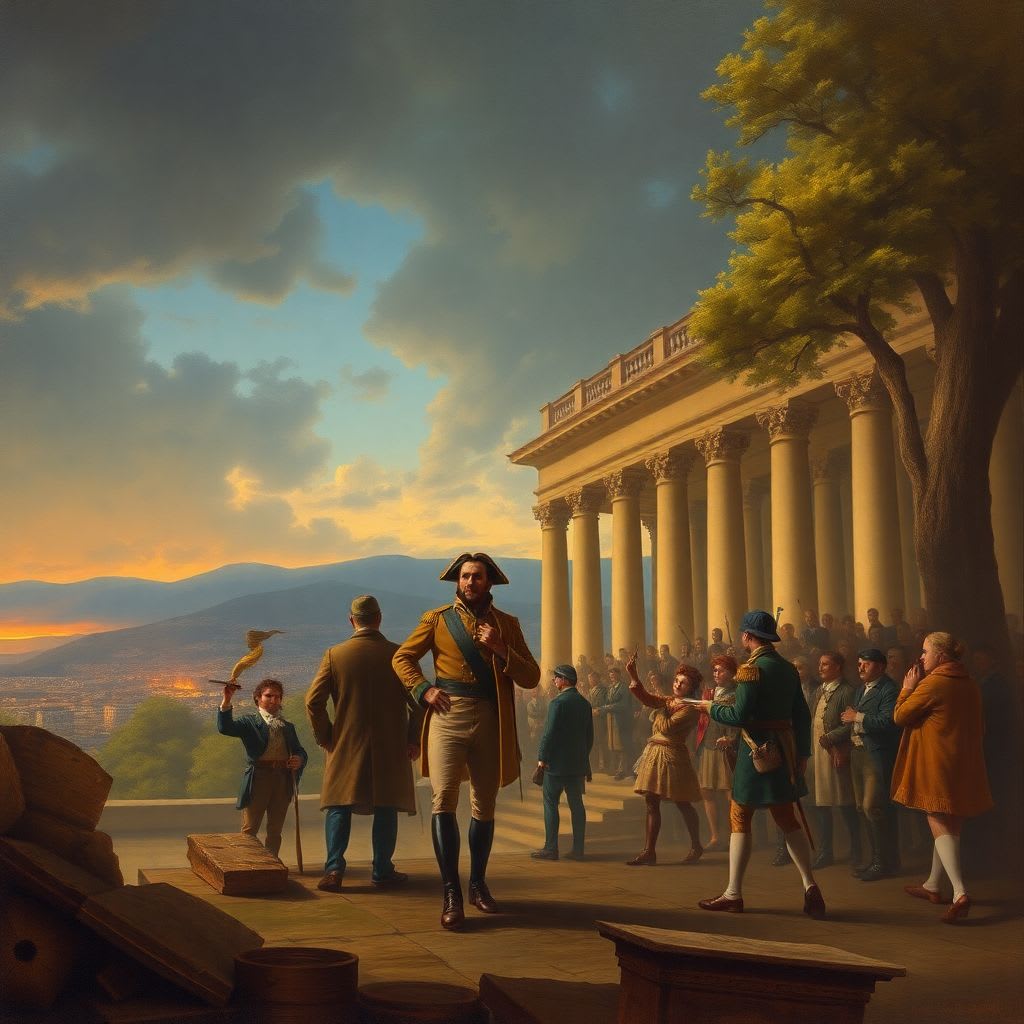
France, 1799–1802
October 9, 1799 – Fréjus
I have returned to France, stepping onto her soil like Caesar crossing the Rubicon. The people rushed to greet me as if salvation wore epaulettes.
They smell it — the change. The air tastes of collapse: bankrupt treasuries, conspiracies, a Directory gasping like a dying beast. I say little. I listen. And I wait.
The Republic does not need saving. It needs direction. It needs a single mind, a steady hand. Mine.
November 9, 1799 – Paris (18 Brumaire)
History bends.
This morning I was a general with ambition. Tonight, I am something far more dangerous: a man with authority.
The coup began in confusion. Words failed. The Councils resisted. For a moment, it nearly slipped away. But Lucien — brave, cold-blooded Lucien — declared that I was defending the Republic from internal enemies. The soldiers moved in. The deputies fled.
There was shouting. There was panic. And then... silence.
That silence was the birth cry of a new France.
December 15, 1799 – Tuileries Palace
I now rule as First Consul. A title crafted in ambiguity — not king, not tyrant, not yet. But the truth is simple: I give the orders. No law is passed without my hand. No war declared without my voice.
I have not destroyed the Republic. I have focused it.
At night, I walk alone through the halls of the Tuileries. I run my fingers along the walls once touched by Louis XVI. There are ghosts here. I nod to them, then pass on.
July 14, 1800 – Marengo
Victory again — by a hair’s breadth.
Marengo was chaos. The Austrians struck hard, and for hours it seemed the dream might crumble in the dust. But Desaix returned like lightning. Kellermann charged. I seized the moment with the precision of a blade sliding into ribs.
When it was over, France stood taller — and I, unshaken, stood at its summit.
I told Josephine that night: "One battle can change everything — if you know when to strike."
December 24, 1800 – Paris
An assassin's bomb shattered the night as I rode to the opera. The blast missed. Others died — innocent people — and I felt no fear, only fury.
Terror still clings to France like a disease. But I will cure it, with law, with order, with iron if need be. The people do not want liberty — they want security.
So I will give them safety... and they will give me power.
February 19, 1801 – Concordat Negotiations
I speak now with the Pope’s emissaries. I do not kneel. France shall have its priests, but they shall wear the Republic’s leash. Religion is useful — a pillar, not a throne.
Let the people light candles again, let them pray. As long as their prayers end with my name whispered under breath.
March 25, 1802 – Treaty of Amiens
Peace. For the first time in ten years, Europe is quiet.
They call it the Peace of Amiens. I call it an intermission. England smiles across the Channel, but her cannons never sleep. Still, the French embrace me as the man who ended war. They cheer in the streets. Children wave flags. I accept their affection as one accepts a crown — silently, but with purpose.
Let them think the story ends here.
But I know better.
About the Creator
Alain SUPPINI
I’m Alain — a French critical care anesthesiologist who writes to keep memory alive. Between past and present, medicine and words, I search for what endures.
Keep reading
More stories from Alain SUPPINI and writers in Chapters and other communities.
Mastering French Without Losing Your Sanity: A Realistic Guide for Beginners
Learning French can feel like solving a Rubik’s Cube blindfolded. The tricky pronunciation, the never-ending grammar rules, and the surprising exceptions make it seem impossible. But don’t worry—equipping yourself with key expressions and effective strategies can turn frustration into fluency. Let’s simplify French and make learning enjoyable.
By Alain SUPPINIExclusive • 11 months ago
Fair Exchange, No Robberies
Dark Memoirs - Index There are at least two kinds of people in the world: those who write this half-arsed kind of intro to a story that looks to separate the rare and the norm, and those who realise it's an overused framing device and don't.
By Paul Stewart13 days ago in Chapters
How to Use Dopamine for Deep Focus and Flow
Introduction For the longest time, I thought dopamine was my enemy. It was the thing pulling me toward endless scrolling, overeating, and wasting hours on apps that gave me nothing back. I blamed my lack of focus on willpower, discipline, or motivation. But what I eventually realized changed how I work, think, and focus entirely.
By Dilip Kumara3 days ago in Chapters
The Devil's Cut
“Comrade, finally you’re awake.” The voice was smooth, sensual. A flickering incandescent bar was all that lit the white, sterile room. All Vladimir remembered was everything going black. He tried to move his arms and found them strapped to the gurney.
By Matthew J. Fromm5 days ago in Fiction




Comments
There are no comments for this story
Be the first to respond and start the conversation.