
Jeremiah Chapter 1
Summary of this chapter.

### **Summary of Jeremiah Chapter 1**
Jeremiah Chapter 1 recounts the divine calling of the prophet Jeremiah, his commission, and his initial hesitations, setting the foundation for his prophetic ministry. The chapter emphasizes God’s sovereignty, His foreknowledge, and His power to equip those He calls. Jeremiah is appointed as a prophet during a turbulent time for the kingdom of Judah, with the nation on the brink of exile due to its persistent disobedience. The chapter can be divided into several key sections: the introduction to Jeremiah, his divine calling, God's promises of protection and empowerment, and the symbolic visions confirming his mission.
#### **1. Introduction to Jeremiah (Verses 1–3)**
The opening verses introduce **Jeremiah**, the son of **Hilkiah**, a priest from the town of **Anathoth** in the territory of **Benjamin**. This background situates Jeremiah within the priestly lineage, suggesting that he was familiar with temple rituals and the religious life of Judah.
The chapter specifies that Jeremiah's prophetic ministry began during the reign of **King Josiah** and continued through the reigns of subsequent kings, including **Jehoiakim** and **Zedekiah**, until the fall of Jerusalem and the Babylonian exile. This historical context highlights that Jeremiah's ministry took place during a period of significant political upheaval, moral decay, and impending judgment for Judah.
#### **2. God's Call to Jeremiah (Verses 4–5)**
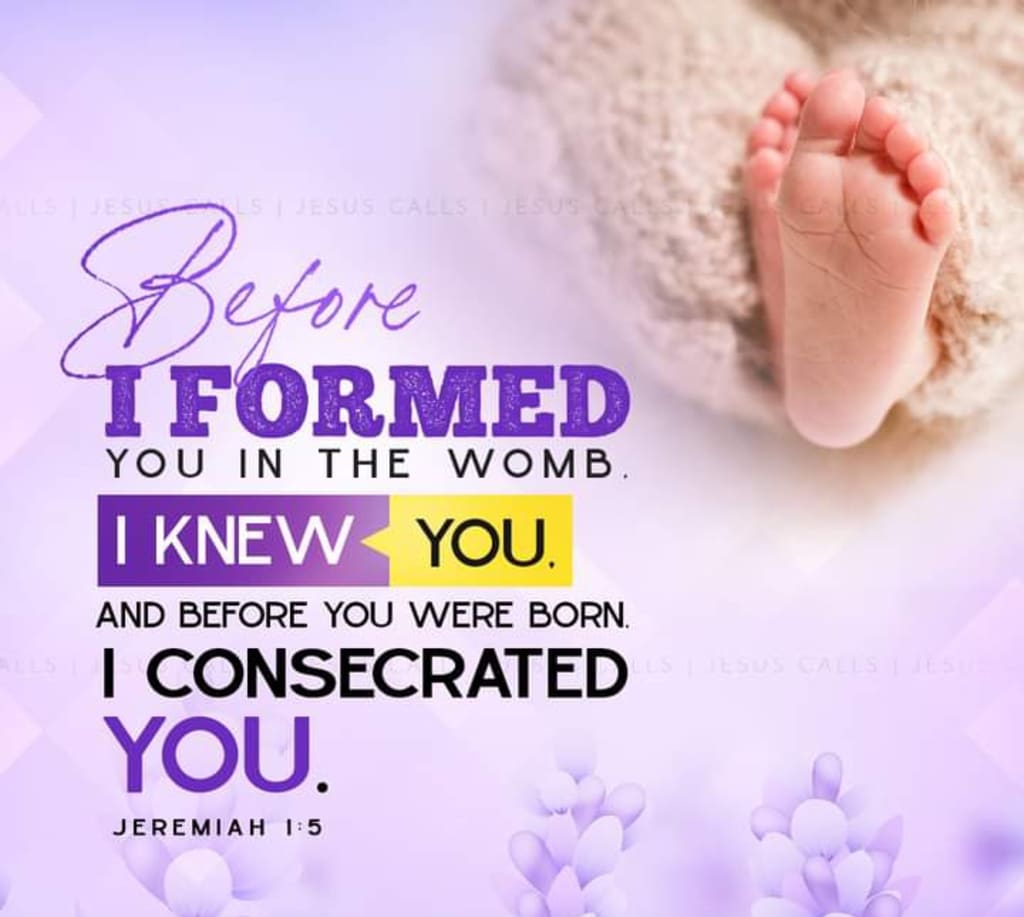
The next section describes the personal and direct calling of Jeremiah by God. God tells Jeremiah that before he was even formed in the womb, He knew him and had set him apart for a specific purpose: to be a prophet to the nations. This statement emphasizes God's sovereignty and His intimate knowledge of Jeremiah’s life and future before his birth. It also illustrates that Jeremiah’s mission was preordained and that he had been chosen for a special role in God’s plan.
This divine foreknowledge underscores the theme of predestination and the idea that God has a purpose for individuals, which transcends human understanding.
#### **3. Jeremiah’s Hesitation and God’s Assurance (Verses 6–8)**
Jeremiah responds to God's call with hesitation, expressing his feelings of inadequacy. He says, "Ah, Sovereign Lord, I do not know how to speak; I am too young." Jeremiah’s response is one of humility, but it also reveals his fear and reluctance to take on the heavy burden of being a prophet. He feels unqualified, perhaps due to his inexperience or youth, and doubts his ability to deliver God’s message effectively.
In response, God reassures Jeremiah, telling him not to say, "I am too young," because He will send him to whomever He chooses, and Jeremiah will speak whatever He commands. God promises that Jeremiah need not fear those he will encounter because He will be with him, protecting him from harm. This divine reassurance highlights God's presence and provision, reinforcing the theme that God equips those He calls.
#### **4. God’s Empowerment and Commission (Verses 9–10)**
To further solidify Jeremiah's commission, God reaches out and touches his mouth, symbolically placing His words in Jeremiah’s mouth. This act signifies that Jeremiah will not speak on his own authority but will convey the very words of God. It is a moment of divine empowerment, marking the beginning of Jeremiah’s prophetic role.
God then outlines Jeremiah’s mission, telling him that he is appointed over nations and kingdoms to "uproot and tear down, to destroy and overthrow, to build and to plant." This dual role reflects the nature of Jeremiah's ministry: he will pronounce judgment and destruction on nations, particularly Judah, for their sins, but he will also bring messages of hope, renewal, and restoration.
#### **5. Two Visions Confirming Jeremiah’s Mission (Verses 11–16)**
God gives Jeremiah two symbolic visions to confirm his prophetic mission. The first vision is of an **almond branch**. God explains that this symbolizes that He is "watching" to see His word fulfilled. The almond tree is one of the first to blossom in spring, symbolizing the quickness and certainty of God's judgment and actions.
The second vision is of a **boiling pot tilting from the north**, which represents the imminent disaster that will come upon Judah from the north—symbolically pointing to the Babylonian invasion. God explains that He is bringing judgment on Jerusalem because of the people's wickedness, their idolatry, and their abandonment of Him. This judgment will come swiftly and severely, as the pot’s tilting implies the unstoppable nature of the coming catastrophe.
#### **6. Final Encouragement and Divine Protection (Verses 17–19)**
In the closing verses, God commands Jeremiah to brace himself for the challenges ahead, telling him to stand up and deliver God's message without fear. Despite the opposition Jeremiah will face from the people, kings, priests, and officials, God promises to make him a fortified city, an iron pillar, and a bronze wall. This imagery illustrates the strength and resilience God will provide Jeremiah to withstand the hostility directed at him.
God’s final assurance is that although Jeremiah will face intense opposition, "they will not overcome you, for I am with you and will rescue you." This promise of divine protection reinforces the idea that God’s power will safeguard Jeremiah as he fulfills his prophetic duties.
#### **Conclusion**
Jeremiah Chapter 1 sets the stage for the prophet's challenging ministry, marked by his initial reluctance, God's reassurance, and his commission to deliver difficult messages of judgment and hope. The chapter highlights themes of divine calling, human inadequacy, God’s empowerment, and the certainty of His plans. Despite Jeremiah’s doubts, God promises to equip and protect him, ensuring that His word will be faithfully proclaimed. This chapter emphasizes that God chooses and prepares His servants for His purposes, regardless of their weaknesses, because His strength is made perfect in human frailty.
About the Creator
Danny Prem kumar
A vision is our long-term goals and aspirations for the future in terms of its long-term growth and impact on this world. My mission defines what we do and what we stand for, while our vision speaks to our goals and ideals for the future.
Keep reading
More stories from Danny Prem kumar and writers in Chapters and other communities.
Acts Chapter 17
### **Summary of Acts Chapter 17** Acts Chapter 17 recounts key events during Paul’s second missionary journey as he travels through Thessalonica, Berea, and Athens, preaching the gospel and encountering various reactions. The chapter highlights Paul’s perseverance in spreading the message of Jesus, despite opposition, and his efforts to engage different audiences, including Jews, God-fearing Greeks, and pagan philosophers in Athens. It’s a rich narrative that addresses themes of idolatry, resurrection, and the nature of God.
By Danny Prem kumarabout a year ago in Chapters
Valentine's Dates Over the Years
Colin grinned as Brooklyn slipped into the living room. “Is it all set?” he asked. The twenty-one year old grinned. She was in her last year of college and Colin knew that Lincoln was proud of her. Although she had been away at college, she’d eagerly helped Colin plan his surprise for Lincoln. “I’m so glad you’re finally doing this,” she said.
By Reb Kreyling18 days ago in Chapters
When the Shelter Closes
Across the street from my house, a man slept under a tree, his dog by his side. My first, naive thought: he must be traveling through. But he kept coming back, often sleeping there during the day. Then it hit me—that person might not have a home.
By Bride of Sound5 days ago in Humans




Comments
There are no comments for this story
Be the first to respond and start the conversation.