
Jama Taqseem Episode 13 & 14
A Pakistani Drama Review
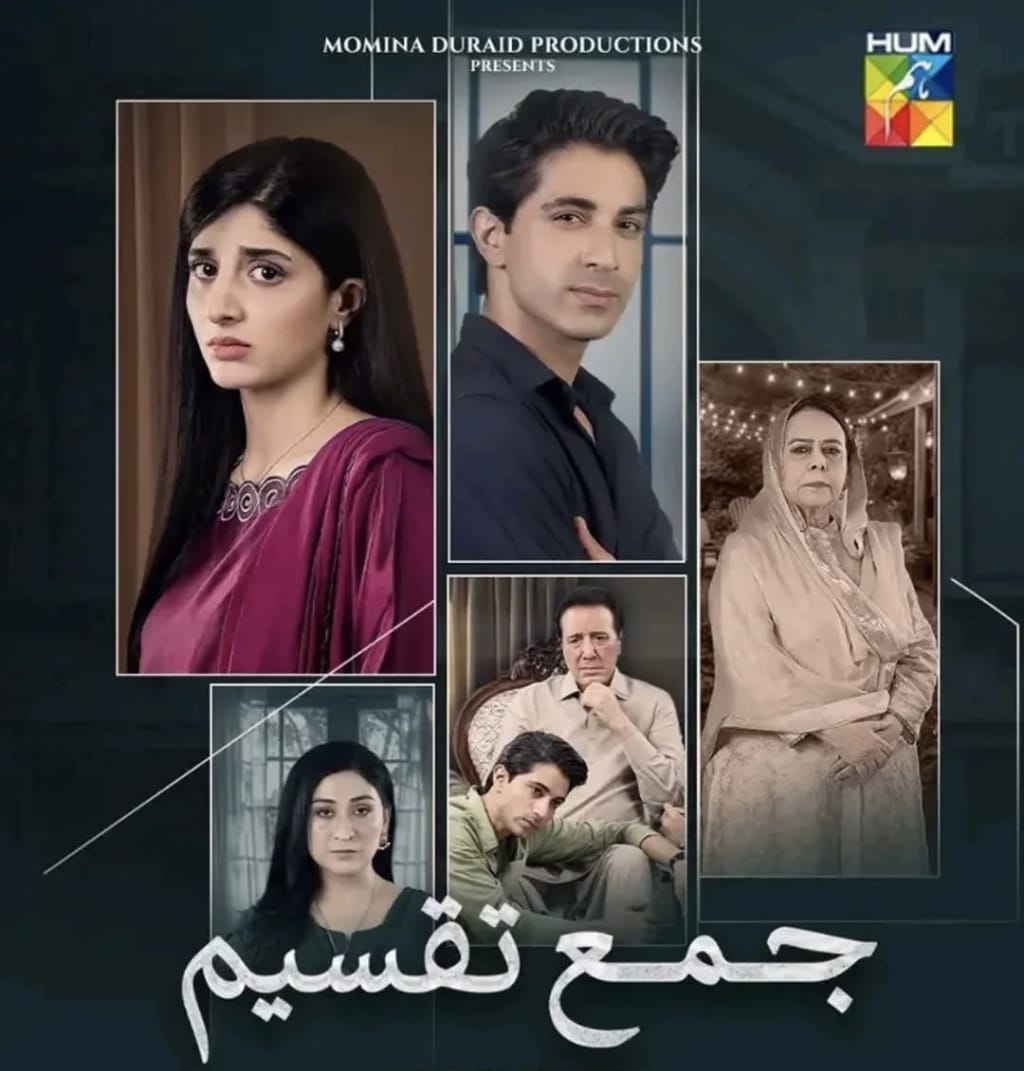
Jama Taqseem stands out as a drama that deviates from standard cliches, instead delivering a genuinely human, empathetic, and emotionally sensible examination of family dynamics and young marriages. Rather than depending on theatrics or moral lecturing, it achieves its impact via realism, depicting imperfect characters, genuine difficulties, and steady improvement.
Jama Taqseem is primarily concerned with how love, ego, and upbringing intersect in the lives of a newlywed couple. Qais (Talha Chahour) and Laila (Mawra Hocane) are not romanticized heroes; they are real, flawed people trying to adjust to married life and each other's surroundings. Their disagreements, misunderstandings, and reconciliations appear genuine, never overdone or forced.
The brilliance of this drama is in its refusal to place any blame. It does neither praise one character or demonize another. Qais misses the comforts of home—the warmth of family meals, the old routine—while Laila, despite her good intentions, struggles to adjust to her new responsibilities. Their differences are the result of immaturity and inexperience, not malicious intent. Both are discovering what marriage really requires: compromise, understanding, and patience.
In one scene, Qais rants about missing his mother's parathas, and rather than turning it into a dramatic marital quarrel, the program utilizes it to reflect on how people bring habits and emotional attachments from their previous life into marriage. Qais and Laila later apologize to each other, quietly reinforcing the concept that relationship growth occurs via self-awareness rather than power.
This picture of shared responsibility is uncommon in Pakistani television, where one couple — typically the woman — is expected to bear all of the blame. Jama Taqseem disrupts the pattern, demonstrating that both partners must evolve together.
The character growth of Laila is particularly noteworthy. Initially unprepared for married life, she gradually matures as she learns to cook, manage a home, and find a job. Her moral compass remains firm; she respects her in-laws, accepts her parents' counsel, and sincerely strives to balance her responsibilities. Her mistakes are the result of her youth rather than greed, making her path feel genuine and emotionally compelling.
Qais's account is just as convincing. After being sent out by his authoritarian father, who would not accept disagreement, Qais must confront the reality of independence and responsibility. His difficulties with rejection, vanity, and self-worth are vividly described. Rather than depicting him as a victim, the play demonstrates how males, too, experience emotional struggle when deciding between family devotion and personal ambition.
The portrayal of family interactions in Jama Taqseem adds another level of authenticity. The father's rigidity, the mother's helplessness, and the generational struggle between parents and children all represent society facts. The father's choice to entrust the family factory exclusively to one son exemplifies favoritism and inequality, which are prominent issues in many homes. However, the drama never turns judgmental; instead, it serves as a mirror for society.
The story's female characters, ranging from moms to daughters-in-law, are nuancedly written. The mother confronts her husband's rigidity, the daughters question obsolete traditions, and the granddaughter's character development following a big incident provides emotional depth. Even Nighat, who is continuously nasty, is not a caricature; she embodies the toxicity that can exist inside families.
Overall, performances are good. Mawra Hocane excels as Laila, conveying the sensitivity and drive of a young woman managing expectations. Talha Chahour portrays Qais with sincerity and restraint, as a man divided between love, pride, and duty. Hasan Ahmed, Sadaf, and Madiha Rizvi have great supporting performances, while the actor who plays Kamran deserves special notice for conveying arrogance and remorse with equal conviction.
Syed Wajahat Hussain, the director, ensures that every element, from set design to dialogue, represents realism. The sequences taken in Hyderabad, particularly near the bangle factory, provide cultural depth and visual reality. Even little exchanges, such as a father giving his granddaughter chocolate or a quiet talk between spouses, have emotional significance.
One of the show's most notable triumphs is its reluctance to sensationalize. It does not rely on overblown tensions, background music, or lengthy speeches. Instead, it relies on the audience to think and feel. The language conveys the messy, flawed reality of relationships without moralizing.
Viewers are left thinking about more profound issues as the narrative goes on, such as what makes a healthy marriage? How do parents' expectations influence young couples? When does love turn to ego?
Jama Taqseem does not provide simple solutions, but it does urge its audience to contemplate – and that is what makes it unique.
In a time where television frequently feeds on extremes, such as heroes and martyrs, villains and saints, Jama Taqseem serves as a reminder that there are gray regions in life. It's a narrative of development, love, pride, and forgiveness, presented with candor and emotional maturity.
About the Creator
Keep reading
More stories from Raviha Imran and writers in Chapters and other communities.
Case No. 9 Episode 7 & 8
Case No. 9 has emerged as one of Pakistan's most captivating dramas in recent years, depicting trauma, justice, and human perseverance. While the idea might sound basic – a woman’s battle for justice after sexual assault - the script, performances, and directing lift it far beyond a traditional narrative. It's more than simply another drama about a victim's battle; it's a masterclass in execution, realism, and emotional intensity.
By Raviha Imran4 months ago in Chapters
The Cave Part 6
If you have ever heard a tale about yourself that you cannot remember and doubtless think is made up, you will know how I felt when Tharkin related all that the eagle had seen of me before my memories were scattered. Of far distances and traveling companions that I did not recall, camping out under the stars and making our way to the mountains with deliberate purpose. The great bird had lost contact with my party once we entered the forests, and the seven other members were not seen again by him or his brethren since.
By Jamye Sharp15 days ago in Chapters
A Historic Declaration
We the People of the Husbands of the United States of America, in Order to form a more perfect Union, and I mean you...with me...establish Justice, insure domestic Tranquility, provide for the common defence, promote the general Welfare, and secure the Blessings of Liberty to ourselves, after Puberty, do ordain and establish this Declaration of Co-Dependence.
By Gerard DiLeo5 days ago in Humans



Comments
There are no comments for this story
Be the first to respond and start the conversation.