
It's about bloody time we talked about periods and climate
1.8 billion menstruators, about 10,000 disposable period products and up to 500 years to break down

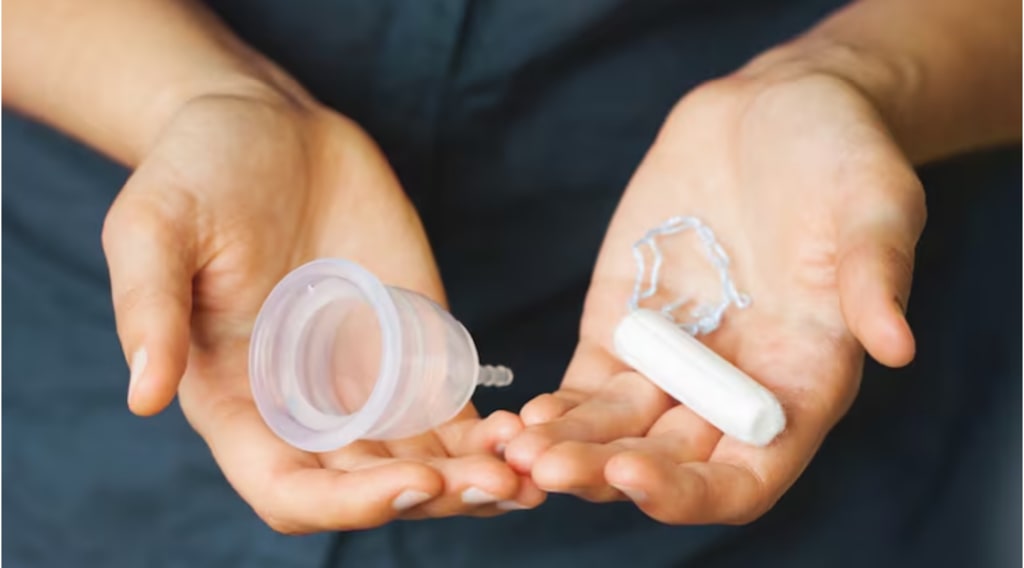
Billions of disposable menstrual products are used on a daily basis, and the environmental impact is significant. But experts and advocates say the key to solving the problem is more equitable access to period products of all kinds — both disposable and reusable.
Although there are more climate-friendly options available these days, reusable options can be a hard sell for many people, they said, because of factors like cost and stigma.
"We can't talk about reusables without talking about equity and access. It will only be a solution for people who have access to the financial means to purchase it, and water and sanitation resources to manage it," said Dr. Carmen Logie, a professor at the University of Toronto's social work faculty.
The environmental impact of menstrual products
Around 1.8 billion people menstruate every month worldwide, meaning at a given point each day, 800 million, or 26 per cent of the global population, are menstruating, according to data from the National Institutes of Health. Over the course of a lifetime, a woman will use around 10,000 menstrual products, and in Europe and the United States, more than 80 per cent end up in landfills.
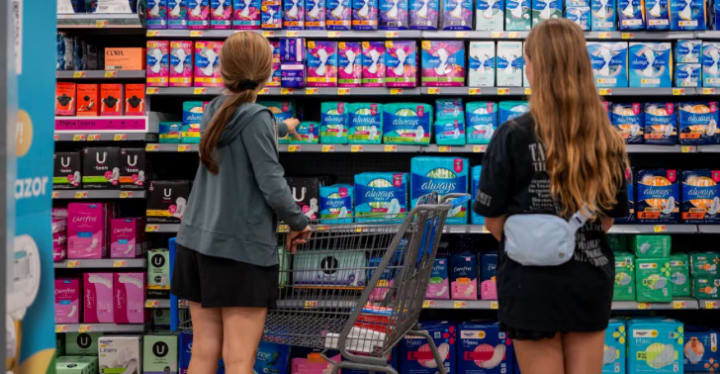
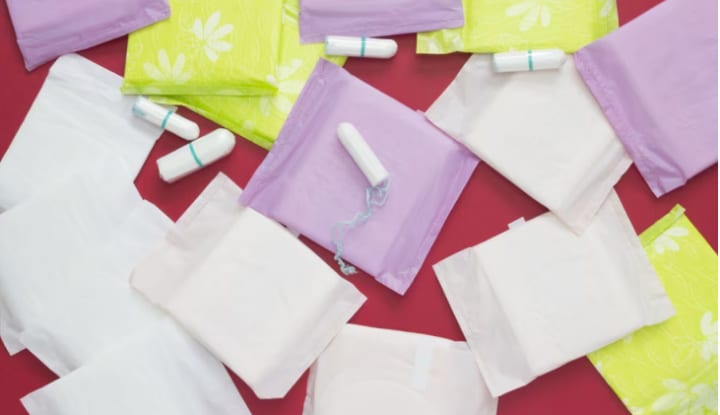
Single-use pads and tampons remain the most popular method of menstrual care, but are made up of roughly 90 per cent plastic, which can take up to 500 years to break down, according to research from the United Nations Environment Programme.
"Tens of billions of disposable menstrual products are used each year. In high-resource contexts, these end up in municipal garbage or specialized bins, which are then taken to landfills or incinerators," said Dr. Dani Barrington, senior lecturer in global health at the University of Western Australia.
"Even with the best systems in place, these products have used massive amounts of raw materials and contributed large amounts of greenhouse gases during their production and disposal."
How sustainable are reusables?
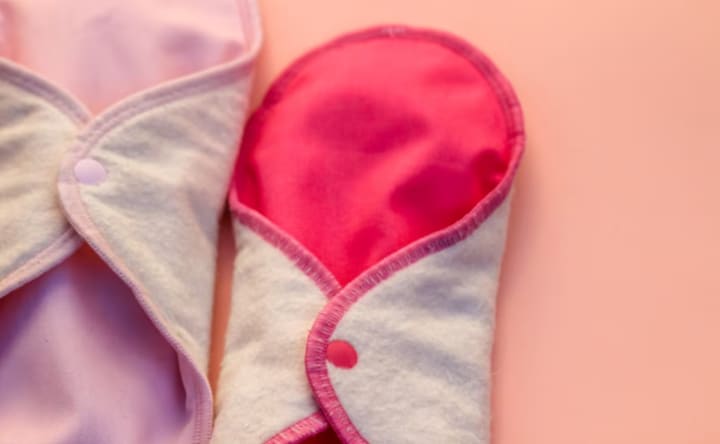
Reusable products, on the other hand, are much more environmentally friendly. On a per-use basis, their production and disposal uses fewer raw materials and produces less waste and emissions, Barrington said. Popular alternatives include fabric pads, silicone menstrual cups and period underwear.
But the solution is not as simple as mandating that everyone switch to reusables.
"In order for people to have an informed choice, they need to have evidence-based, unbiased education. And that also means not having pressure," said Dr. Megan Harrison, pediatrician and adolescent health specialist in Ottawa. "Most people care about the environment, but there are a lot of things that go into someone's decision-making about something like a product that they're going to use at a really important time of the month."
Harrison stressed the importance of removing judgment from the equation.
And these products still have some kind of impact, when considering their whole life cycle, including the energy and water used to wash them, what the packaging is made of and what happens when they're thrown away, Harrison said.
However, according to a 2022 study from Cleaner Environmental Systems, reusable products still have significantly lower lifetime environmental impacts than disposable ones, despite repeated washing. Menstrual cups had the smallest carbon footprint and scored 99 per cent lower than disposables on all environmental measurements, followed by menstrual underwear.
Pads made from corn husks?
While it is difficult to quantify their global use, some 49 billion and 19 billion single-use menstrual products are used each year in the European Union and United States, respectively, according to research from the United Nations Environment Programme.
In a bid to combat this, entrepreneurs have been touting more sustainable options.
Rashmi Prakash is the co-founder and CEO of Aruna Revolution, a fibre tech company that makes compostable materials for products including menstrual pads based in Dartmouth, N.S. She spoke to CBC Radio's What on Earth about her work.
What began as a pandemic-era experiment turned into climate-friendly disposable period products made out of corn husks and cellulose fibres.
Every single component will decompose when put into the compost, she says.
"All of our fibre layers are made out of cellulose fibres and then our back sheet — which is the leak-proof layer — is also made from compostable ingredients," said Prakash.
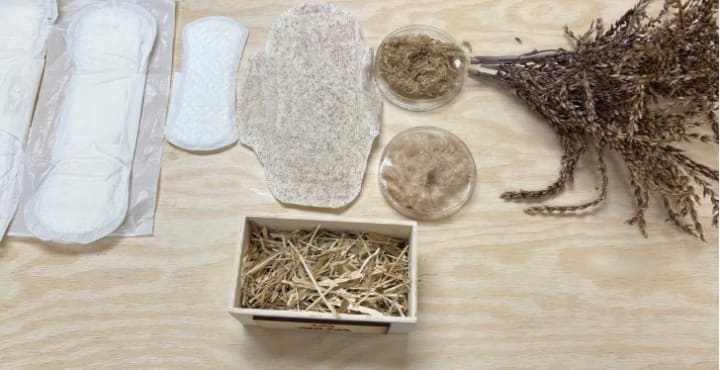
Once the product is used, it can go straight into your home compost or industrial compost. (Though, right now, not all industrial composters accept menstrual products.) Depending on the compost company, the pads could take anywhere between four weeks to 90 days to break down, she said.
Sustainable products on the market range between 75 cents to $1.40 a piece. Aruna's products are in the middle, at about a dollar per pad, Prakash says. In comparison, plastic-based pads range between 35 cents to 55 cents each.
Period poverty, stigma and policies pose as barriers
Sometimes people can't afford period products at all, let alone climate-friendly ones, and that's also a problem right here in Canada.
"I can speak to the population of homeless youth that I see or people that don't have affordable housing," said Harrison. "The last thing they're thinking about is getting a period and having to go pay for that now. It's really inequitable."
About the Creator
Sabrina
Welcome to my site on Vocal.media Story ! Here, you`ll find a curated collection of my stories and thoughts
please support me i am very hard working
The Cave Part 6
If you have ever heard a tale about yourself that you cannot remember and doubtless think is made up, you will know how I felt when Tharkin related all that the eagle had seen of me before my memories were scattered. Of far distances and traveling companions that I did not recall, camping out under the stars and making our way to the mountains with deliberate purpose. The great bird had lost contact with my party once we entered the forests, and the seven other members were not seen again by him or his brethren since.
By Jamye Sharp26 days ago in Chapters
The Bone: Why is the American bomber arriving in the UK for a possible major attack on Iran considered so dangerous?
The Bone: Why is the American bomber arriving in the UK for a possible major attack on Iran considered so dangerous? A large U.S. Air Force bomber aircraft capable of carrying 24 cruise missiles has landed on British soil.
By Real content6 days ago in Chapters
TUS NUA - ch 53
TUS NUA – ch 53 New Beginnings – Mia and Midnight (*)(*)(*) Finola knew Ali’s brother-in-law needed to put his mind at rest. She fed her arm through his and led him outside. “We’ll sit here. If you like, I can put a block around us so our conversation will be private.”
By Margaret Brennan5 days ago in Fiction




Comments (1)
This is really a topic that is left untalked about a lot. I like the idea of biodegradable ones, maybe not for the compost heap, but they'll rot faster in the landfill.