
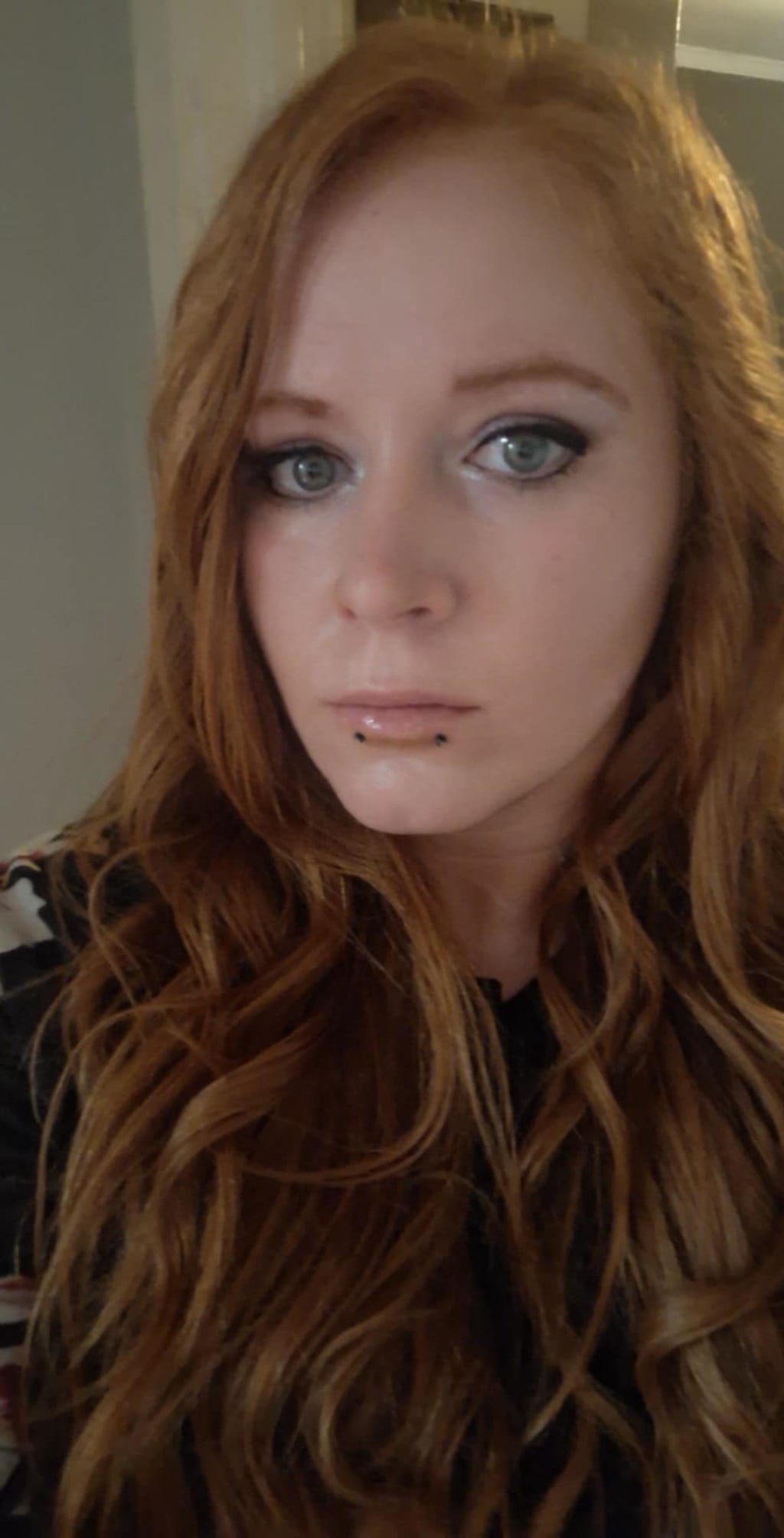
My heart is jittery, hands sweaty as I hold the roughed-up green folder that’s barely holding it together and filled to the brim with my life story. My one in one-hundred-thousand in one-hundred-thousand story. Tears pool in my eyes, blurring my vision. Naturally, my head hurts. There’s pain in the back of it, behind my eyes, and my ears are ringing.
Of course today I have a headache. It built up pressure inside my skull, like a balloon blowing up inside a small wall with nowhere to go.
It’s not stopping me. I won’t let it.
Because today, I’m meeting my hero.
And she’s four years old.
Only two years older than I was when I was diagnosed with Pseudotumor Cerebri, or Idiopathic Intracranial Hypertension—honestly, the latter name is a lot more fun to tell people, because their faces are priceless when they hear it! Let’s call it PTC for short, though, alright?
Anyway.
Maisie. Four years old. Clumsy. An anomaly.
Just like me.
I’ve met a lot of people. Stunned a lot of doctors. Diagnosed at two with PTC is “unheard of”, and I’ve heard that a thousand times. As if they don’t believe me. As if I’d know the name of that disease off the top of my head and pick something to tell them about for fun.
PTC is far from fun.
And poor little Maisie and her family are finding that out.
I squeeze my papers tighter. My medical charts from the time I was two to the time I married my husband. These papers are as much my identity as my driver’s license, my kids, my husband, my red hair, and my passport.
I breathe in…
And breathe out…
Through my nose…
Out my teeth…
Opening my car door, I step out into the bright sun.
It hurts my eyes as much as it brings warmth and comfort.
And the Alabama air smells of sweaty old men.
The pavement crunches beneath my black tennis shoes. I know they're inside the church, busy running around. The little girl probably knows nothing about me, even though I already know a thousand things about her. Even things about what her future is going to look like: CT scans, spinal taps, pressure tests…
Why am I so nervous about meeting a four year old?
Because meeting her is going to be like looking into the eyes of a younger me. I’m going to see in her everything I went through. All the things I don’t even remember.
This little girl is my new favorite hero.
She is another one in one-hundred-thousand in one-hundred-thousand story, and I’m honored to meet her.
What if I scare her? I’m not exactly the friendliest person. I’ll be the first to admit that. Wearing black all the time, with lips rings, and a nose ring. So hopefully I don’t scare her.
What if she doesn’t like me? She’s four…how many four year olds hate anyone?
What if I say something wrong? The great thing about four year olds is that they don’t remember much.
My stomach feels acidic, like it’s ready to barf. And I sure hope not. It’s not like I haven’t even met these people before. They go to my church. The mother—Carrie—is the children’s choir director and has worked with both my daughters. Carrie’s mom and dad teach my Sunday school class.
There was no reason to be nervous about meeting someone I’ve already met.
But I am. There’s no logic or reasoning as to why I am.
Sweat dribbles down my forehead.
At least I wear black. No one can see the sweat soaking my pits with black.
When I get to the church door, I secure my story in my left arm, raise my right, and get ready to go in.
But I freeze.
What if I can’t help them?
That’s the bigger question.
What if my story can’t pave a better future for Maisie?
I can’t think like that. God didn’t bring me here, to the middle of flippin’ nowhere, out of coincidence. He didn’t bring my entire family from Canada to come live in the dying, rundown town of Monroeville, Alabama to magically happen upon another child like me at this random church we just started attending. That doesn’t just happen. Two one in one-hundred-thousand in one-hundred-thousands meeting upon chance doesn’t happen. In fact, it’s so rare that Maisie’s doctors are trying to disprove she has it, thinking there must be a reason someone so young is diagnosed with PTC.
It’s why my story has to help.
So doctors know it’s okay to call it that. For Maisie to see she has a future ahead of her that’s worth living, not just a life of pain and doctor appointments. And so her parents can know that one day it will be alright, and there are answers.
I hope my pain paved a way for Maisie.
And anyone following after.
Finally, I take one more deep breath, and step through the glass door.
My story has to help.
About the Creator
Keep reading
More stories from Elizabeth Smith and writers in Chapters and other communities.
Idiopathic Idiot
Oiy, I must be hungover. But it was just one little wine cooler—I shouldn’t be hungover. My eyes are killing me, though. Look left, and it stabs. Look right, and it stabs. Up and down stab, too. There’s a dull ache behind them. It hurts so bad, I’m thinking about calling into work. On a scale of one to ten, I’d give it a solid seven. Anything above a six for me is pretty bad. What’s a ten? A ten means I’m in the hospital.
By Elizabeth Smith7 months ago in Chapters
The Guardian Chapter V
Alexander left his Coming of Age ceremony with Cronos and the elders with as many new questions as he had answers for his old questions. Cronos had confirmed his suspicions were correct. Not only was there a link between the Beast Masters and the inhabitants of the Citadel, but it was the Citadel's fault that the Beast Masters existed in the first place. Instead of banishing the law breakers which allowed them to wreak havoc on the rest of humanity, the Citadel elders should have stripped them of their powers before they became too strong. Now Alexander would need to battle the Beast Masters and the Jikininki. It would be difficult for him to forgive the Citadel Elders because their poor decisions led to the deaths of his parents and more than half the planet's human population.
By Mark Gagnon14 days ago in Chapters
Stop the AI from taking over Earth!
Not long after, Gazzer and I arrived back at Void. It seemed… different not mentioning how much HAVE CHANGED! The buildings, many were removed, the houses looked the same, the population… INCREASED MAGNIFICIENTLY! Oh boy, how much trouble would it be… as in, I WOULD HAVE TO HELP GAZZER THROUGH BUSTLING STREETS JUST TO GET TO SCHOOL! It’s trouble alright! But then, I saw it… AI robots on MY PLANET! I had to stop them. I took my VoidA2000 which turned into a car and drove to the area where the AIs were at.
By *+*+*~Teja~*+*+*8 days ago in Chapters


Comments
There are no comments for this story
Be the first to respond and start the conversation.