
Hunny
Ther Life and Times of A Force of Nature-Chapter 1

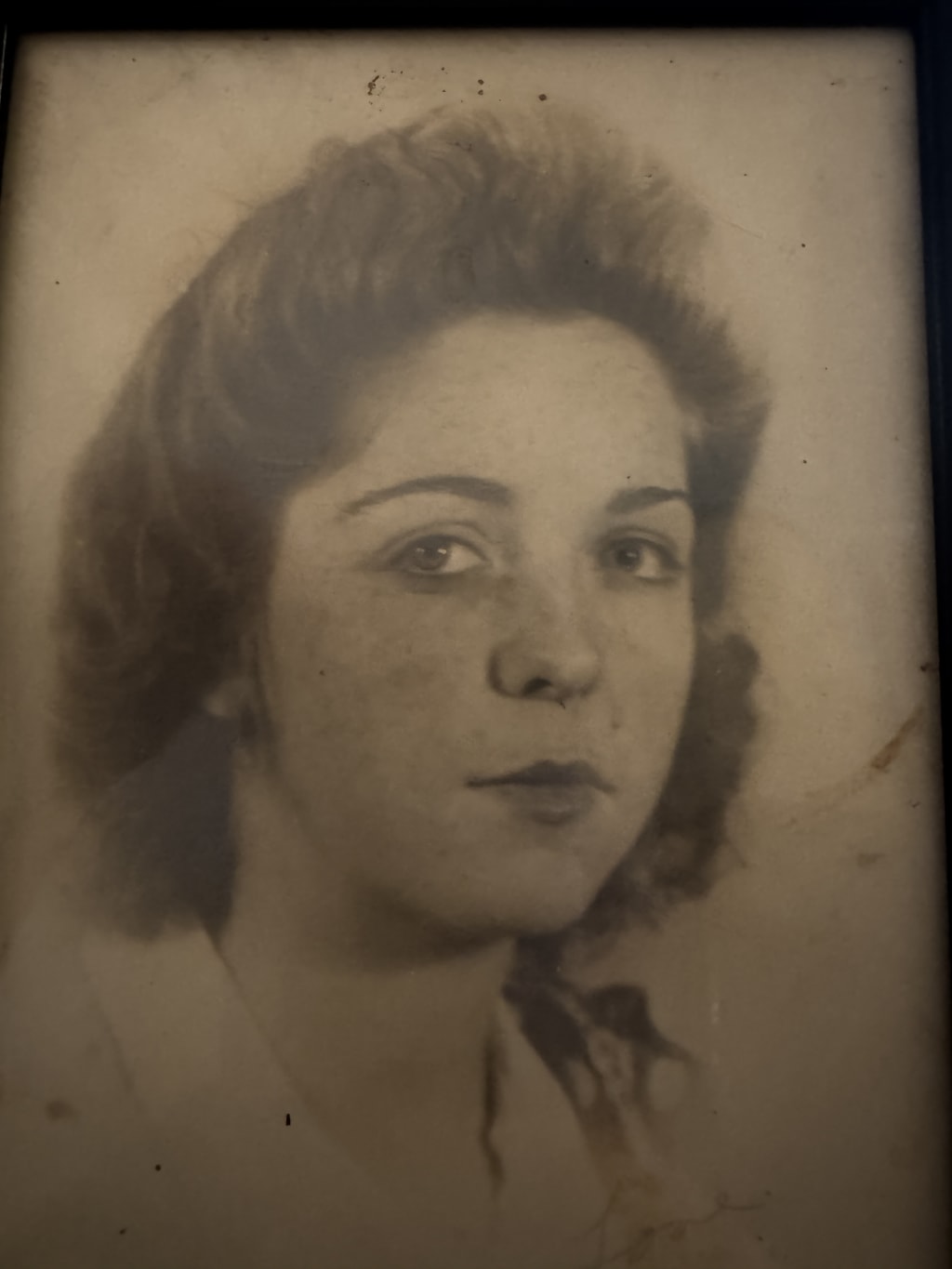
Hunny Chambers-My Mother’s Daughter
________________________________________
Preface: Born to Blaze
Arkansas, 1930.
The world was gray when Hunny was born—dust storms in the distance, soup lines on the horizon, and silence in homes where dreams had been rationed out like sugar.
She arrived when the country was gripped by the Depression, to a family already buckling under its own weight.
But Hunny wasn’t made to blend in.
She was made to burn brighter.
By the time she was ten, she could out-stare her father, out-run the boys, and out-talk any preacher brave enough to call her family shameful. She grew up with calluses on her hands and stardust in her bones. Her birth name was Helen Elizabeth.
She danced through poverty and violence, through war-time love, motherhood, and judgment. She wore pregnancy like a pageant sash and defiance like perfume. She never gave anyone permission to make her feel small.
This isn’t just her story.
It’s a legacy of women who walked boldly where shame told them to tiptoe.
Hunny didn’t wait for the lightening of liberation—she made her own thunder. She was the first Women’s Libber I ever knew, and maybe the first one in Arkansas. She was my Momma.
Chapter 1: Welcome to the World
Arkansas, 1930
“Woman, can’t you do anything right?”
That wasn’t the kind of welcome Hunny deserved—but it was the one she got.
She came into the world kicking through exhaustion and broken expectations. Her mother, Elizabeth Ryan Crook, had just endured thirty-two hours of hard labor, her face flushed but still striking—an Irish beauty with blushing cheeks and a kind, loving heart. Her Sundays were sacred: morning worship, quiet evenings in prayer, and most Wednesday nights spent beneath the Missionary Baptist sermons of faith. Doing her best to avoid discussions from the good Christian folk of why they should withdraw membership from drunkards, thieves, and adulterers. Her husband was most definitely all three
She held her newborn baby girl in her arms with the reverence of a prayer. But Hunny’s Paw looked down and saw nothing holy.
He had demanded a son.
Despite his Native American roots—where women once held generational power—he clung to a warped idea of masculinity twisted by alcohol and overconfidence. His dark hair and chiseled jawline gave him the look of a movie star. Many whispered that he looked like Clark Gable, and folks in town said he could charm a copperhead. But behind that handsome veneer was cruelty. During Prohibition, he ran a still behind the shack they called home, sold moonshine in mason jars, and drank what he didn’t barter away. The jars smelled of death and defiance.
He would eventually beat Elizabeth with the same fists he used to build shelves and break horses. And when his rage wasn’t enough, his silence became the sharpest blade, especially for this newborn baby girl.
No name. No welcome. No warmth. A sign of her life to come.
But Elizabeth, with trembling hands, wrote down the name Helen Elizabeth—a legacy stitched from hope.
Still, the name never stuck.
Later, that little girl would look in the mirror and give herself a better one.
She called herself Hunny.
She had read it in a children’s book once, and because life was never going to sweeten itself, she’d have to do it on her own terms.
Their shack stood at the edge of a dirt road that cracked in summer and froze in winter, just sturdy enough to pretend it was a home. Two bedrooms. That would eventually house four children. No plumbing. An outhouse far enough out back to keep the smell away—but never the shame.
The floorboards slumped as if they were tired of holding up the suffering. The roof leaked. The stove wheezed in winter. The chamber pots under the bed for those times it was just too damn cold to take the long trek to the outhouse in the moonlight, or when it was raining or snowing so hard no one wanted to venture out of the semi-warmth of the house. And yet, Elizabeth managed, and as her family grew, she would sew dresses from flour sacks and teach her girls how to whisper a prayer of gratitude between the chaos. But praying would not come easily for Hunny.
Hunny was the firstborn—and the first target.
Her Paw never softened. Not when two more daughters followed. Geraldine came next, then Billie June, each met with anger toward the woman who had the audacity not to bear him a son. Not even when a son, Edward, named after his father, arrived. He still beat anything that looked like love and dared to cross him. Even the slightest infraction would invoke his anger, and Hunny, with her firebrand spirit, was his favorite storm to rage against. Her sisters cowered. His son, though protected with a vengeance by his mother, was even beaten for spilling his milk or crying too loudly, which would only make it worse. In these moments, her mother tried to intervene, only to have his wrath turned on her. She had years of experience in hiding the bruises beneath makeup and her Sunday best. She explained away the broken bones as being clumsy, and once she had to wear a high-backed dress for weeks to hide the bruise shaped like a boot print on her back.
But Hunny?
As she grew older, she intervened.
Puberty arrived like armor plating. The moment her body gave her a shadow of adult stature, Hunny placed herself squarely between her Paw’s fists and her mother and siblings’ frailty. She didn’t just take the brunt—she taunted him, daring him to make her cry. If only to take his focus away from her Mamma and her siblings.
“You think I’m scared of you?” she’d say, teeth bared in defiance. “Hit me, old man. See what happens.”
Even before puberty, at age seven, she stared him down. At ten, she became a living shield. By twelve, she understood rebellion as both art and weapon, not with fists, but with mocking laughter, boldness, and never backing down.
Just a quarter mile up the road stood a different kind of cruelty—cleaner, quieter, and dressed in white linen. The Preacher and his wife lived there, another Elizabeth, more rigid than kind. She was religious in a way that justified racism, and she measured virtue by how white and privileged a neighbor appeared. Her scorn was polite, polished, yet poisonous.
They had five children—two girls and three sons—with names that felt as mismatched as their sense of righteousness. The sons were Billie Dee, Jarrel Dean, and E.C., a boy known only by his initials. The girls were Erma Jean Ruth and Juanita, though Juanita, by some accident of grace, got the prettiest name of them all.
The Preacher himself was a hollow man with a booming voice and a leather strap that hung beside the family Bible. He didn’t drink. He didn’t laugh. He didn’t strike in rage—he struck in rhythm, each blow justified by scripture and the ten commandments. Although the 7th commandment, he seemed to think, was only a suggestion in God’s eyes
"Spare the rod and spoil the child."
It wasn’t just his doctrine. It was a mission.
One hand on the strap. The other, equally gripping a bible, its words twisted into tyranny.
His wife smiled through it all, sipping sweet tea on the porch as if violence was part of the liturgy.
That house radiated fear behind its polished sermons. Love was conditional. Affection was earned in silence. And Hunny, even as a child, knew exactly what she was looking at—it may be a pretty house with a perfect yard, but she saw it for what it was, a prison wrapped in hypocrisy.
She carved out space where none was given. She dared to enter that manicured yard, racing Erma Jean across the field, swapping secrets with Juanita beneath quilts hung out to dry. She made Billie Dee laugh with her twang and tenacity. Even E.C., reserved and watchful, began to drift toward her light.
E. C. didn’t speak much. But Hunny saw him watching. Saw the flinch when his Paw’s eyes narrowed. Saw the way his soul bent under rules too heavy to hold.
Their friendship was forged in quiet rebellion. He gave her a tin whistle that he got from a crackerjack box, his hands trembling. She played it, not really knowing how, with a wink just to make him smile.
She liked his silence—it didn’t feel judgmental, just deliberate. Intentional. Like he was waiting to become someone he hadn’t met yet. There was kindness in his eyes, unlike his brothers. He was a good boy, and she knew in her heart of hearts that he would grow up to be a good man.
One time, after a particularly brutal leather strap beating from the Preacher, he was sitting under his favorite tree, looking like the weight of the world was on his shoulders. “You want to see a real fight?” she said, slamming her hands on the Preacher’s whitewashed fence. “Come watch me block my Paw’s punches. Leather ain’t got nothing on fists.”
He didn’t answer. But something shifted. Like Hunny had offered him a way out that wasn’t escape—it was defiance.
By fifteen, she had turned herself into a warning sign and a lighthouse. Her dresses hugged her hips like armor, and her tight sweaters had all the boys staring, but not at her beautiful green eyes. The freckles splayed across her face, and the cute upturned nose gave her an innocent, bashful look. She was neither. Her hair was auburn wildfire. Her steps down the road were like sermons—unwritten, unashamed.
“She needs a session with the strap,” the Preacher hissed to his wife. Even though he had been witness to the beatings of her father, he thought that if he had a swipe at her, she would change her ways and repent. He obviously did not know Hunny.
“No,” the preacher's wife said softly, watching Hunny with narrowed eyes. “She needs grace. And with that Paw of hers, I don’t see that coming her way.”
Grace didn’t come easy—but Hunny found it anyway. In sunrises. In small acts of rebellion. In a fierce way, she watched her mamma light candles with bruised hands after Sunday service.
And when the preacher’s wife called her white trash as she walked out of church and set off behind her mother for the long, dusty walk home. Hunny turned, spat in the dirt, and grinned.
“I’d rather be trash than a fake-ass pious bitch.” That is when their feud solidified into lifelong distrust and hatred of one another.
I tell this story not just because it was hers. I tell it because it’s mine. I am Hunny’s daughter. I carry both her name and my grandma’s. I carry their fury, their faith, their fractures. And this story—stitched with blood, bruises, and backbone—is the truth my mother never apologized for.
About the Creator
Lizz Chambers
Hunny is a storyteller, activist, and HR strategist whose writing explores ageism, legacy, resilience, and the truths hidden beneath everyday routines. Her work blends humor, vulnerability, and insight,
Keep reading
More stories from Lizz Chambers and writers in Chapters and other communities.
Hunny
Chapter 9- The Child Between Them Hunny avoided Elizabeth’s house for weeks. She didn’t say it out loud—Hunny never admitted avoidance—but she found reasons to stay away. Laundry. Errands. Lisbeth’s nap schedule. The heat. The humidity. The alignment of the planets. Anything to keep her from stepping back into the house where her mother had blindsided her with a baby boy who looked like betrayal wrapped in a blanket.
By Lizz Chambers10 days ago in Chapters
The Cave Part 6
If you have ever heard a tale about yourself that you cannot remember and doubtless think is made up, you will know how I felt when Tharkin related all that the eagle had seen of me before my memories were scattered. Of far distances and traveling companions that I did not recall, camping out under the stars and making our way to the mountains with deliberate purpose. The great bird had lost contact with my party once we entered the forests, and the seven other members were not seen again by him or his brethren since.
By Jamye Sharp14 days ago in Chapters
Uzbekistan and Afghanistan Target $5 Billion Trade Deal Amid Regional Economic Shift
Taliban government says it has discussed increasing bilateral trade with Uzbek authorities, and both countries are committed to raising their mutual trade to “five billion dollars.”
By Real content4 days ago in Chapters




Comments (1)
This is so good, Lizz. I couldn't stop reading. I don't know if I even breathed while reading it. It sounded like a great movie being played in my head as the characters came to life with flesh and bones and color. No more grays for Hunny's world! Such strong women and such Southern evils...I can say that because I am from north Louisiana and I know, too.