
How The Internet is CHANGING Your Brain
How The Internet is CHANGING Your Brain

Imagine life without the internet. Some of us remember the days before everything was connected, but living without smartphones, maps, and instant search engines now seems completely foreign. Our increasing reliance on the online world is significantly impacting our relationships, information sources, and interactions. These changes are even affecting our brains. With more devices relying on the internet, it's no surprise that global access is on the rise. In 2016, an estimated 3.5 billion people accessed online services worldwide, with China leading at 721 million users, followed by India, and the US with 290 million users. English is the most common language used online, followed by Chinese and Spanish.
Internet usage varies across generations, influenced by those who had to adapt to new technology and those who grew up with it. Generation X users, born between the mid-1960s and early 1980s, logged an average of 110 minutes of mobile internet usage daily. Millennials, born from the early 80s onward and who grew up with the internet, averaged 185 minutes per day. Social media and messaging apps are crucial to our lives, with over a billion people using apps like WhatsApp and even more on platforms such as Facebook and X (formerly Twitter).
As internet use increases, our behavior is changing. Communication through these platforms is more common, reducing the popularity of phone calls and text messages. The rise of online shopping has caused a decline in traditional high street stores, transforming our towns and cities.
The internet's prevalence is also altering our brains. With so much information at our fingertips, Millennials have been found to be more forgetful than previous generations due to constant distractions. Memory formation relies on repeated and focused thinking, but constant new information disrupts this process, leading to less permanent storage. The ease of accessing information online means we're less likely to memorize it. For instance, previous generations memorized map directions, while we rely on GPS apps.
We're also becoming more addicted to our smartphones, constantly checking for messages and updates, which fosters a habit of distraction. Our brains are less accustomed to deep thinking, making it harder to engage in it when needed. Research shows that constant information flow reduces our cognitive control, diminishing our ability to decide what to think about. The more we rely on phones and apps for information, the less we can determine what's important.
However, the impact of technology on our brains isn't entirely negative. Throughout history, inventions have shifted our focus, allowing us to spend time on other activities. For example, washing machines reduced the time spent on laundry, freeing up hours for work or other pursuits. Similarly, the internet enables faster communication and information access, giving us more mental capacity for other tasks.
To keep our brains active and adaptable, it's beneficial to reduce screen time and be mindful of daily distractions. Keeping track of online time and unplugging occasionally can help maintain a healthy balance.
Did you like this article? Will you like to be notified whenever I drop new articles? Please do subscribe, in order not to miss from my future posts.
About the Creator
Keep reading
More stories from Iyokho Osaretin and writers in Chapters and other communities.
Prevent the #1 Killer: Beetroot Boosts Circulation, Reduces Clogged Arteries & BP
The Leading Cause of Death Worldwide What do you think is the leading cause of death worldwide? It’s cardiovascular disease, which includes heart attacks, strokes, arterial blockages, and high blood pressure. However, there's one vegetable that can significantly improve heart health: beetroot.
By Iyokho Osaretin2 years ago in Chapters
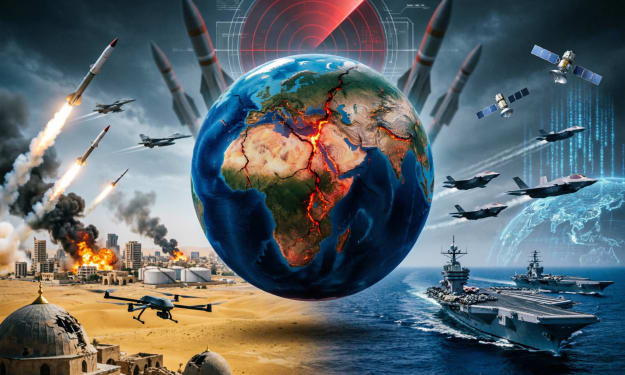
How World War III Could Begin in Our Time
The First Sparks: How World War III Could Begin in Our Time World War III may not start with a single declaration or one massive attack. Instead, it could begin quietly, through a series of connected crises, misunderstandings, and power struggles already happening today. The world is more connected than ever, but that connection also makes global conflict easier to spread.
By Wings of Time 3 days ago in Chapters



Comments
There are no comments for this story
Be the first to respond and start the conversation.