
How Strong Are Heavy Duty Caster Wheels 2000 lb? A Research-Based Insight
Exploring the Strength and Performance of 2000 lb Caster Wheels


As a writer and researcher with a focus on industrial equipment and performance analysis, I frequently explore the capabilities of equipment used in demanding environments. One question that often arises is, “How strong are heavy duty caster wheels rated at 2000 lb?” These components are critical to efficiency and safety in numerous commercial and industrial applications, from logistics to manufacturing floors. This blog is a research-based review that delves into the strength, design, and application of best 2000 lb caster wheels, presenting practical insights supported by technical understanding.
Understanding Load Ratings and What 2000 lb Really Means
At first glance, the number “2000 lb” seems straightforward—it indicates the maximum load one wheel can carry. However, there’s more nuance to this specification. The load rating is not just a marketing term; it is the result of rigorous testing standards, often under controlled lab conditions. These include impact testing, dynamic loading, and stress fatigue testing. In other words, a caster wheel rated for 2000 lb has been engineered to carry a full ton under specific circumstances, typically with a safety margin built in.
However, real-world environments are rarely controlled. Uneven flooring, sudden impacts, heat, and corrosive agents can all affect the performance of these wheels. That’s why users need more than just a label—they need to understand the construction, material, and design behind these heavy duty casters.
Materials That Define Strength
The structural integrity of 2000 lb caster wheels largely depends on the materials used in their construction. Industrial-grade steel frames provide durability and resistance to deformation under extreme pressure. The wheels themselves may be made from forged steel, polyurethane, or phenolic resin—each offering a balance between load-bearing capability and application-specific needs.
For instance, forged steel wheels are ideal for high-impact, high-heat environments, while polyurethane wheels offer quieter operation and floor protection in sensitive environments. The wheel core, tread, and bearing type all contribute to overall performance.
From my observations and data analysis, polyurethane-bonded wheels are increasingly favored in settings where both strength and surface care are required. While not as hard as steel, they retain structural integrity under heavy loads and have excellent wear resistance.
Engineering Behind the Performance
Heavy duty casters 2000 lbs are not just defined by their wheel materials. The bracket, or rig, also plays a pivotal role in maintaining performance under pressure. Heavy-gauge steel rigs, heat-treated for strength, offer resistance against twisting or bending during movement. These rigs often include reinforced legs and double ball raceways, which enhance maneuverability without sacrificing strength.
Many industrial casters and wheels designed for 2000 lb capacity incorporate precision ball bearings to reduce friction and facilitate smooth operation, even under full load. In dynamic environments, such as assembly lines or aerospace manufacturing facilities, mobility is just as critical as strength. A caster that can carry a load but not move efficiently offers limited value.
Safety Factors and Margin of Error
Manufacturers of Heavy Duty Casters 2000–5000 lbs usually build in a safety factor—often 25–33% above the rated load—to account for dynamic stresses. This means that a caster rated for 2000 lb may technically withstand 2500–2600 lb under test conditions, although exceeding the specified capacity is never recommended for continuous use.
As a writer committed to factual analysis, I emphasize the importance of staying within rated limits. Even with built-in safety margins, long-term performance is best preserved by avoiding overload and by distributing weight evenly across all casters on a cart or dolly.
Applications That Test Their Limits
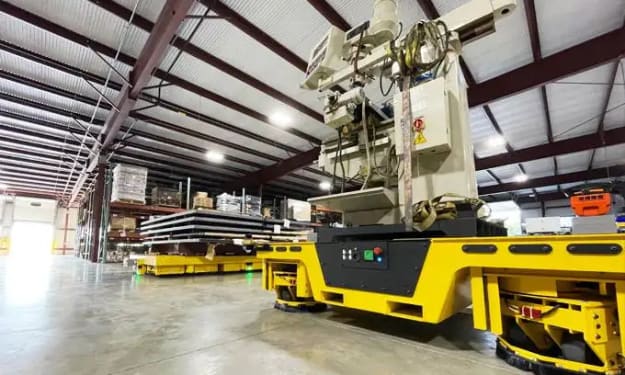
In my review of industrial use cases, I’ve seen 2000 lb caster wheels used in everything from mobile workstations and machine bases to custom transport carts in automotive and aerospace sectors. These environments are not only heavy-duty but also highly variable in movement frequency and flooring conditions.
For example, in aerospace manufacturing, the combination of delicate parts and extreme weight requires casters that provide both smooth mobility and unwavering stability. In such scenarios, the chosen wheels must be optimized not just for static load but also for dynamic motion, pivoting, and occasional rough handling.
Durability Beyond Load Capacity
Strength isn't the only measure of a caster's performance. Durability over time is equally essential. Factors like chemical resistance, thermal tolerance, and maintenance requirements come into play. Wheels exposed to solvents, extreme temperatures, or abrasive particles can deteriorate faster, regardless of their load rating.
One factor I consistently evaluate in my research is maintenance accessibility. Sealed bearings, corrosion-resistant finishes, and replaceable components significantly extend the life of heavy duty casters. These attributes ensure that even under maximum load, the caster doesn’t just perform—but continues to perform for years.
Considerations When Choosing 2000 lb Casters
From a research standpoint, the most suitable caster is not merely the one with the highest load rating but the one matched precisely to the operating environment. Some considerations I suggest evaluating include:
Floor Type: Soft floors require broader treads to distribute weight and avoid damage.
Movement Pattern: Frequent directional changes may demand swivel casters with higher-grade bearings.
Environment: Exposure to moisture, chemicals, or high temperatures can influence material choice.
Mounting Type: Top plate, stem, or bolt hole designs should align with the structural design of the equipment.
Matching the caster to the application ensures not just strength, but reliability, safety, and longevity.
Final Thoughts
In conclusion, 2000 lb caster wheels represent a significant achievement in material engineering and product design. But their true strength lies not only in their load capacity but in the ability to maintain that performance across time, usage, and varied conditions.
As a writer and researcher, I believe that understanding the context of use—paired with accurate interpretation of manufacturer data—is key to making informed decisions. Whether for a warehouse setting, factory floor, or specialized commercial use, selecting the right industrial casters and wheels is a matter of matching proven engineering with specific operational demands.
Their strength is not just in the steel, resin, or polyurethane from which they are made. It is in the thoughtful design, rigorous testing, and adaptability to real-world conditions. And in the realm of Heavy Duty Casters 2000–5000 lbs, that kind of strength is what defines operational success.
About the Creator
Donald Carlisle
I'm a manufacturing writer focused on material handling solutions. I simplify complex industrial challenges into clear, actionable content that helps businesses boost efficiency, optimize operations, and apply insights to real workflows.
Keep reading
More stories from Donald Carlisle and writers in Chapters and other communities.
What Are the Top Benefits of Using Heavy Duty Carts & Trailers?
As a writer and researcher exploring innovations in industrial logistics and workplace efficiency, I’ve come across numerous tools and technologies that serve as the backbone of streamlined operations. Among them, heavy duty carts & trailers stand out for their immense impact on material movement, workforce safety, and operational cost-efficiency.
By Donald Carlisle11 months ago in Chapters
Valentine's Dates Over the Years
Colin grinned as Brooklyn slipped into the living room. “Is it all set?” he asked. The twenty-one year old grinned. She was in her last year of college and Colin knew that Lincoln was proud of her. Although she had been away at college, she’d eagerly helped Colin plan his surprise for Lincoln. “I’m so glad you’re finally doing this,” she said.
By Reb Kreyling26 days ago in Chapters
Story of Earl Shaw
Earl Shaw and his groundbreaking contributions to laser science. Earl Shaw was born in 1937, during a time when the world was teetering on the edge of tremendous technological transformation. From a young age, Shaw displayed an unusual fascination with the unseen forces of nature—light, magnetism, and the mysterious waves that seemed to govern the behavior of the physical world. He did not see science as a cold, rigid discipline. Instead, he viewed it as a living tapestry woven with curiosity, imagination, and endless possibility. This mindset would one day position him at the forefront of laser technology, leading to the invention of the spin-flip Raman tunable laser, a breakthrough that would quietly shape modern photonics.
By TREYTON SCOTT6 days ago in Chapters


Comments
There are no comments for this story
Be the first to respond and start the conversation.