
He's not dead! The prototype of the heroic son Wang Cheng is still alive and has been hiding for decades, and the reason is tear jerking
Shoot me for victory
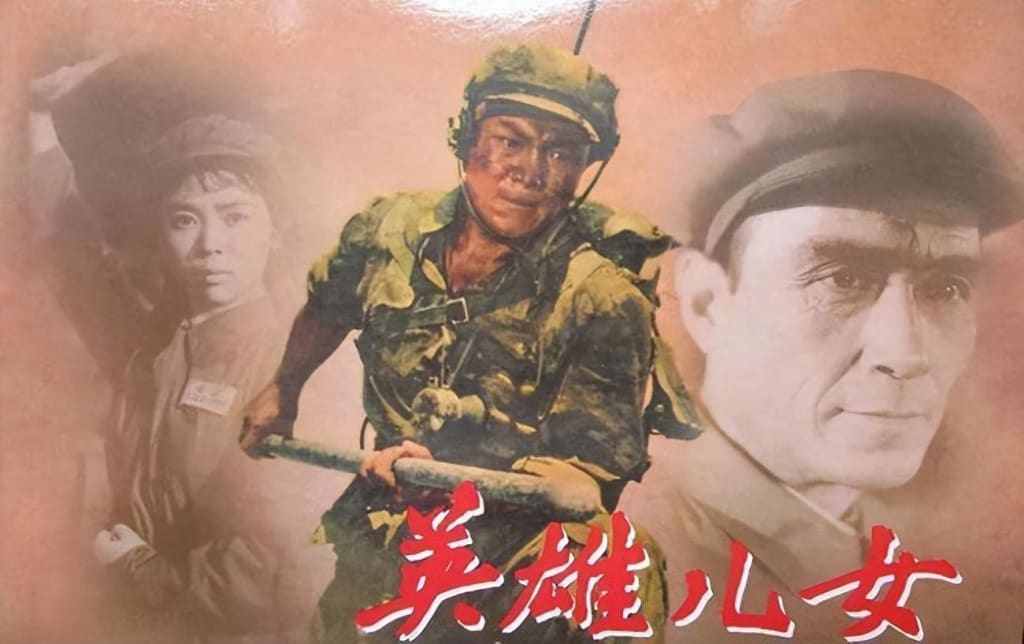
But many people don't know that the prototype of Wang Cheng is still alive today!
Because he almost never mentioned his time during the Korean War, went incognito for decades, and even his wife and children didn't know about it.
And the reason behind this, when spoken out, can't help but make people shed tears
Heroic Past: Battle of North Mountain in Shixian Cave
On April 26, 1953, the sky over the Korean Peninsula was shrouded in thick clouds.
The battlefield on the north mountain of Shixian Cave is filled with smoke and the sound of artillery fire is incessant. A reinforced company of the 201st Regiment of the 23rd Army of the Chinese People's Volunteer Army has suffered heavy casualties after several days of fierce fighting.
There are only more than ten soldiers remaining on the battlefield, including 25-year-old infantry operator Jiang Qingquan.
Jiang Qingquan had scars on his body, but he still held onto his walkie talkie tightly and kept in touch with the rear command center.
This walkie talkie is the only link between the company and firepower support, which is crucial to the survival of the entire position. Jiang Qingquan's eyes were bloodshot from prolonged observation, and he kept an eye on the enemy's movements, accurately reporting coordinates.
As the battle continued, his comrades on the battlefield also fell one after another. Jiang Qingquan was deeply saddened, but he knew he had a heavy responsibility and must persevere to the end.
He called for artillery support while shooting at the approaching enemy with a submachine gun.
But the enemy's attack is becoming increasingly fierce. When Jiang Qingquan found himself becoming the last soldier on the battlefield, he made an astonishing decision.
He shouted loudly at the walkie talkie, 'Shoot me! Shoot my bunker!' At this moment, Jiang Qingquan was ready to die with the enemy.
At this critical moment, an enemy hand grenade exploded beside Jiang Qingquan. The violent shock wave overturned him to the ground, and shrapnel hit his abdomen and eye sockets.
Blood soaked through his military uniform in an instant. Immediately afterwards, a poisonous gas bomb fell into the bunker, and the pungent gas quickly diffused. Jiang Qingquan lost consciousness in intense pain and suffocation.
When Jiang Qingquan opened his eyes again, he found himself lying on a US military truck. He finally realized that he had not sacrificed himself, but had become a prisoner of war.
his fact is like a bolt from the blue for Jiang Qingquan. As a volunteer soldier, being captured is an unacceptable shame.
In the prisoner of war camp, Jiang Qingquan faced a severe test. The enemy tempted him with money and generous treatment, attempting to shake his position. However, Jiang Qingquan remained silent and refused to disclose any valuable information.
Even in the face of severe torture, he gritted his teeth and remained silent. His firm will left the enemy feeling defeated and surprised.
When he learned that the enemy intended to send him to Taiwan, Jiang Qingquan erupted in strong resistance. He smashed objects in the ward, refused treatment, and even tore his own wounds.
He would rather die than accept the fate of being sent to Taiwan. In the end, the enemy had to abandon this plan.
In July 1953, the Korean War ceasefire agreement was signed. Jiang Qingquan finally had the opportunity to return to his home country.
However, the experience of being captured left an irreparable wound in his heart. He felt deep self blame and shame, believing that he had let down the expectations of his sacrificed comrades and his country.
Hiding Name: A Painful Choice
In 1954, Jiang Qingquan was demobilized and returned to his hometown. The former volunteer soldier has now become an ordinary farmer.
His hands no longer held the gun, but picked up the hoe. The fields became his new battlefield, with sweat replacing blood and soaking his clothes.
Jiang Qingquan chose to conceal his past. Whenever someone asks about his military experience, he always casually says that he fell ill in Dandong and was unable to go to Korea.
This simple lie became his protective color, allowing him to integrate into the ordinary rural life.
However, the inner torment cannot be easily erased. As a former prisoner of war, Jiang Qingquan carries an indescribable sense of shame. In his perception, being captured is the greatest insult to a soldier.
This self condemnation is like a thorn, deeply rooted in his heart, tormenting him day and night.
My family also knows very little about Jiang Qingquan's experience. He chose to bury the pain in his heart, unwilling to let his loved ones worry.
In the eyes of outsiders, he is just an ordinary farmer, hardworking and simple, living in harmony with his neighbors.
No one knows that this silent and reserved man once shouted 'fire on me' on the battlefield and remained steadfast in the enemy's prisoner of war camp.
In 1964, the movie "Sons and Daughters of Heroes" was released and caused a sensation nationwide. The image of Wang Cheng in the film deeply moved countless audiences.
However, for Jiang Qingquan, this movie became a thorn in his heart.
When the screening team arrived at Daling Village where Jiang Qingquan was located, the whole village gathered together excitedly to watch.
About the Creator
Reader insights
Good effort
You have potential. Keep practicing and don’t give up!
Top insight
Heartfelt and relatable
The story invoked strong personal emotions
Keep reading
More stories from writers in Chapters and other communities.
Search for a Sister, Chapter Two
4-H-N heard not a word about her secret mission around Headquarters over the following days, so had to conclude either Mini-Flash Phytolith hadn’t been listening in after all, or she’d misjudged him. She hoped it was the latter, as she wanted the pair of them to get on, even if he wasn’t going out of his way to make it easy for her.
By Doc Sherwood20 days ago in Chapters




Comments (1)
A touching story