
Guardians of the Pacific: Unraveling the Mystery of the Moai Statues on Easter Island
Exploring the History, Cultural Significance, and Enduring Legacy of Rapa Nui's Monumental Stone Figures
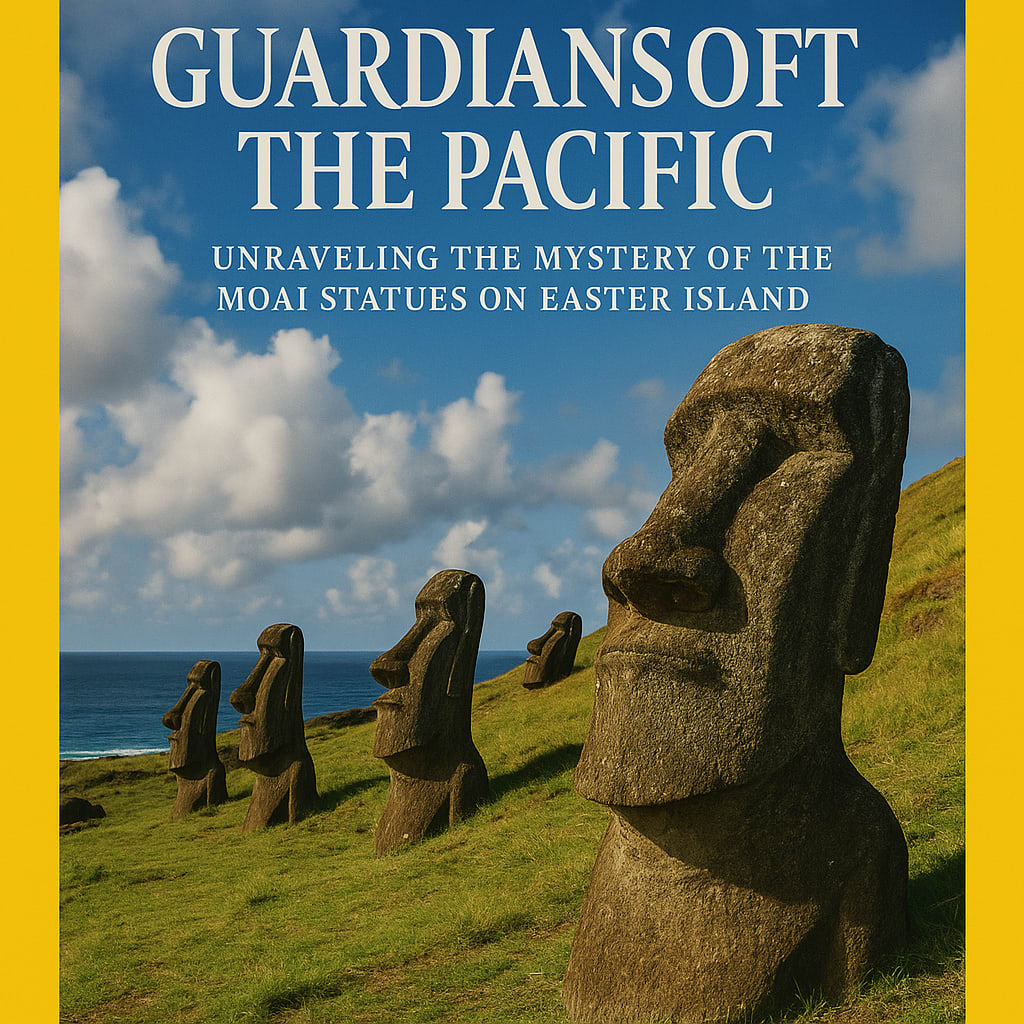
The Silent Watchers of Rapa Nui
Easter Island, known to its indigenous people as Rapa Nui, is one of the most remote inhabited islands in the world, located over 2,000 miles off the coast of Chile in the southeastern Pacific Ocean. Despite its isolation, this small volcanic island has captured global fascination due to the presence of nearly 900 massive stone statues known as moai. These monolithic figures, carved from volcanic rock between 1100 and 1650 CE, are among the most iconic archaeological relics on the planet. But what are the origins of these statues? What was their purpose? And how did a society living on such a small island manage to create and transport them? The story of the moai is one of ingenuity, spiritual depth, and ecological caution — a powerful blend of human achievement and warning.
Origins and Cultural Context
The moai were created by the Rapa Nui people, Polynesians who are believed to have arrived on the island between 800 and 1200 CE. Upon settling, they developed a rich and complex culture centered around ancestor worship, which is key to understanding the moai. These statues were not merely decorative; they represented deified ancestors and were believed to hold spiritual power, or mana. The moai were positioned to face inland, overlooking villages — a symbolic gesture that reflects their role as protectors and sources of wisdom for the living.
Each moai was carved to honor a particular ancestor or important figure. Though many share similar features — large heads, heavy brows, elongated ears, and a prominent nose — each is unique, suggesting individual identities. The most distinctive statues are topped with a pukao, a red stone hat or topknot, thought to signify high status.
Construction and Transportation
One of the most enduring mysteries of the moai is how these massive figures, some weighing over 80 tons and standing up to 33 feet tall, were carved and transported across the island without modern tools or machinery. The primary quarry for moai stone was Rano Raraku, a volcanic crater on the island's southeastern flank, where hundreds of incomplete statues still remain.
Theories about their transportation range from rolling the statues on logs to "walking" them upright using ropes and a coordinated team effort. Recent experiments and oral traditions support the idea that the Rapa Nui may have rocked the statues back and forth in a walking motion, a method requiring not only strength and coordination but also a deep understanding of balance and physics.
Ecological Collapse and Cultural Shift
For a long time, a dominant theory linked the decline of moai construction with an ecological collapse caused by deforestation. Trees were likely cut for transporting statues, building canoes, and agriculture, eventually leading to soil erosion, reduced crop yields, and societal stress. This idea was popularized by Jared Diamond in his book Collapse, portraying Easter Island as a cautionary tale of environmental overreach.
However, recent scholarship challenges this narrative, suggesting that the islanders were more resilient and adaptable than previously believed. European contact in the 18th century brought diseases, slave raids, and cultural disruption that devastated the Rapa Nui population, possibly contributing more significantly to the end of moai building than environmental factors alone.
Modern Significance and Preservation Efforts
Today, the moai stand as powerful symbols of Polynesian heritage and ingenuity. They are also key to Rapa Nui identity, culture, and spirituality. In recent decades, efforts have increased to preserve and protect the moai from natural erosion, climate change, and the pressures of tourism. The island itself is a UNESCO World Heritage site, and the Chilean government, in collaboration with the local Rapa Nui community, has implemented sustainable tourism practices and restoration projects.
There has also been a growing movement to return moai and other cultural artifacts held in foreign museums back to Rapa Nui. One famous case is the moai taken to the British Museum in the 19th century, which the Rapa Nui have petitioned to be repatriated, emphasizing the spiritual and cultural void left by its removal.
Conclusion: Legacy of the Moai
The moai of Easter Island are more than stone sculptures — they are expressions of belief, engineering, artistry, and cultural resilience. As we continue to study them, they offer insights not only into the people who made them but also into broader human themes: the relationship between humans and nature, the role of ancestors in shaping identity, and the consequences of both innovation and excess.
Whether viewed as ancestral guardians, architectural wonders, or environmental parables, the moai continue to command attention and awe. In their silent, solemn gaze, they remind us of the enduring power of culture — and the delicate balance it must strike with the environment that sustains it.
About the Creator
Keep reading
More stories from Anwar Jamil and writers in Chapters and other communities.
The Taos Hum: The Sound That Shouldn’t Exist
In the small town of Taos, New Mexico, a strange phenomenon has puzzled residents, scientists, and skeptics for decades. Known simply as “The Taos Hum,” this low-frequency, droning sound is reportedly heard by a select portion of the population — yet has never been successfully recorded or definitively explained.
By Anwar Jamil7 months ago in Chapters
Search for a Sister, Chapter Two
4-H-N heard not a word about her secret mission around Headquarters over the following days, so had to conclude either Mini-Flash Phytolith hadn’t been listening in after all, or she’d misjudged him. She hoped it was the latter, as she wanted the pair of them to get on, even if he wasn’t going out of his way to make it easy for her.
By Doc Sherwood20 days ago in Chapters
Businesswoman 359
A trail of vodka like a transparent blood line on the floor. Socialista picked up the bottle and chugged. “We’ve gotta hit them with the idea that we’re prepared to knock over their rocket. It’s against the environment and the welfare of the Earth,” Socialista swallowed and announced.
By Skyler Saunders3 days ago in Chapters



Comments
There are no comments for this story
Be the first to respond and start the conversation.