
Graphics Processing Units (GPUs)
Driving Modern Computing and innovation

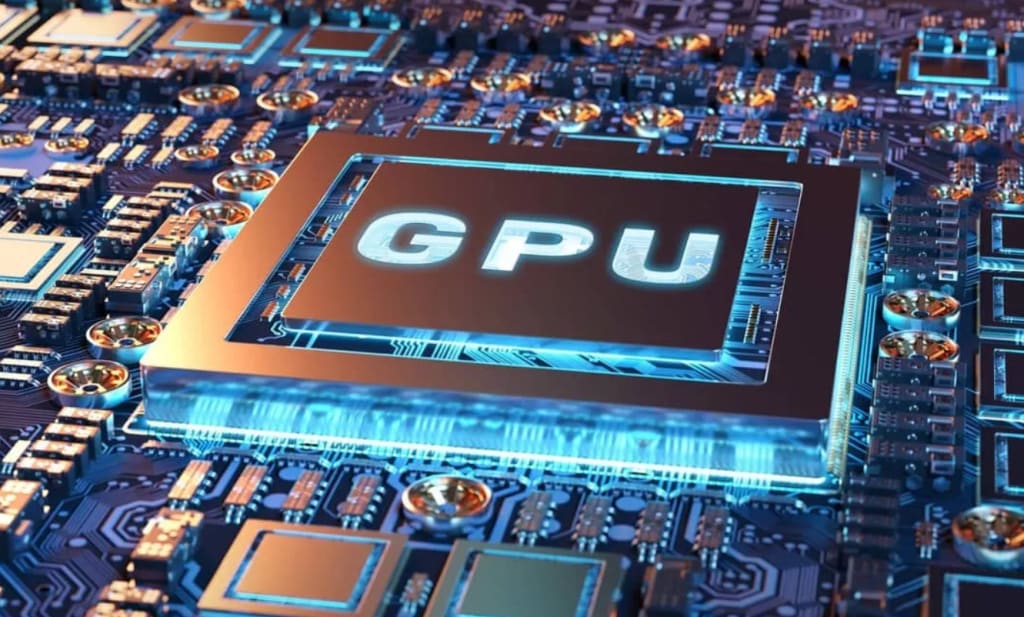
The Graphics Processing Unit (GPU) has evolved from its origins as a specialized hardware component for rendering images to a cornerstone of modern computing. Today, GPUs play a critical role in gaming, artificial intelligence, scientific research, and more. This article explores the history, architecture, and transformative impact of GPUs in the digital age.A Brief
History of GPUs
The concept of GPUs emerged in the 1990s with the rise of 3D graphics in gaming. Early innovations included:
1. 1999: NVIDIA introduced the GeForce 256, branding it as the world’s first GPU. It brought hardware-based transformation and lighting to gaming, setting a new standard for graphics performance.
2. 2000s: GPUs expanded in capability with programmable shaders, allowing developers to create realistic visual effects.
3. 2010s and Beyond: The rise of general-purpose GPU (GPGPU) computing unlocked their potential for non-graphics applications, particularly in data-intensive fields.
How GPUs Work
A GPU is a specialized processor designed to handle complex mathematical calculations required for rendering images and processing data. Key components include:
1. Shader Cores: Execute parallel tasks, enabling the rendering of pixels and vertices.
2. Memory Interface: High-bandwidth memory (such as GDDR or HBM) stores and accesses data at incredible speeds.
3. Parallel Processing Architecture: Allows the simultaneous execution of thousands of threads, making GPUs ideal for tasks requiring massive parallelism.
4. Cooling Systems: Essential for maintaining performance by dissipating heat generated during intensive workloads.
Applications of GPUs
Initially designed for rendering 3D graphics, GPUs now power a wide range of applications:
1. Gaming
GPUs remain essential for gaming, delivering high-resolution visuals, realistic textures, and smooth frame rates. Technologies like ray tracing, powered by modern GPUs, enable life-like lighting and reflections.
2. Artificial Intelligence (AI) and Machine Learning
GPUs accelerate deep learning by performing massive parallel computations for training neural networks. Frameworks like TensorFlow and PyTorch leverage GPU capabilities to enhance AI research and applications.
3. Cryptocurrency Mining
The parallel processing power of GPUs makes them suitable for mining cryptocurrencies, solving complex algorithms to validate blockchain transactions.
4. Scientific Research
In fields such as physics, genomics, and climate modeling, GPUs handle simulations and data analysis that require immense computational power.
5. Content Creation
From 3D modeling to video editing and special effects, GPUs empower creative professionals with tools for real-time rendering and faster workflows.
6. Autonomous Vehicles
GPUs process data from sensors and cameras in real-time, enabling object detection, path planning, and decision-making in self-driving cars.
Key Players in the GPU Market
The GPU industry is dominated by a few major companies:
1. NVIDIA: Known for its GeForce and Quadro series, NVIDIA leads in gaming, AI, and data center solutions.
2. AMD: Competes with its Radeon and Radeon Pro GPUs, offering high-performance options for gaming and professional use.
3. Intel: A newcomer to the discrete GPU market, Intel focuses on integrated GPUs and its ARC series for gamers and creators.
The Future of GPUs
The evolution of GPUs continues to reshape the technological landscape. Emerging trends include:
1. Ray Tracing and Real-Time Rendering: Advanced rendering techniques will enhance visual realism in gaming and simulations.
2. AI-Specific GPUs: Hardware optimized for machine learning workloads, such as NVIDIA’s Tensor Cores, will continue to grow in importance.
3. Energy Efficiency: Innovations in architecture and manufacturing processes aim to balance performance with reduced power consumption.
4. Quantum Computing Integration: GPUs may complement quantum processors to handle hybrid workloads in the future.
GPUs have transcended their original purpose, becoming indispensable tools across diverse industries. Their ability to process massive amounts of data in parallel has unlocked new possibilities in gaming, AI, scientific research, and beyond. As GPUs continue to evolve, they promise to drive innovation and shape the future of technology, solidifying their role as a critical component of the digital world.
About the Creator
Keep reading
More stories from Gus Woltmann and writers in Chapters and other communities.
The Impact of Gaming on Teenagers
Positive Impacts of Gaming a. Cognitive Development Video games often require players to think critically, solve problems, and make quick decisions. Strategy games, puzzle games, and role-playing games (RPGs) can enhance skills such as:
By Gus Woltmann2 months ago in Chapters
Valentine's Dates Over the Years
Colin grinned as Brooklyn slipped into the living room. “Is it all set?” he asked. The twenty-one year old grinned. She was in her last year of college and Colin knew that Lincoln was proud of her. Although she had been away at college, she’d eagerly helped Colin plan his surprise for Lincoln. “I’m so glad you’re finally doing this,” she said.
By Reb Kreyling17 days ago in Chapters
Can the Taliban win a war against Pakistan? Retaliation for Pakistani airstrikes in Paktika, US weapons left in Afghanistan 2026
On February 22, separate airstrikes in Afghanistan’s Paktika and Nangarhar provinces killed and injured multiple people. Military sources in Pakistan claimed that seven hideouts of the TTP (Tehreek-e-Taliban Pakistan) or Pakistani Taliban and other militant groups were targeted across three provinces—Nangarhar, Paktika, and Khost. However, after visiting the affected areas, Al Jazeera’s team confirmed civilian casualties. It is worth noting that Al Jazeera is an impartial news organization.
By Real content5 days ago in Chapters



Comments
There are no comments for this story
Be the first to respond and start the conversation.