
China's 2D Chip Could Soon Be Used to Make Silicon-Free Chips
A new type of transistor could enable silicon-free chip manufacturing thanks to advancements in materials and architecture.
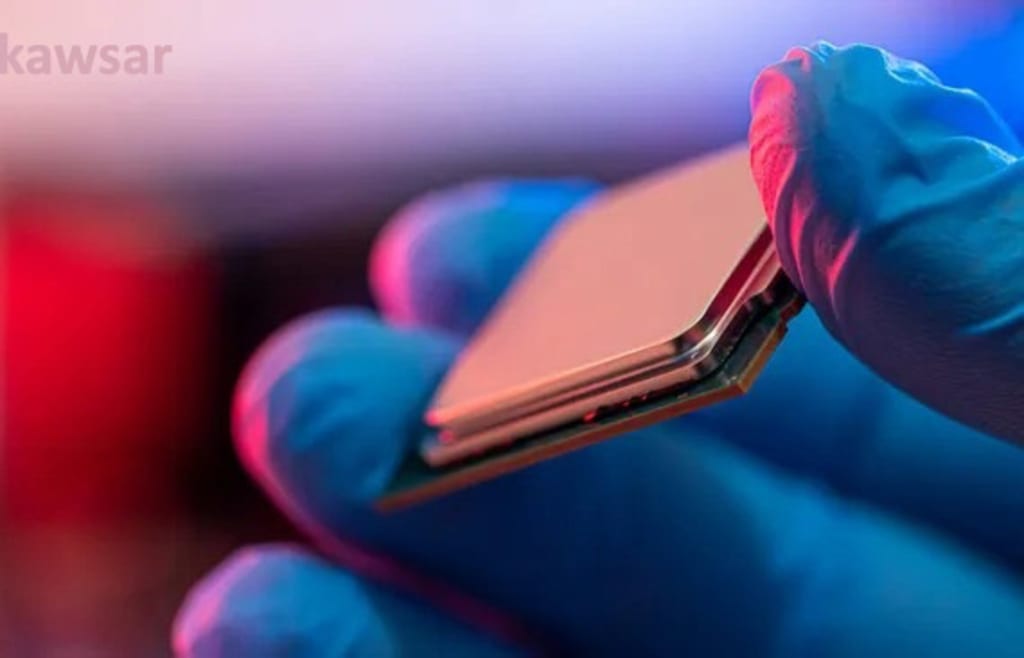
A Breakthrough in Semiconductor Technology
With the creation of a new 2D chip material, China has made significant progress in semiconductor innovation that may pave the way for silicon-free electronics. To overcome limitations in performance, energy efficiency, and production scalability, researchers have been looking into alternatives to conventional silicon-based chips. China may now be closer to commercializing next-generation chips that rely on ultra-thin, highly efficient components thanks to a breakthrough in two-dimensional (2D) materials.
The Rise of 2D Semiconductors
The semiconductor industry has been dominated by silicon for decades, but engineers are facing physical and financial obstacles as transistors shrink to near-atomic scales. A promising alternative is provided by materials with two dimensions, such as graphene and Transition Metal Dichalcogenides (TMDs). In comparison to silicon, these atomically thin layers have exceptional electrical properties while consuming significantly less power. According to reports, Chinese researchers have created a functional two-dimensional chip with low power leakage and high electron mobility, making it suitable for AI and advanced computing. 2D materials can be stacked vertically, enabling denser and more efficient chip designs, in contrast to silicon, which requires intricate 3D structures to improve performance.
Potential Advantages Over Silicon
1. Energy Efficiency – 2D semiconductors operate at much lower voltages, reducing power consumption in devices.
2. Scalability – Their ultra-thin nature allows for further miniaturization beyond silicon’s limits.
3. Flexibility – These materials can be used in flexible and wearable electronics, opening new possibilities for smart devices.
4. Heat Dissipation – 2D chips generate less heat, improving device longevity and performance.
China Push for Semiconductor Independence
As a result of U.S. export restrictions on advanced semiconductor technology, China's efforts to become self-sufficient in chip manufacturing are being accelerated. China may be able to gain an advantage in next-generation electronics and reduce its dependence on foreign silicon supply chains by investing in alternative materials like 2D semiconductors.
Challenges Ahead
2D chips hold promise, but mass production remains a challenge. It is still expensive and difficult to produce 2D materials without defects on a large scale. Additionally, additional research and investment will be required to incorporate these materials into existing fabrication procedures. However, silicon-free chips may become a reality sooner than anticipated if China is able to overcome these obstacles.
The Future of Computing
2D semiconductors have the potential to revolutionize everything from smartphones to quantum computing if they are successfully commercialized. As a result of China progress in this area, silicon may no longer be the undisputed king of chips in the global semiconductor landscape.
The world will be watching to see if China can turn its innovations in 2D chips into a viable, disruptive technology as research continues.
About the Creator
Keep reading
More stories from writers in Chapters and other communities.
Dox Thrash (1896–1965)
Dox Thrash and the invention of the carborundum printmaking process Dox Thrash was born in 1896 in the heart of rural Georgia, a place where creativity lived quietly in the corners of daily life. Long before he would become known for revolutionizing printmaking with the carborundum process, Thrash grew up surrounded by the textures and tones of the natural world—wood grain shimmering under sunlight, dusty roads blending into thick summer air, hand‑stitched quilts patterned with the stories of generations. These impressions would later fuel his artistic instincts, shaping a style that felt both grounded and luminous.
By TREYTON SCOTT6 days ago in Chapters
Silken Chains
Silhouettes of the female form were given flesh and bone. Silken skin glistened under the spotlight. Dry ice rose around our Icons as they danced atop their podiums in the Square. Heralded for their beauty, their movements were slight, powerful, and sensual.
By Paul Stewart5 days ago in Fiction




Comments
There are no comments for this story
Be the first to respond and start the conversation.